

 Phoenix 24
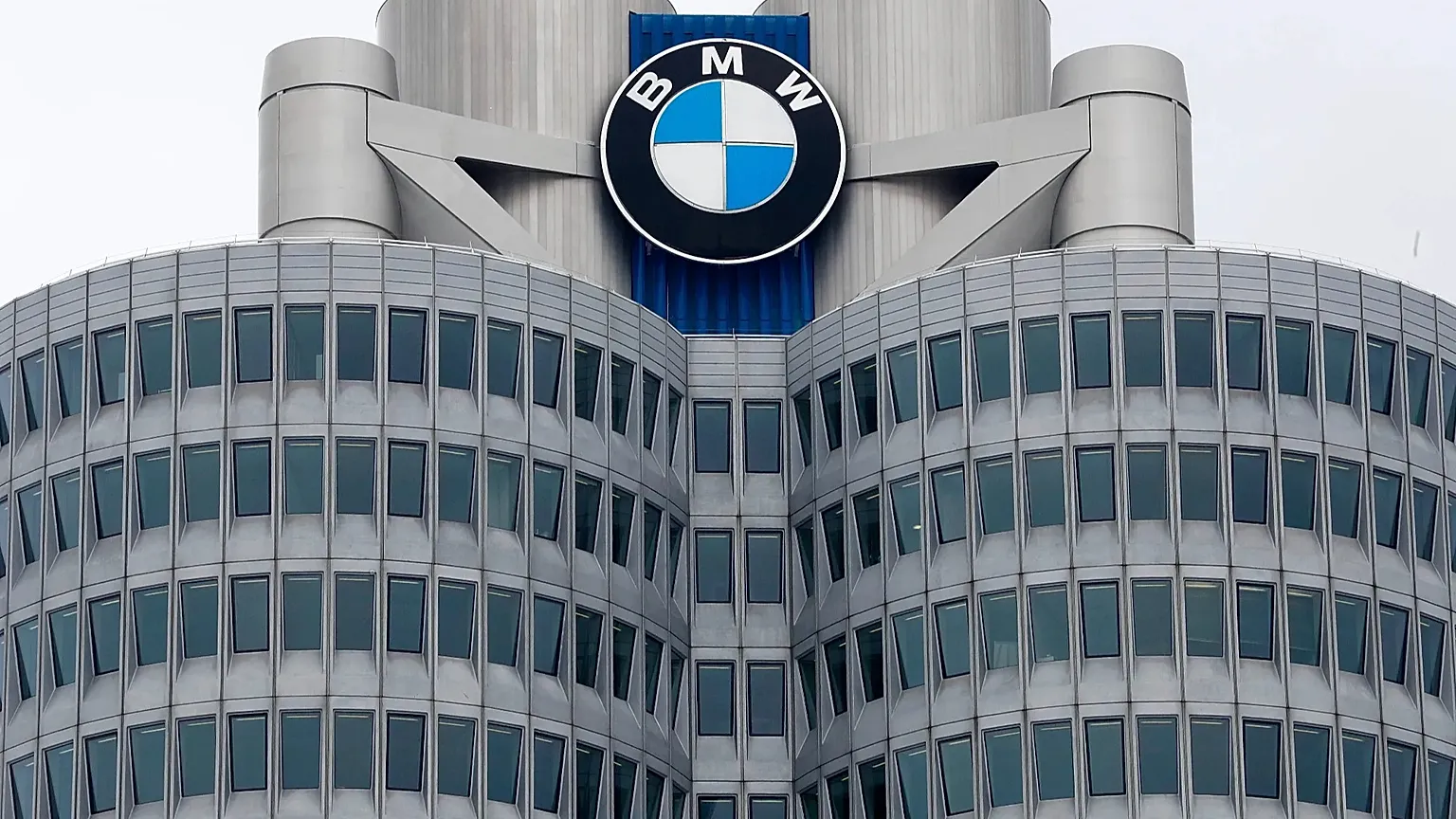
The German automaker faces declining profits, restructuring costs and mounting competition from Chinese manufacturers.
MUNICH, GERMANY — November 4, 2026. German luxury automaker BMW has reported a sharp decline in quarterly profitability and warned that its core automotive division could record an operating loss for 2026. The announcement follows another downward revision to its financial outlook as the company confronts weakening sales in China, international trade pressures and substantial restructuring expenses. The results underscore the difficulties facing Germany’s automotive industry as manufacturers attempt to preserve profitability while financing technological innovation and adapting to increasingly competitive global markets.
According to BMW’s third-quarter financial results, group profit before taxes declined 10.6% to €2.08 billion, while net profit fell approximately 15% to €1.45 billion. Revenue decreased 5.8% to €30.45 billion, reflecting lower vehicle deliveries and unfavorable currency movements. The automotive division’s operating margin narrowed to 3.4%, compared with 5.2% during the equivalent period in 2025. Although the company remained profitable during the quarter, the deterioration illustrates how quickly changes in demand, production costs and competitive conditions can affect the financial performance of established premium manufacturers.
The most significant announcement concerns BMW’s full-year outlook. Management now expects the automotive division’s operating margin to range between negative 0.5% and positive 0.5%, replacing its previous forecast of 1% to 3%. A negative margin would mean that the division recorded an operating loss for the year, although this would not necessarily translate into a net loss for the entire BMW Group. The company attributes much of the revised forecast to additional restructuring and portfolio expenses expected during the fourth quarter, while maintaining that its underlying automotive operating margin should remain above 2% before those charges.
Chief Executive Officer Milan Nedeljković has announced plans to accelerate structural adjustments designed to improve efficiency and strengthen BMW’s long-term competitiveness. The measures include reducing management functions, simplifying organizational processes and implementing a workforce restructuring program involving approximately 8,000 positions in Germany. The employment implications are significant because the automotive industry supports extensive networks of suppliers, specialized manufacturers and service providers. Changes within major automakers can therefore affect regional economies beyond the companies undertaking the restructuring.
China represents another central challenge. BMW reported that vehicle deliveries in the country declined by approximately one-quarter during the third quarter, continuing a deterioration in a market that has historically generated substantial revenue for German premium brands. Chinese manufacturers have strengthened their competitive position through electric vehicles, advanced digital features and increasingly attractive pricing. As domestic competitors expand their technological capabilities, foreign producers face pressure to reconsider product development, localization strategies and the relationship between price and perceived value.
BMW’s global deliveries declined 6.3% to 551,075 vehicles during the quarter, despite increases of 2.6% in Europe and 2.5% in the United States. Those gains were insufficient to compensate for weaker Chinese demand. The geographical differences demonstrate that the company’s difficulties cannot be attributed to a uniform decline in global consumer interest. Instead, BMW confronts markets characterized by different competitive pressures, purchasing preferences and regulatory conditions, requiring increasingly differentiated commercial and manufacturing strategies.
The company intends to expand the localization of its supply chain and product portfolio in China while accelerating its next generation of vehicles. Central to that strategy is the Neue Klasse, a technological platform designed to improve electric-vehicle efficiency, digital integration and manufacturing economics. BMW expects the new generation to strengthen its profitability over the coming years, supported by improvements in battery technology and production processes. Nevertheless, introducing new platforms requires substantial investment and carries execution risks, particularly when manufacturers must simultaneously maintain existing vehicle ranges and adapt production facilities.
Electrification remains an important component of BMW’s business. Fully electric vehicles represented approximately 20% of global deliveries during the third quarter, while the combined share of battery-electric and plug-in hybrid vehicles reached 27.4%. In Europe, electrified vehicles accounted for nearly half of deliveries. These figures indicate that BMW continues making progress in the transition toward lower-emission mobility, even as its profitability faces pressure. The challenge lies in converting technological development and sales growth into sustainable financial returns.
BMW is also pursuing operational improvements through artificial intelligence, procurement optimization and more efficient production systems. Management has identified AI agents as tools capable of automating selected administrative processes, supporting planning and improving decision-making. However, digital transformation alone cannot resolve problems involving weak market demand or excessive manufacturing costs. Its economic contribution will depend on measurable productivity improvements, successful integration with existing operations and the company’s capacity to reorganize resources effectively.
The financial outlook contains an important distinction between profitability and liquidity. Despite the anticipated restructuring charges, BMW continues forecasting more than €2.5 billion in automotive free cash flow for 2026. This suggests that management expects the business to retain meaningful cash-generating capacity even if reported operating profitability falls close to zero. Nevertheless, sustaining investment in new technologies while restructuring established operations will require careful capital allocation and financial discipline.
BMW’s difficulties reflect a broader transformation of the European automotive industry. German manufacturers face intensifying competition from China, changing global trade conditions and the high costs associated with developing electric and software-defined vehicles. Their future competitiveness will depend not only on brand recognition and engineering expertise, but also on production efficiency, supply-chain resilience and the ability to deliver technological innovation at prices consumers are willing to pay.
The company’s revised forecast does not establish that an annual operating loss is inevitable. It identifies a credible possibility within a narrow range of expected outcomes, influenced substantially by restructuring costs. For BMW, the immediate priority is managing that transition without undermining its long-term industrial capabilities. More broadly, its results illustrate a decisive challenge for European manufacturing: transforming technological expertise into sustainable competitiveness in a global market where established industrial leadership can no longer be taken for granted.
Phoenix24: Beyond the numbers, the transformation of industry. / Más allá de las cifras, la transformación de la industria.