

 Phoenix 24
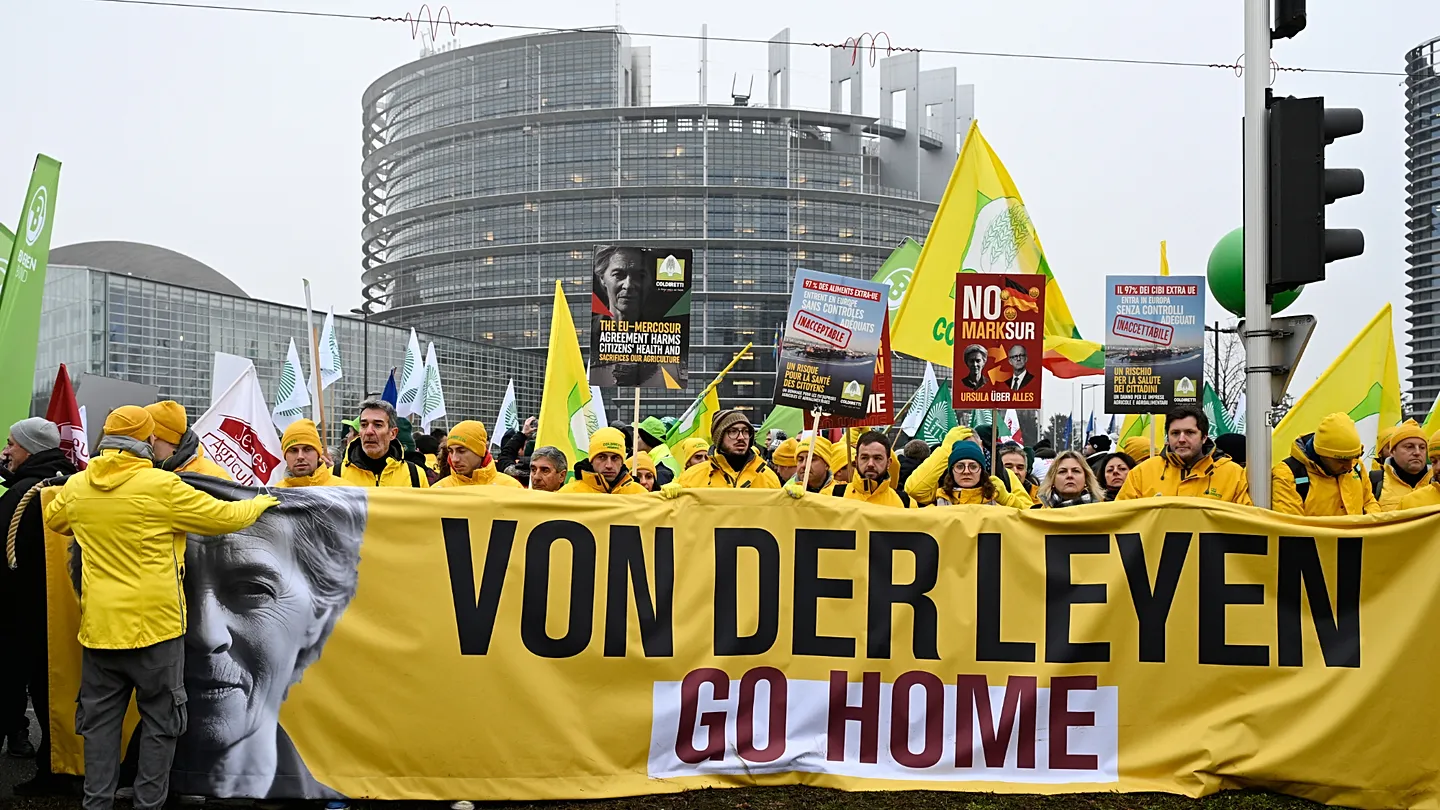
Trade governance is now colliding with democratic legitimacy.
Brussels, February 2026.
Ursula von der Leyen’s decision to push ahead with the provisional application of the EU Mercosur trade agreement, despite a judicial challenge linked to members of the European Parliament, is not only a trade story. It is a stress test of institutional power inside the European Union. Euronews reported that the Commission president moved to apply the agreement provisionally even as parliamentary opposition had helped stall the ratification process, and the move immediately reframed the conflict from market access into a dispute over who can legitimately set the tempo of major geopolitical trade policy in Europe.
The strategic significance of the decision lies in the method, not just the substance. Provisional application is a legal and political tool that allows parts of major agreements to begin operating before full ratification is complete. In periods of consensus, it can be presented as a practical instrument that avoids paralysis. In periods of contestation, it can look like executive acceleration at the expense of democratic scrutiny. That is why the Mercosur step is provoking such a strong reaction. Critics are not only contesting tariff schedules, agricultural competition, or environmental safeguards. They are contesting the governance pathway itself.
This matters because the EU Mercosur agreement has long been politically combustible across multiple fronts. Agricultural sectors in several EU member states, especially in countries with strong farm lobbies, have warned about competitive pressure from South American imports and uneven regulatory burdens. Environmental groups have criticized the deal through the lens of deforestation, enforcement credibility, and sustainability commitments. Supporters, meanwhile, frame the agreement as a strategic diversification instrument for Europe at a time of geopolitical fragmentation, supply chain stress, and intensifying trade pressure from larger powers. Von der Leyen’s decision enters this already polarized terrain and adds a constitutional layer to an economic dispute.
The result is a more dangerous political mix. Once a trade agreement becomes a proxy battle over institutional legitimacy, compromise gets harder. A sectoral concession on safeguards may no longer satisfy actors who believe the process itself has been bypassed or compressed. Likewise, Commission arguments about urgency and strategic competitiveness may fail to persuade those who see provisional application as evidence of executive overreach. In that sense, the dispute is no longer simply Mercosur versus European farmers, or trade liberalization versus protection. It is becoming Commission authority versus parliamentary and national political resistance inside a stressed Union.
There is also a deeper geopolitical calculation behind the move. The Commission has strong incentives to demonstrate that Europe can still conclude and operationalize major trade arrangements in a fragmented world economy. Delays, legal challenges, and repeated political veto points risk signaling to external partners that EU trade commitments are structurally unreliable or hostage to internal cycles. By moving ahead provisionally, von der Leyen appears to be asserting that Europe must preserve strategic credibility with Mercosur partners and avoid looking institutionally immobilized. That logic is coherent from a power projection perspective, but it comes with domestic costs if large constituencies interpret speed as imposition.
The internal European split sharpens that risk. France has remained one of the most visible critics of the agreement’s current shape, particularly on agriculture and regulatory reciprocity, and political resistance has also been visible in other member states. This means the Commission is not navigating a marginal protest. It is operating against a coalition of concerns that combine farm economics, sovereignty anxieties, environmental politics, and procedural legitimacy. When those elements converge, trade debates stop behaving like technocratic dossiers and start functioning like identity conflicts over who Europe protects and how Europe governs.
From the Mercosur side, however, prolonged European hesitation creates its own strategic consequences. South American partners have repeatedly treated the agreement as a test of whether the EU can act as a serious long term counterpart beyond rhetorical commitments to strategic partnership. If Europe signs, celebrates, and then delays implementation indefinitely, it weakens its own claim to be a dependable geopolitical actor in Latin America. That is part of what makes this episode structurally important. The Commission is balancing two credibility problems at once: external credibility with Mercosur, and internal legitimacy within the EU institutional system. Solving one may intensify the other.
This is why the current clash should be read as part of a larger transformation in European governance. Trade policy can no longer be separated from democratic trust, social protection, and strategic autonomy language. Agreements are judged not only by GDP projections or tariff reductions, but by whether citizens and political blocs believe the institutions managing them are transparent, fair, and accountable under pressure. Provisional application may be legally available, yet legal availability alone no longer guarantees political acceptance in a Union marked by accumulated distrust and uneven economic exposure.
The likely next phase will not be defined only by legal filings or parliamentary statements. It will be shaped by narrative competition. The Commission will argue strategic necessity, competitiveness, and European relevance in a fractured global market. Opponents will argue democratic bypass, social asymmetry, and technocratic insulation from domestic costs. Each frame can mobilize powerful constituencies, which means the Mercosur dispute may continue to expand beyond trade specialists into a broader public argument over the architecture of EU decision making itself.
Von der Leyen’s move therefore does more than advance a controversial agreement. It exposes the central tension of contemporary European power: the Union wants to act faster in a harsher geopolitical economy, but every acceleration mechanism risks deepening the legitimacy crisis that makes fast action politically harder to sustain. In that contradiction, Mercosur becomes more than a trade deal. It becomes a live referendum on how Europe governs under strategic pressure.
The truth is structure, not noise. / Truth is structure, not noise.