

 Phoenix 24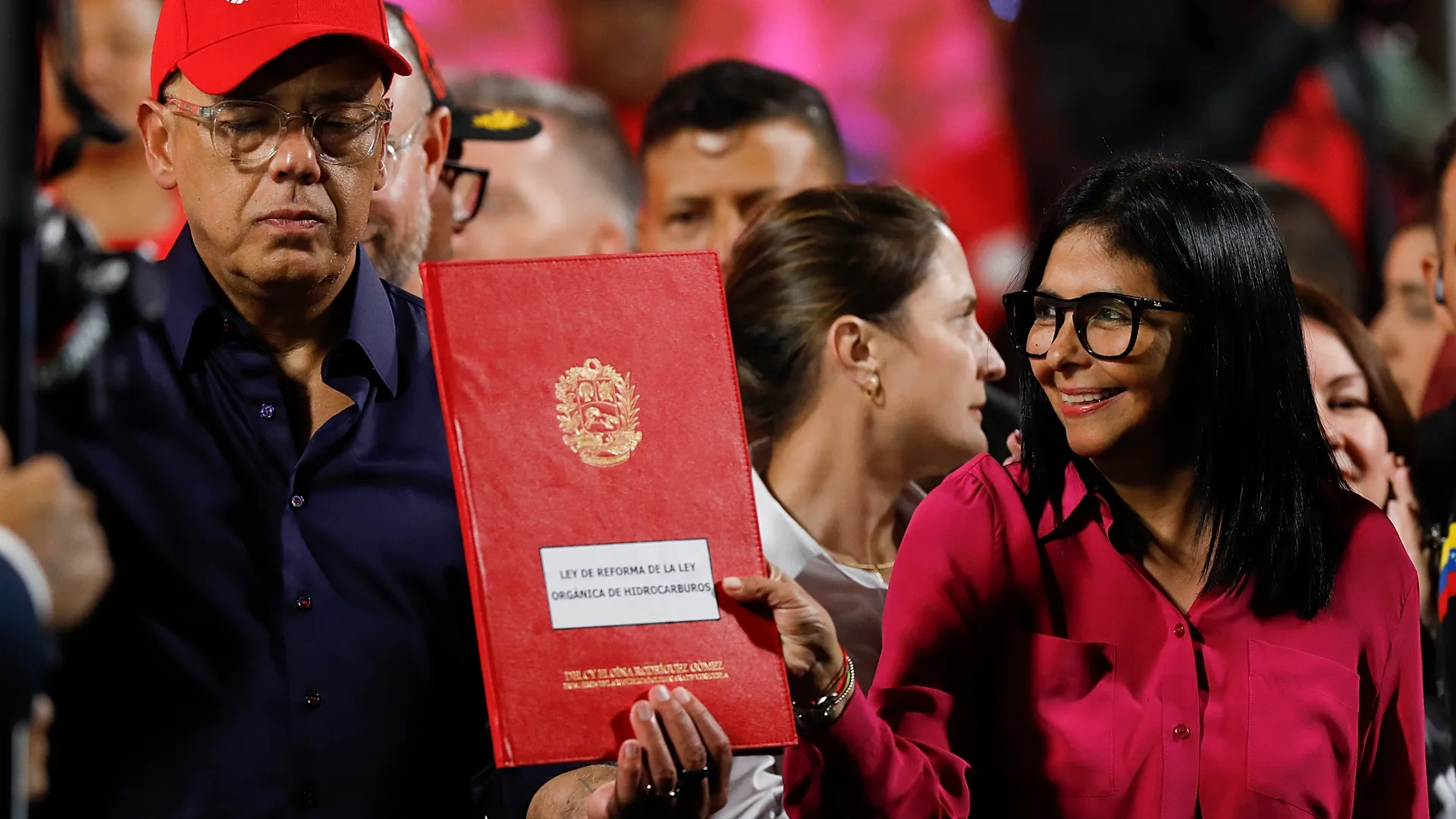
Amnesty is being sold as a national reset.
Caracas, February 2026.
Venezuela’s National Assembly leadership has told families of detainees that every person held for political reasons will be released next week, framing the pledge as the direct consequence of a pending amnesty law. The commitment was delivered publicly by National Assembly president Jorge Rodríguez outside a National Police detention complex in eastern Caracas known as Zone 7. He set a narrow window, from Tuesday through Friday, and insisted the releases would follow once the amnesty is definitively approved. The statement has the cadence of certainty, yet its credibility will be measured by names, gates, and timestamps, not by slogans.
The amnesty bill has already cleared a first vote, and it is expected to face a second vote in an ordinary session next week before being signed and published by the acting executive. The initiative has been pushed by acting president Delcy Rodríguez as a “repair” mechanism for political wounds stretching back to the start of the Chavista era in 1999. The text, as described by reporting from Euronews and the Associated Press, spans events from 1999 to 2026 while excluding categories such as homicide, drug trafficking, and serious human rights violations. That design tries to balance reconciliation optics with legal limits, but it also creates room for disputed interpretations of who qualifies.
At the center of the story is a long conflict over definitions, because the state has historically denied holding political prisoners while opposition groups and human rights organizations have documented cases they describe as politically motivated. The NGO Foro Penal has tracked detainees it classifies as political prisoners and has repeatedly challenged official release figures, arguing that announcements often outpace verifiable exits. Reuters has reported competing counts in recent weeks, with government aligned sources describing larger numbers and monitors describing lower confirmed totals. The gap is not clerical, it is political, since uncertainty keeps families dependent on rumor, personal contacts, and prison gate waiting.
The pledge lands in a volatile transition environment shaped by external pressure and internal recalibration. Officials have tied the push for amnesty to a broader effort to stabilize the country after the operation by United States forces that ended with Nicolás Maduro being removed and transferred abroad to face charges described as narcoterrorism. Washington’s explicit support for the amnesty, highlighted in Euronews coverage, gives the plan international backing but also injects a narrative of foreign leverage that the government can use selectively. In Caracas, the same endorsement can be framed as diplomatic legitimacy or as coerced concession, depending on the audience being addressed.
The amnesty also functions as a governance signal to multiple constituencies at once, including security services, opposition actors, and international partners watching for proof of de escalation. For the opposition, a mass release can be read as a first tangible confidence building measure, yet it can also be criticized as conditional mercy that implicitly brands dissent as criminal. For the government, it offers a controlled narrative of reconciliation while preserving red lines through exclusions that keep certain cases outside the umbrella. In that tension, amnesty becomes both policy and theater, a tool that can open space while also managing blame.
There is a psychological layer that matters as much as the legal one, because families experience promises as a cycle of hope followed by delay, partial compliance, or opaque procedures. When a top lawmaker says “they all leave,” the public hears a clear timeline, yet detainees live inside administrative systems where paperwork, transport, and internal approvals can stretch deadlines without formal breach. This is why observers emphasize verifiable sequencing, releases that occur first, publication that follows, and lists that can be audited. Without that transparency, even a genuine release effort can be experienced as another episode of uncertainty.
Internationally, the credibility test will also be shaped by how institutions and media ecosystems narrate the outcome. Al Jazeera and Reuters have framed the pledge as deadline politics, a promise that demands immediate validation by the week’s end, rather than an open ended intention. European governments that have dealt with Venezuelan displacement pressures will watch whether releases reduce incentives for flight or simply shift the form of instability. Multilateral bodies like the United Nations typically respond to such developments by focusing on due process, detention conditions, and the protection of civil and political rights, themes that will return if implementation falters.
If releases happen at scale and on schedule, the move could reset bargaining space and reduce the temperature of daily confrontation, at least temporarily. If releases are selective, delayed, or unverifiable, the promise will harden cynicism and deepen the perception that the state uses freedom as a negotiating chip. Either outcome will influence the next phase of Venezuela’s legitimacy contest, because the fastest way to rebuild trust is to align words with visible procedures. In a system where power often speaks through institutions, the prison gate is the simplest truth machine.
Against propaganda, memory.
Contra la propaganda, memoria.