

 Phoenix 24
The first production units will use a single memory module, potentially limiting performance compared with the configuration previously suggested.
Seattle, June 2026
Valve has confirmed that the first batch of its new Steam Machine will ship with one 16-gigabyte DDR5 memory module instead of the possible two-module configuration discussed during earlier technical presentations. The correction removes the expectation that some units could arrive with two 8-gigabyte modules operating in dual-channel mode. Although the total memory capacity remains unchanged, the internal arrangement can influence bandwidth, frame-rate consistency and overall system responsiveness. The decision has therefore generated concern among players already questioning the device’s high price and aging graphics specifications.
The clarification emerged after Valve engineers initially indicated that Steam Machine units could use either one 16-gigabyte module or two 8-gigabyte modules, depending on manufacturing availability. The company later acknowledged that the statement had been inaccurate and confirmed that all launch systems would use a single stick. This means the initial production run will operate with single-channel system memory unless owners purchase and install an additional compatible module. Valve has suggested that future manufacturing revisions could adopt a different arrangement, but it has not committed to a schedule.
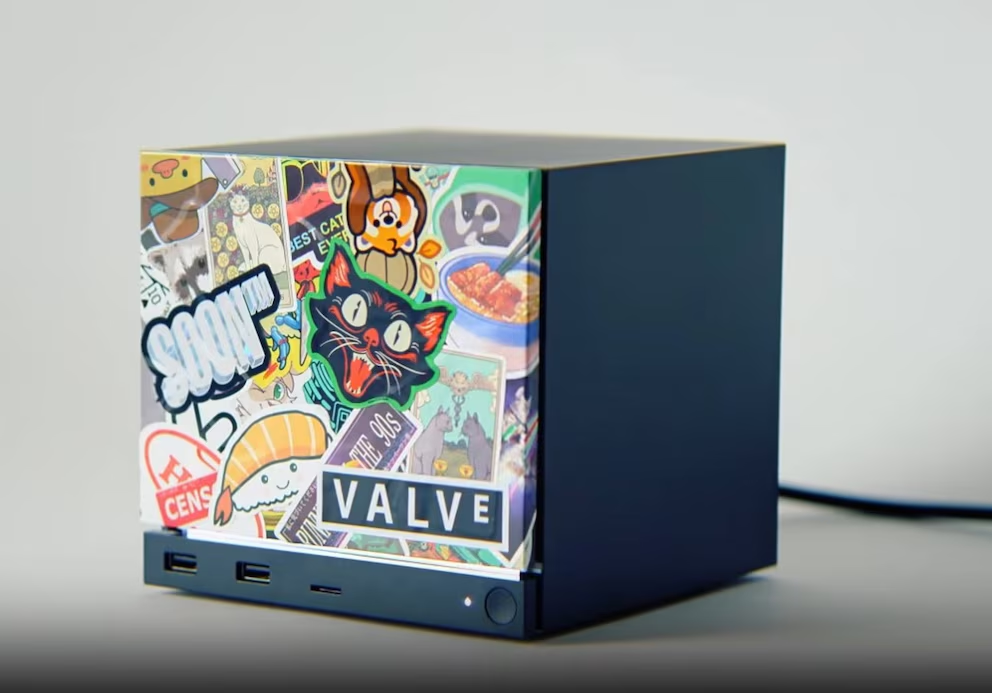
Dual-channel memory allows a processor to access two modules simultaneously, increasing the amount of data that can move between the central processing unit and system memory. In gaming computers, that additional bandwidth can improve average frame rates and, more importantly, reduce sudden drops that create visible stuttering. The effect varies according to the game, graphics settings and hardware architecture, but testing on comparable systems has shown measurable performance differences between single-channel and dual-channel configurations. Users may notice the limitation most clearly in processor-intensive titles and during demanding scenes where stable frame delivery becomes essential.
The decision is especially significant because Valve has promoted Steam Machine as a compact living-room computer capable of delivering a console-style experience with the flexibility of a PC. Its custom AMD processor uses six Zen 4 cores and twelve threads, while the graphics system is based on RDNA 3 architecture with 8 gigabytes of dedicated GDDR6 memory. Valve has presented the machine as substantially more powerful than Steam Deck and capable of targeting 4K output at 60 frames per second through technologies such as FidelityFX Super Resolution. A memory configuration that restricts bandwidth complicates that performance message, even though system RAM and dedicated video memory fulfill different functions.
Steam Machine begins at approximately 1,049 dollars for the model equipped with 512 gigabytes of storage, while the 2-terabyte version carries a significantly higher price. Buyers who add the new Steam Controller must pay an additional amount, placing complete packages well above the cost of conventional consoles. Valve has explained that it is selling the hardware close to its production cost rather than subsidizing it through software revenue. The company argues that hardware subsidies encourage closed ecosystems, while Steam Machine is designed to preserve the openness and flexibility associated with personal computers.
That philosophical position has not prevented comparisons with PlayStation and Xbox, particularly because Steam Machine is intended primarily for television-based gaming. Traditional consoles offer standardized hardware, optimized software and lower entry prices, although they place greater restrictions on operating systems, stores and hardware modifications. Steam Machine permits users to access their existing Steam libraries, install compatible software and replace selected components. Its value therefore depends on whether consumers prioritize openness enough to accept a premium price and some of the complications normally associated with PC ownership.
Valve’s memory decision appears closely connected to the global shortage and rising cost of RAM and storage components. Demand from artificial intelligence infrastructure has placed pressure on the semiconductor market, making some components more expensive and difficult to obtain in large quantities. Valve previously delayed final pricing and adjusted the launch schedule while attempting to secure sufficient supplies. Using one 16-gigabyte module may simplify manufacturing and preserve the possibility of later expansion, but it also transfers part of the performance optimization burden to customers.
Owners will technically be able to add another memory module, although the upgrade is not as simple as opening an easily accessible compartment. Early hardware examinations indicate that reaching the memory slots requires substantial disassembly of the compact chassis. Users must remove several internal components carefully, creating a process that may discourage people without experience handling computer hardware. The possibility of upgrading therefore preserves the machine’s PC identity without guaranteeing that every buyer will feel comfortable correcting the launch configuration.

Installing a second compatible 16-gigabyte module could provide both dual-channel operation and a total of 32 gigabytes of system memory. That upgrade may improve multitasking, demanding games and applications beyond entertainment, but it also raises the effective cost of achieving the configuration many enthusiasts expected from the beginning. Buyers must identify compatible specifications and consider whether opening the device affects support or warranty conditions. Valve has not yet provided a simplified official upgrade program for customers seeking dual-channel performance.
The controversy also reflects the difficulty of describing a product that exists between a console and a compact desktop computer. Console buyers generally expect the manufacturer to optimize every component before release because internal upgrades are uncommon or impossible. PC users are more accustomed to replacing memory, storage and other hardware, but they also compare component value closely. Steam Machine attempts to satisfy both audiences, creating expectations that become difficult to manage when a cost-saving decision resembles a technical compromise.
Single-channel memory does not make the device incapable of running modern games, nor does it automatically eliminate Valve’s broader performance targets. Many titles depend more heavily on the dedicated graphics processor, and the impact will differ across workloads. The machine may still provide smooth results when games are configured appropriately and resolution-enhancement technologies are used. The concern is that buyers paying a premium price may expect Valve to avoid a preventable limitation with known consequences for performance consistency.
The graphics hardware has already attracted scrutiny because its 8 gigabytes of video memory may become restrictive in newer games using high-resolution textures and advanced ray tracing. Valve’s reliance on upscaling allows the system to render internally at a lower resolution before reconstructing the image for a 4K display. This approach can produce attractive results while reducing the workload placed on the graphics processor. It does not, however, eliminate every memory bottleneck or guarantee identical performance across the extensive Steam catalogue.
Compatibility remains one of Steam Machine’s strongest arguments because SteamOS uses Proton to run a large number of games originally developed for Windows. The technology has improved considerably since the first generation of Steam Machines failed to gain broad consumer support in 2015. Valve’s success with Steam Deck demonstrated that a Linux-based gaming system could provide a practical and accessible experience. The new machine extends that strategy into the living room while removing the handheld screen and battery that define Steam Deck.
The launch also arrives with a reservation system intended to distribute limited inventory more fairly and reduce automated purchasing by resellers. Valve has restricted purchases and randomized part of the queue because component shortages prevented the company from producing the number of units originally planned. Limited availability may protect early demand, but it could also reduce the product’s immediate presence compared with established consoles. The high price and memory controversy add further uncertainty to a launch already shaped by constrained supply.
For technically experienced buyers, the single-module configuration may be an inconvenience rather than a decisive flaw. They can install additional memory, expand storage and use Steam Machine as a flexible entertainment computer. Less experienced users may reasonably expect the system to deliver its intended performance without internal modifications. The difference between those two audiences will influence whether the product is judged as an accessible console alternative or an expensive compact PC for enthusiasts.
Valve has not abandoned Steam Machine’s central promises of openness, game-library access and user modification. What changed is a specific hardware expectation that helped support the device’s performance narrative. The correction demonstrates how manufacturing pressures can alter a product between its announcement and commercial release, even when headline specifications such as total memory remain technically intact. It also reminds consumers that capacity alone does not describe how efficiently a computer can use its components.
La capacidad puede permanecer igual, pero la configuración determina cuánto rendimiento puede aprovechar realmente el jugador. / Capacity may remain the same, but configuration determines how much performance the player can truly use.