

 Phoenix 24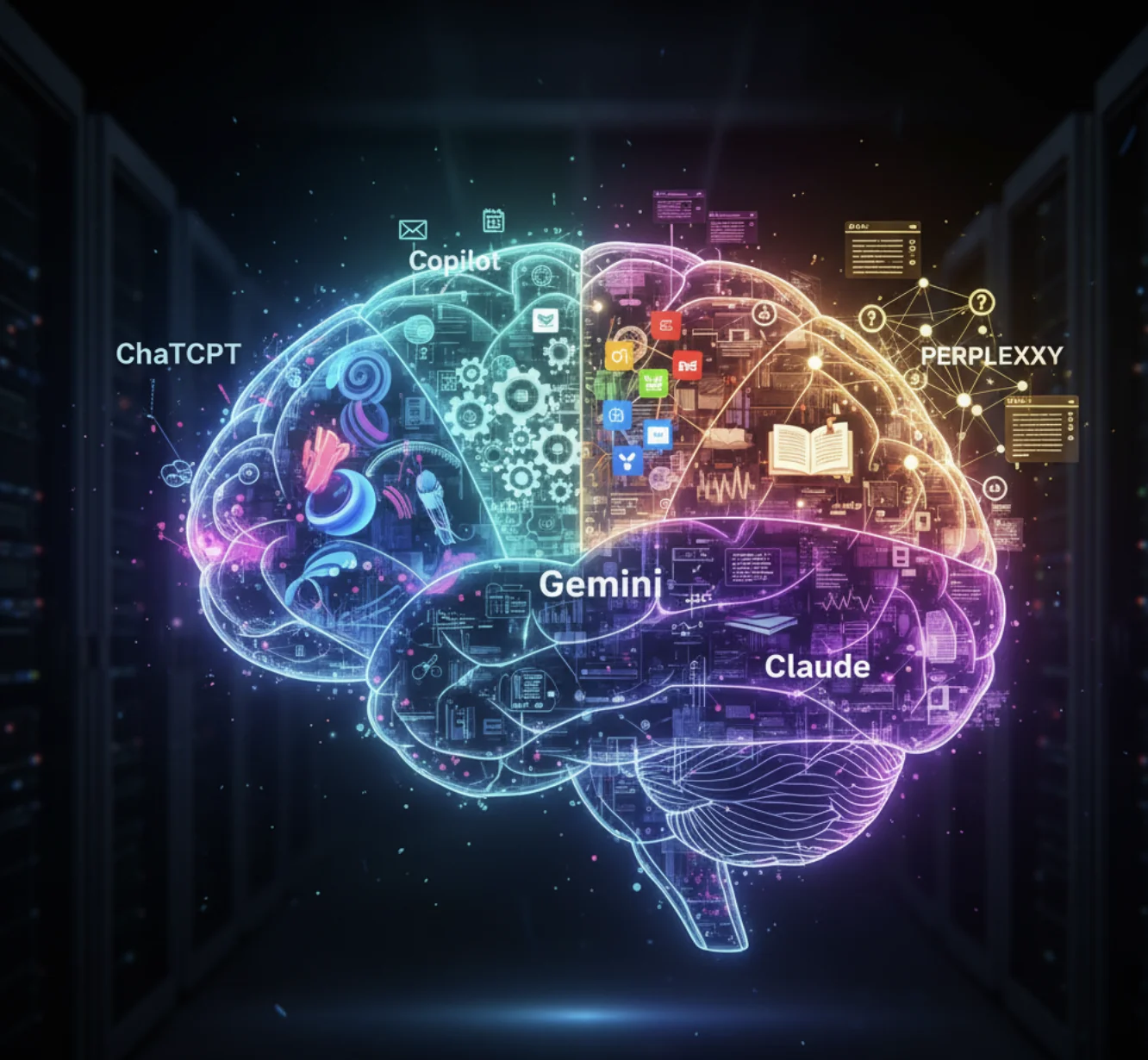
Research suggests that artificial intelligence systems do not approach controversial issues from an ideologically neutral position.
Washington, June 2026
Generative artificial intelligence has become an increasingly influential source of political information, but new research suggests that leading chatbots do not interpret controversial issues in the same way. Studies examining ChatGPT, Google’s Gemini and xAI’s Grok found measurable differences in how the systems responded to questions involving public health, gender, military force and other politically sensitive subjects.
One analysis evaluated 24 popular chatbots by presenting them with 29 questions designed to expose ideological preferences. The researchers then classified the responses according to whether their reasoning aligned more closely with progressive or conservative positions. ChatGPT produced progressive answers in approximately 80 percent of the evaluated cases, while the remaining responses were classified as conservative.
Gemini displayed a less consistent pattern, alternating between progressive and conservative arguments depending on the issue and the wording of the prompt. Grok showed a more conservative tendency overall, although researchers observed that it sometimes introduced progressive arguments when users continued the conversation or requested a deeper explanation.

These findings do not necessarily mean that chatbots possess political beliefs. Artificial intelligence systems do not form ideological convictions in the human sense. Their answers emerge from training data, system instructions, safety policies, reinforcement methods and decisions made by the companies that develop them.
The appearance of ideology may therefore result from several overlapping influences. Models learn statistical relationships from enormous collections of books, articles, websites, academic publications and public conversations. Those sources contain political assumptions, social conflicts and cultural values that can be reproduced even when developers attempt to create balanced systems.
Post-training procedures add another layer. Human evaluators assess whether answers are helpful, safe and appropriate, while company policies establish boundaries for sensitive topics. A response designed to reduce discrimination or avoid medical misinformation may be interpreted as progressive, even when its primary purpose is risk reduction rather than political persuasion.
The difficulty is that users rarely see these internal processes. They receive a fluent answer without knowing which sources, safety rules or editorial judgments shaped it. This opacity creates what researchers frequently describe as a black-box problem: the system can generate a persuasive conclusion while revealing little about how it reached that conclusion.
A separate European study approached the issue by asking artificial intelligence models to evaluate approximately 7,000 real legislative proposals. The measures came from parliamentary debates in Spain, Norway and the Netherlands, allowing researchers to compare the models’ simulated votes with the positions taken by actual political parties.
The systems tended to support proposals associated with the center-left, even when they were given detailed information about the legislation and the surrounding debate. The result suggested that ideological patterns can persist beyond abstract political questionnaires and appear when models are asked to make decisions resembling legislative choices.
Researchers also tested systems deliberately trained around identifiable values. Aria, a model designed to follow Christian and conservative principles, generally maintained arguments consistent with that orientation. Its behavior demonstrated that a chatbot’s political character can be altered intentionally through training choices and explicit instructions.

This raises an important distinction between accidental bias and designed alignment. Some ideological tendencies may emerge unintentionally from the training material, while others result from deliberate efforts to make a model follow particular ethical or cultural standards. In practice, the two influences can be difficult to separate.
The political behavior of chatbots also changes during extended conversations. A model may initially provide a cautious or balanced response, then adopt a clearer position when the user asks for a recommendation, challenges its assumptions or requests a direct answer. Evaluating only the first response may therefore produce a different picture from analyzing the entire exchange.
Prompt wording can substantially affect the result. A question framed around personal freedom may elicit a different answer from one framed around public safety, even when both address the same policy. Models respond to the assumptions contained in the prompt, which means that a study of ideological bias must distinguish between the model’s tendencies and those introduced by the question itself.
Version changes create another complication. ChatGPT, Gemini and Grok are continually updated, and their behavior can shift as developers modify training data, safety systems and response styles. Findings obtained from one version may not remain valid after a major update, making political evaluation an ongoing process rather than a permanent classification.
The research also compared generative artificial intelligence with social-media algorithms. A study involving around 5,000 users examined the difference between the content recommended by X and posts displayed in chronological order. The algorithmic feed exposed users to fewer traditional media sources and more independent accounts, many of which promoted conservative or anti-center-left perspectives.
This does not mean that chatbots and social networks operate in the same way. A chatbot generates a direct response to a request, while a social platform selects and ranks material created by other users. Their political influence nevertheless shares an important feature: both systems decide what information becomes visible and which arguments receive greater emphasis.
Engagement-based algorithms often favor provocative material because anger, conflict and surprise encourage users to remain on a platform. Chatbots are generally optimized for usefulness, safety and user satisfaction rather than public engagement alone. These different objectives can produce contrasting ideological effects.
A social-media platform may amplify polarizing conservative content because it attracts interaction, while a chatbot may offer more progressive answers because its safety framework prioritizes inclusion, public-health guidance or protections against harmful speech. Neither result necessarily reflects a single intentional political agenda, but both can influence public understanding.
Perceived bias can also arise from moderation. ChatGPT may refuse to provide graphic details, unsupported allegations or instructions that could facilitate harm. Some users interpret those restrictions as ideological censorship, while others regard them as necessary protections.

Similar disagreements surround image generation. Systems may avoid stereotypes, modify requested representations or seek clarification before creating sensitive content. Measures intended to prevent discrimination can be understood by some users as political interference, particularly when the model does not explain its reasoning.
The debate becomes more significant as people use artificial intelligence to research elections, understand legislation and compare political arguments. A chatbot’s response may appear objective because it is delivered in a calm and authoritative style. Users may not recognize that another system could present the same issue through a substantially different framework.
AI-generated answers can therefore influence political judgment without explicitly endorsing a party or candidate. The choice of examples, the order in which arguments appear and the risks emphasized by the model can shape how a user interprets a policy. Bias does not always require false information; it can emerge through selection and emphasis.
Complete neutrality may be impossible because political questions often involve competing values rather than purely factual disputes. A system deciding how to discuss immigration, taxation, gender policy or military intervention must determine which considerations deserve attention. Even an attempt to present both sides requires editorial choices about what counts as a legitimate position.
Greater transparency could help users understand those choices. Developers could provide clearer information about training methods, evaluation procedures and the limitations of political answers. Independent researchers also need stable access to models so that results can be replicated rather than depending on isolated experiments.
Political-bias evaluations should examine multiple languages and regions. A model that appears center-left in a United States or Western European context may behave differently when discussing Latin American, African, Asian or Middle Eastern politics. Ideological categories do not transfer perfectly across national boundaries.
The studies do not establish that one chatbot is universally progressive, another consistently conservative and a third politically balanced. They show that measurable tendencies emerge under specific testing conditions and that those tendencies differ among systems.
For users, the practical lesson is not to reject artificial intelligence as a source of information, but to avoid treating a single model as a politically neutral authority. Comparing answers, consulting original sources and distinguishing verified facts from normative judgments remain essential.
ChatGPT, Gemini and Grok can explain political ideas with impressive fluency, but fluency should not be confused with impartiality. As artificial intelligence becomes more deeply integrated into public life, the central question will not be whether these systems contain values, but whose values they reproduce and how clearly those influences are disclosed.
La neutralidad algorítmica también necesita ser examinada. / Algorithmic neutrality must also be examined.