

 Phoenix 24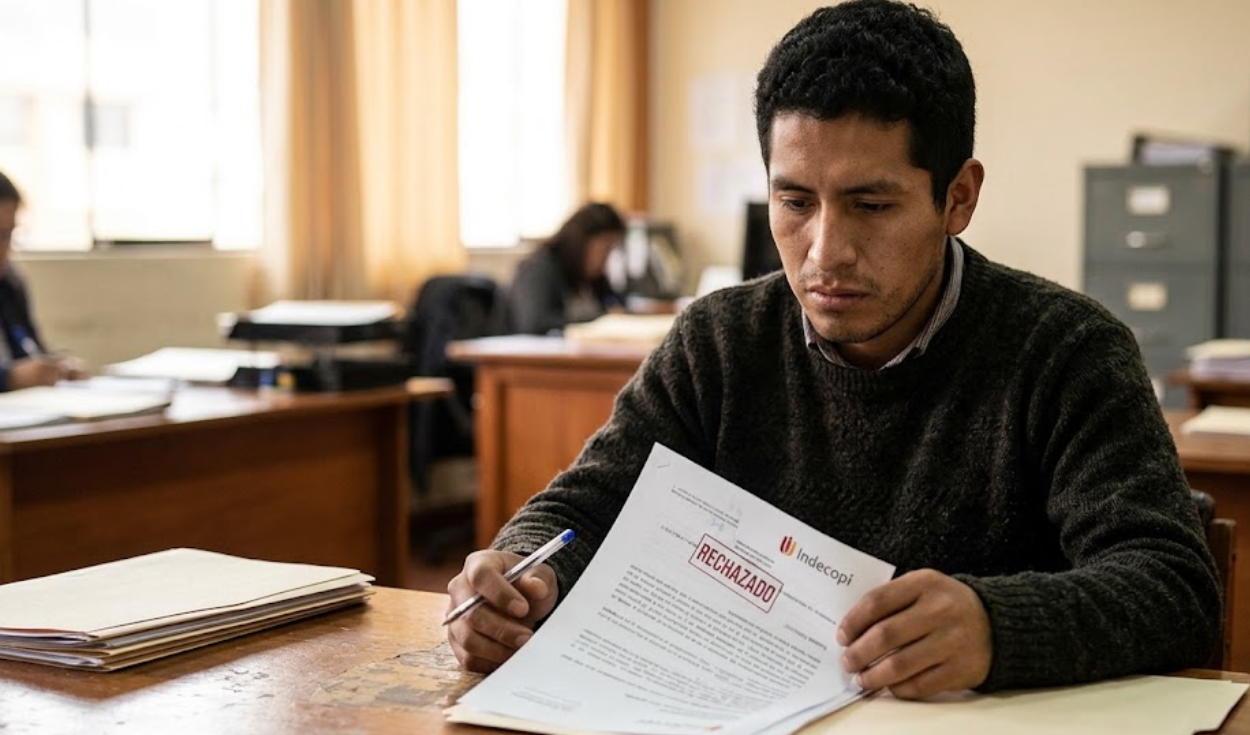
The decision reinforces a central legal principle: artificial intelligence can assist creation, but it cannot replace the human author required by copyright law.
Lima, June 2026
Peru’s intellectual property authority rejected an application to register a book developed with ChatGPT after determining that the applicant had not demonstrated sufficient human creative intervention in the final text. The work, titled Universo Peregrino, was submitted to the Directorate of Copyright at the National Institute for the Defense of Competition and Protection of Intellectual Property, known as Indecopi. During the administrative process, the applicant acknowledged that ChatGPT had generated the book’s content, an admission that became decisive in the evaluation. The authority concluded that the text did not satisfy the authorship requirements established by Peru’s copyright system.
The decision was issued through Resolution No. 1111-2025/DDA and centered on the legal distinction between using artificial intelligence as a tool and presenting machine-generated expression as a human work. Copyright protects original forms of expression created through human intellectual activity, not ideas, commands or automated outputs considered independently. According to the administrative reasoning, the applicant did not provide enough evidence showing that he had personally written, substantially transformed or creatively controlled the passages produced by the system. Without that demonstrable contribution, Indecopi could not recognize him as the author of the complete book.

The ruling does not mean that publishing a book created with the assistance of ChatGPT is necessarily prohibited. A person may use generative artificial intelligence to research, organize information, explore narrative alternatives, correct language or generate preliminary material, subject to the rules of the platform and the applicable law. The legal difficulty appears when that person seeks exclusive rights over text whose expressive elements were substantially determined by the machine. Publication and copyright protection are therefore separate issues, because material may circulate commercially without qualifying for the full protection granted to a human-authored work.
The case also illustrates why writing a prompt is not automatically equivalent to writing the resulting passage. A prompt can establish a topic, tone, length or general objective, but the artificial intelligence system determines the specific vocabulary, syntax, structure and sequence of ideas appearing in its response. Copyright law traditionally protects those concrete expressive choices rather than the abstract instruction behind them. Unless the user later performs meaningful creative work on the output, the relationship between the prompt and the final text may be considered too indirect to establish authorship.
Human intervention remains possible even when artificial intelligence participates extensively in the creative process. An author could select fragments from numerous outputs, reorganize them into an original structure, rewrite substantial sections, introduce independently created characters or arguments and exercise detailed editorial judgment over the final composition. In such circumstances, copyright protection may cover the human-created portions, as well as an original selection or arrangement of otherwise unprotected material. The protection would not necessarily extend to every sentence initially generated by the artificial intelligence system.

That distinction has become increasingly important as writers, publishers and educational institutions adopt generative tools. A manuscript may involve several levels of assistance, ranging from basic spelling correction to the automated generation of entire chapters. Treating all uses as identical would ignore the difference between a writer controlling a creative process and a user simply accepting machine output. Authorities must therefore examine the degree, nature and evidence of human participation in each individual case.
The applicant behind Universo Peregrino reportedly argued that he had provided instructions to ChatGPT and guided the system’s production of the book. Indecopi nevertheless found that those instructions did not prove the level of personal creative expression necessary for registration. The authority focused not only on whether a human initiated the process but on who produced the specific literary expression contained in the submitted work. Its conclusion placed the text outside the category of works that could be registered under the applicant’s name as presented.
The ruling also has practical consequences for anyone attempting to commercialize predominantly AI-generated books. Without copyright protection, an author may have limited ability to prevent others from copying, reproducing or adapting the unprotected portions of the text. A publisher may still use contracts, trademarks, confidential materials or other legal mechanisms, but those protections do not replace copyright in the underlying expression. The commercial ease of generating a manuscript therefore does not guarantee the exclusive legal control traditionally associated with authorship.
Generative artificial intelligence has complicated the concept of originality because its outputs may appear novel even when no human determines every expressive element. These systems produce text by processing statistical relationships learned from enormous collections of existing language and predicting which words should follow a given instruction. The output may not reproduce a specific source, yet the absence of direct copying does not automatically make the user its legal author. Originality and human authorship remain connected requirements within many copyright systems.
The Peruvian decision follows a broader international tendency to deny protection to works generated autonomously by artificial intelligence. Authorities and courts in several jurisdictions have maintained that machines cannot hold authorship because copyright law assigns rights, responsibilities and ownership to human beings or legally recognized entities deriving rights from them. Artificial intelligence cannot give consent, assume contractual obligations, inherit property or be held morally accountable for its expressive decisions. Those limitations make it difficult to insert a machine into a legal framework historically built around human creativity.
At the same time, regulators have generally avoided declaring that every AI-assisted work is unprotected. The central inquiry is whether the human contribution can be identified and whether it contains enough original expression to qualify independently. A writer who uses ChatGPT to propose titles, correct punctuation or test alternative outlines may still remain the author of a manuscript written through personal judgment and language. A person who submits largely unchanged machine-generated chapters faces a much more difficult claim.
Documentation may therefore become essential for authors who work with artificial intelligence. Drafts, prompt histories, revisions, handwritten notes and version comparisons can demonstrate how the writer transformed automated suggestions into an original work. Merely stating that the system was supervised may not be enough when an authority asks who selected the words and shaped the final expression. The stronger the human creative record, the easier it becomes to distinguish assistance from substitution.
The decision also places responsibility on publishers and self-publishing platforms to develop clearer disclosure policies. Editors may need to ask whether manuscripts contain AI-generated text, how extensively the systems were used and whether the author possesses enforceable rights over the submitted material. Publishing a work whose principal content lacks copyright protection could expose a company to commercial uncertainty, imitation and disputes over originality. Transparency will therefore become increasingly important in contracts between writers, agents and publishers.
For readers, the dispute raises questions that extend beyond legal registration. Some may accept books generated substantially by artificial intelligence if the process is openly disclosed, while others may expect literature to represent a recognizably human act of imagination and experience. The legal system does not determine literary quality, emotional value or cultural legitimacy, but it does define who may claim exclusive ownership. Indecopi’s ruling addressed that narrower question and concluded that machine-generated text could not be registered as though it were entirely human-authored.
The case of Universo Peregrino will likely become an important reference in Latin American discussions about artificial intelligence and intellectual property. It demonstrates that giving instructions to a chatbot may produce publishable material without necessarily producing a copyrightable human work. Authors using these technologies must contribute more than an initial concept or a sequence of commands if they expect full legal recognition. The machine may participate in the writing process, but the law still demands evidence that a person created the protected expression.
La inteligencia artificial puede generar palabras, pero la autoría exige demostrar quién tomó las decisiones creativas. / Artificial intelligence can generate words, but authorship requires proof of who made the creative decisions.