

 Phoenix 24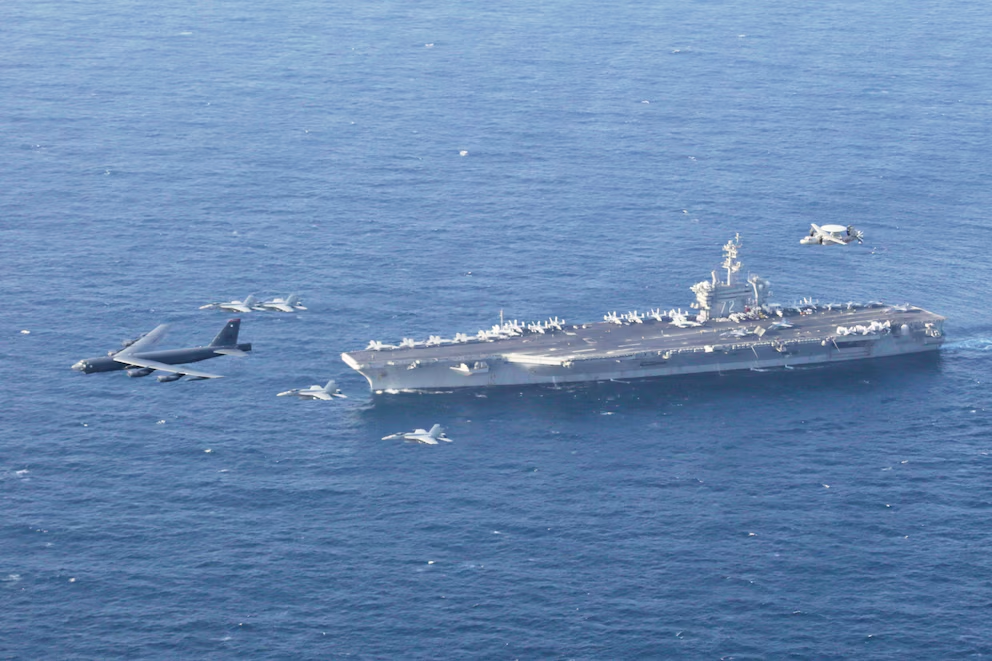
When military readiness becomes a message, deterrence is expressed through movement rather than words.
Washington, January 27, 2026. The United States has announced a new series of aerial military maneuvers in the Middle East as tensions with Iran continue to escalate and American strategic assets are deployed across the region. The exercises, coordinated under U.S. Central Command, are intended to test rapid deployment capabilities, operational flexibility and the sustainment of air power in a volatile security environment marked by heightened geopolitical risk.
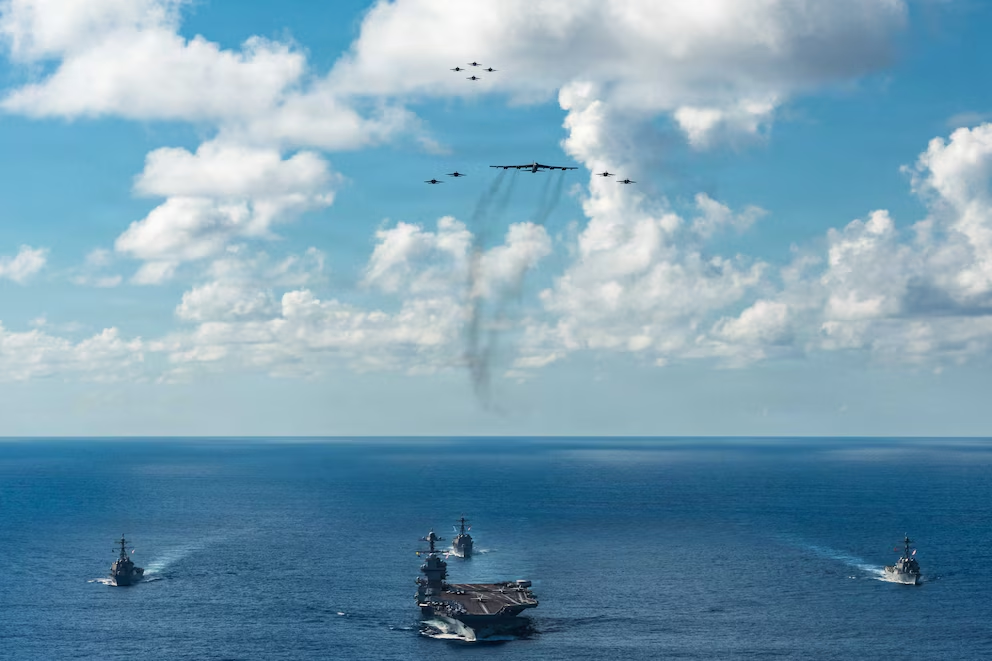
According to U.S. defense officials, the maneuvers will focus on dispersing aircraft across multiple locations, operating with limited logistical footprints and validating command and control procedures under realistic contingency conditions. The drills are designed to ensure that U.S. forces can respond quickly and effectively to a range of scenarios, from crisis response to high intensity conflict, while maintaining readiness in a region that remains strategically critical to global security and energy flows.
The announcement comes amid a broader U.S. military posture adjustment in the Middle East that includes the deployment of naval and air assets intended to reinforce deterrence. Recent movements have involved aircraft carriers, combat aircraft and support units positioned to provide rapid response options. U.S. officials describe these actions as defensive in nature, emphasizing their role in reassuring regional partners and deterring potential aggression rather than signaling an intent to initiate conflict.
At the center of the current tension is the strained relationship between Washington and Tehran, shaped by disputes over Iran’s nuclear activities, regional influence and proxy dynamics. U.S. leaders have stated that the military buildup aims to prevent miscalculation and preserve stability, even as diplomatic channels remain constrained. The exercises are framed as a signal of preparedness, underscoring that the United States retains the capacity to project power and protect its interests and allies if required.
Regional reactions to the announcement have been mixed. Some partner governments view the maneuvers as a necessary measure to maintain balance and security, particularly amid concerns about regional escalation. Others have expressed apprehension that visible military activity could raise tensions further, increasing the risk of incidents or misinterpretation. Iran, for its part, has indicated heightened alertness, portraying its own posture as defensive in response to external pressure.
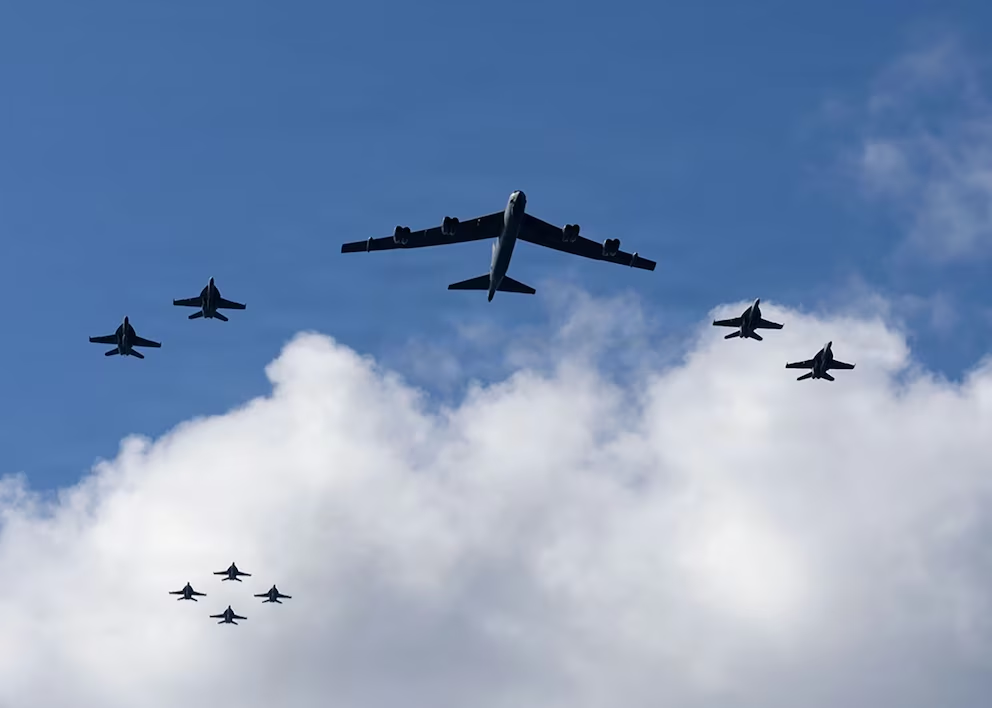
Military analysts note that large scale exercises serve multiple strategic purposes. They allow forces to rehearse complex operations, strengthen interoperability with allies and demonstrate resolve to adversaries. At the same time, they carry inherent risks, as increased activity in congested air and maritime spaces can elevate the potential for accidents or unintended encounters, particularly in regions already marked by distrust and rivalry.
The maneuvers also reflect a broader shift in modern military doctrine toward mobility and adaptability. Rather than relying on a small number of fixed bases, U.S. planners increasingly emphasize dispersed operations that complicate adversary targeting and enhance survivability. Testing these concepts in the Middle East, where infrastructure, climate and political constraints vary widely, provides valuable operational insight.
Critics of sustained military deployments argue that readiness exercises should be paired with credible diplomatic efforts to reduce tensions and avoid escalation. They caution that while deterrence can prevent conflict, it must be balanced with communication and restraint to prevent crises from spiraling beyond control. Supporters counter that preparedness is a prerequisite for diplomacy, ensuring that negotiations occur from a position of strength.
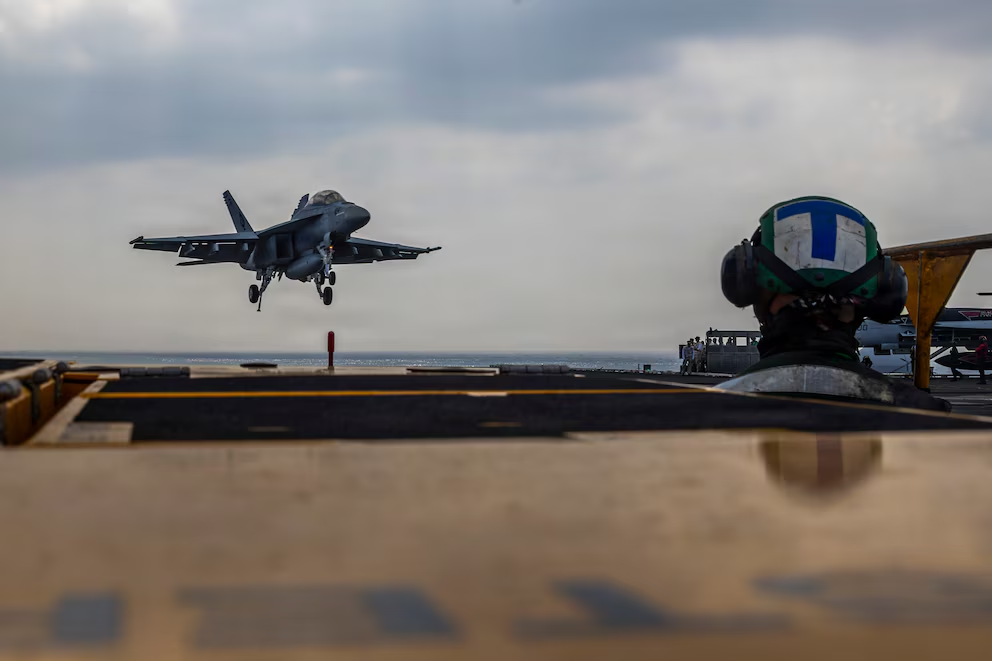
As the exercises move forward, they will be closely monitored by regional actors and global observers alike. Their impact will be measured not only in operational metrics but also in how they influence perceptions of stability, resolve and risk in one of the world’s most strategically sensitive regions.
Behind every data point, there is an intention. Behind every silence, a structure.
Detrás de cada dato, hay una intención. Detrás de cada silencio, una estructura.