

 Phoenix 24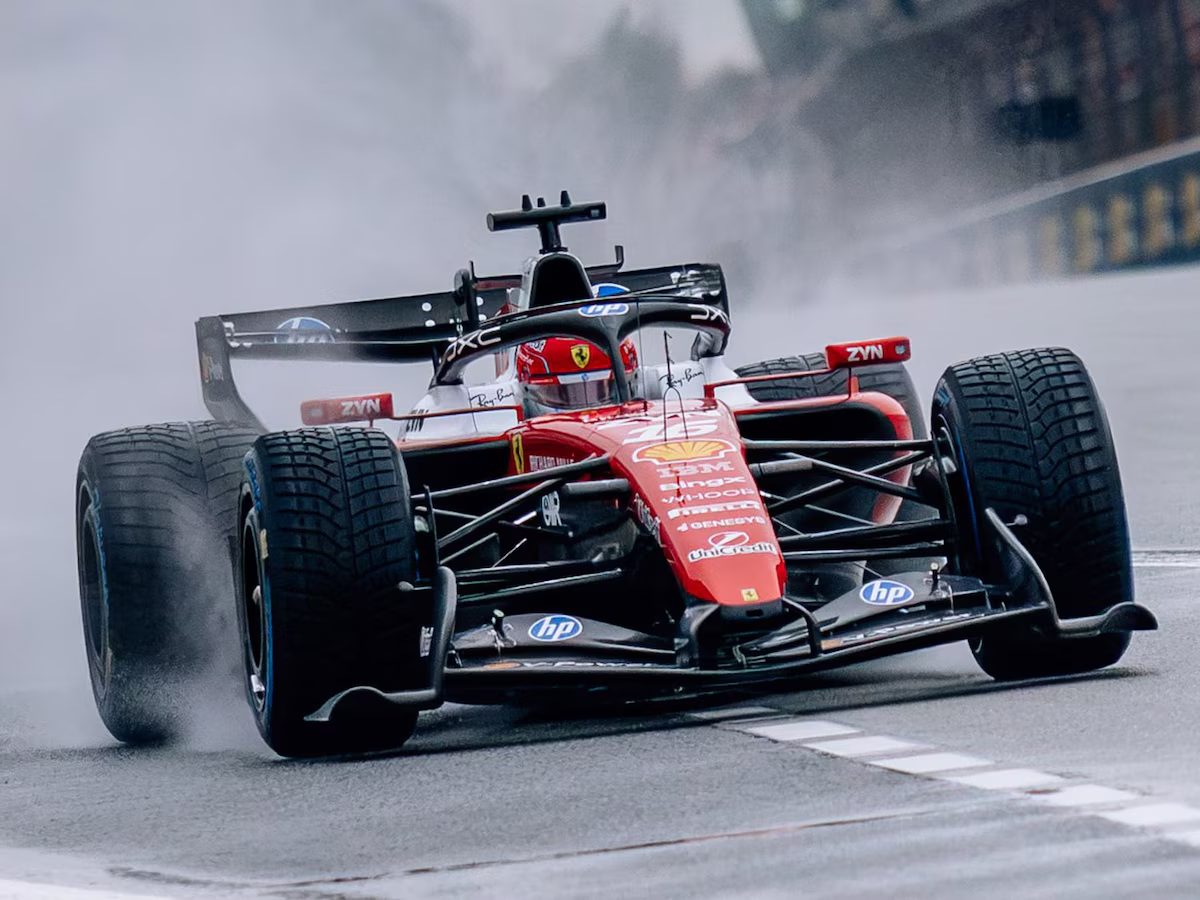
When test sessions become unpredictable, teams must adapt quickly or risk losing momentum before the season begins.
Barcelona, January 27, 2026. The second day of on-track action during the Formula 1 shakedown week at Circuit de Barcelona-Catalunya featured a mix of surprises that illustrated both the complexity of preparations and the competitive tension building ahead of the upcoming season. Multiple drivers were absent for portions of the session due to logistical and mechanical considerations, two newcomers made their first laps in F1 machinery, and the day was briefly interrupted by a red flag incident that underscored the fine line between routine testing and operational disruption.
The session began under clear skies as teams sought to gather data on aerodynamics, chassis balance and power unit performance. Several established drivers did not complete the full planned program, with strategic decisions made to protect newly assembled components or prioritize afternoon runs by reserve drivers. These absences, while not uncommon in preseason work, highlighted how teams allocate limited track time in pursuit of optimal performance data without overtaxing early-build parts.
Among the most closely watched developments were the debuts of two drivers making their first competitive track outings in Formula 1 cars. Both rookies took to the circuit with support from veteran race engineers and performance specialists who monitored telemetry in real time, guiding the newcomers through installation laps and measured performance sequences. These debut runs are critical for both driver acclimatization and team evaluations, offering a rare glimpse into how emerging talent handles F1 braking zones, cornering loads and complex aerodynamic feedback.
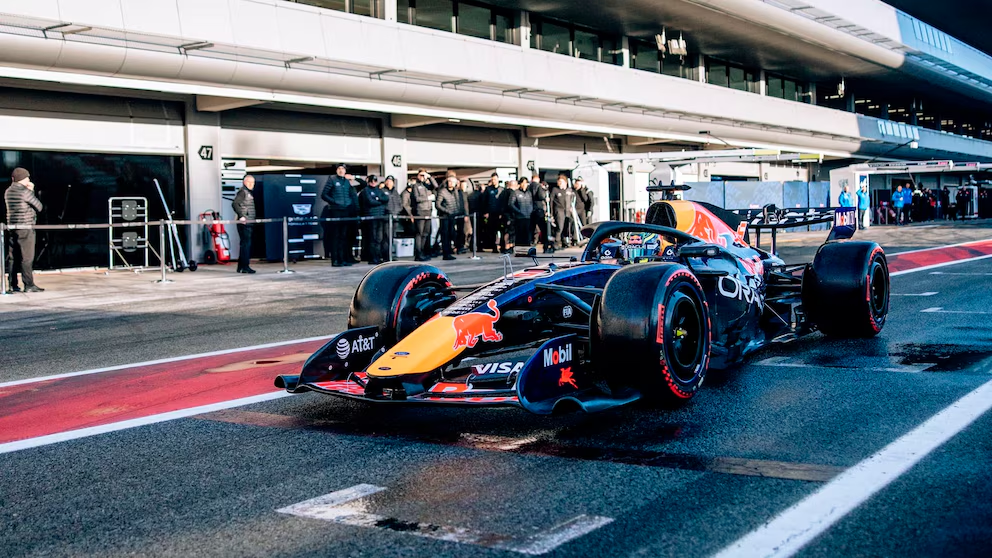
Midday, a red flag was deployed after a minor incident involving a stalled car, bringing all on-track activity to a temporary halt while safety crews cleared the run-off area and assessed the situation. Red flag interruptions during preseason are not unusual, but they underscore the inherent risks of pushing early-generation cars to operating limits before reliability baselines have been fully established. Teams used the stoppage to debrief internally and adjust their afternoon plans, balancing the need to maximize track time with adherence to evolving test protocols.
Technical personnel from multiple teams were observed making rapid adjustments to suspension settings and power unit mappings as part of iterative refinement efforts. Trackside engineers emphasized the importance of combining qualitative driver feedback with quantitative data captured from hundreds of on-board and pit-lane sensors. This dual approach allows teams to iteratively update software calibrations and mechanical set-ups in near real time, a process that can yield performance gains before official practice sessions at the first race of the season.

Observers noted that some teams appeared more conservative in their running programs, focusing on reliability and measured mileage rather than aggressive performance simulations. Others adopted more ambitious test matrices, including back-to-back long-run sequences designed to stress cooling systems and tire degradation profiles. These differing strategies reflect the varied risk tolerances and developmental priorities that teams navigate during preseason, when both short-term insights and long-term preparation matter.
Responses from drivers ranged from enthusiastic endorsements of vehicle balance to cautious assessments of areas requiring refinement. Veteran drivers in particular emphasized the incremental nature of preseason progress, noting that early sessions are as much about confirming baseline expectations as they are about uncovering new performance potential. The ability to maintain clear communication between cockpit and pit wall was highlighted as essential, especially as engineers parse nuanced signals from tire behavior and aerodynamic feedback.
The presence of rookies added a dynamic element to the session, as teams evaluated not only raw pace but also consistency, braking stability and adaptability to evolving track conditions. Rookie performance in preseason can influence decision-making about race-weekend strategies, driver support resources and targeted training programs leading up to the first Grand Prix. Early exposure to F1 hardware challenges even the most talented young drivers, making these initial runs a valuable barometer of readiness.
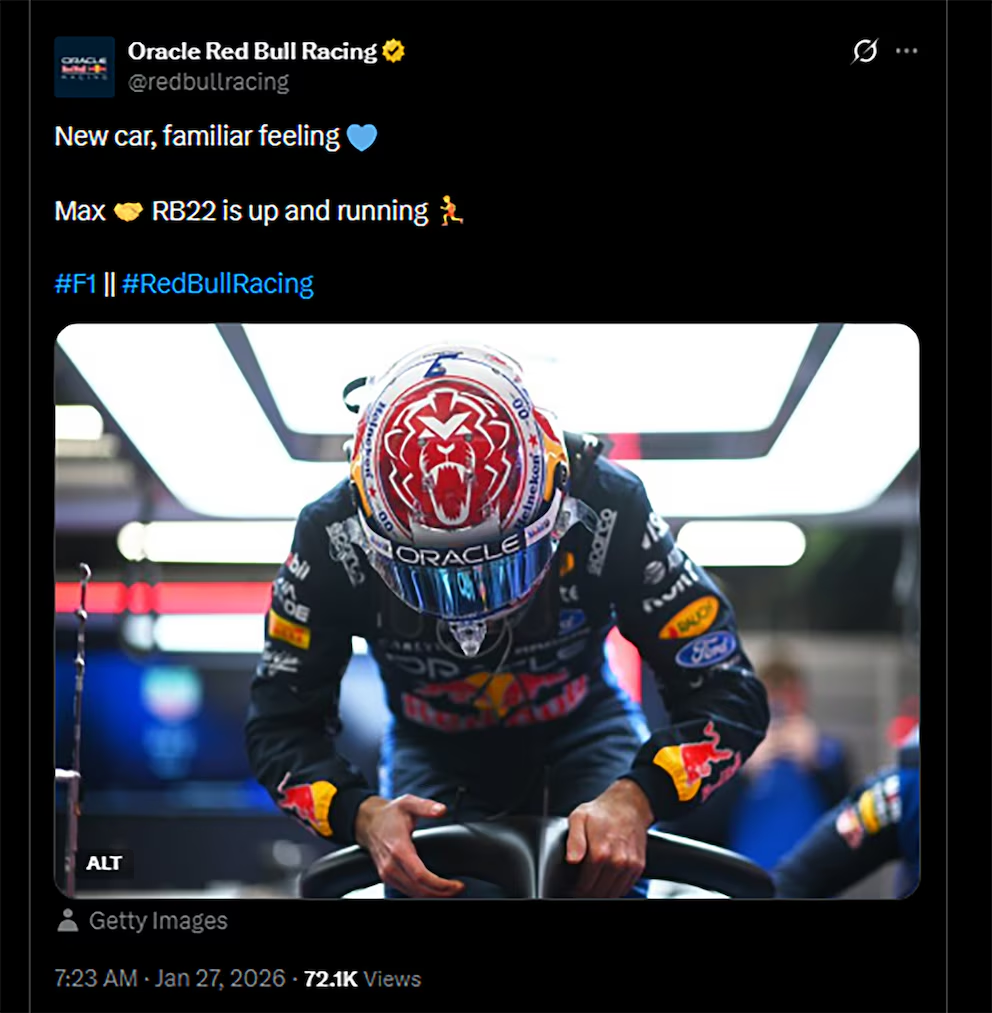
Logistical coordination also featured prominently in team briefings, as the condensed schedule of shakedown week places a premium on efficient pit-lane operations, rapid data processing and clear leadership structures. Teams juggle multiple priorities, including aerodynamic development, power unit calibration and reliability verification, all within a framework that seeks to balance exploration with preservation of critical components.
As the day concluded, teams began to compile comprehensive reports synthesizing driver feedback, lap time analysis and mechanical observations. These reports will inform the next rounds of testing and provide comparative benchmarks for performance across the field. Coaches, performance analysts and technical directors will engage in detailed sessions to translate on-track findings into actionable updates before the calendar advances toward official preseason tests.
The collective activity at Barcelona underscores how even routine testing sessions can be rich with insight, disruption and adaptation. Preseason engagements not only reveal technical trajectories but also offer early narratives around team cohesion, driver development and operational methodology that may foreshadow dynamics in the competitive season ahead.
Behind every data point, there is an intention. Behind every silence, a structure.
Detrás de cada dato, hay una intención. Detrás de cada silencio, una estructura.