

 Phoenix 24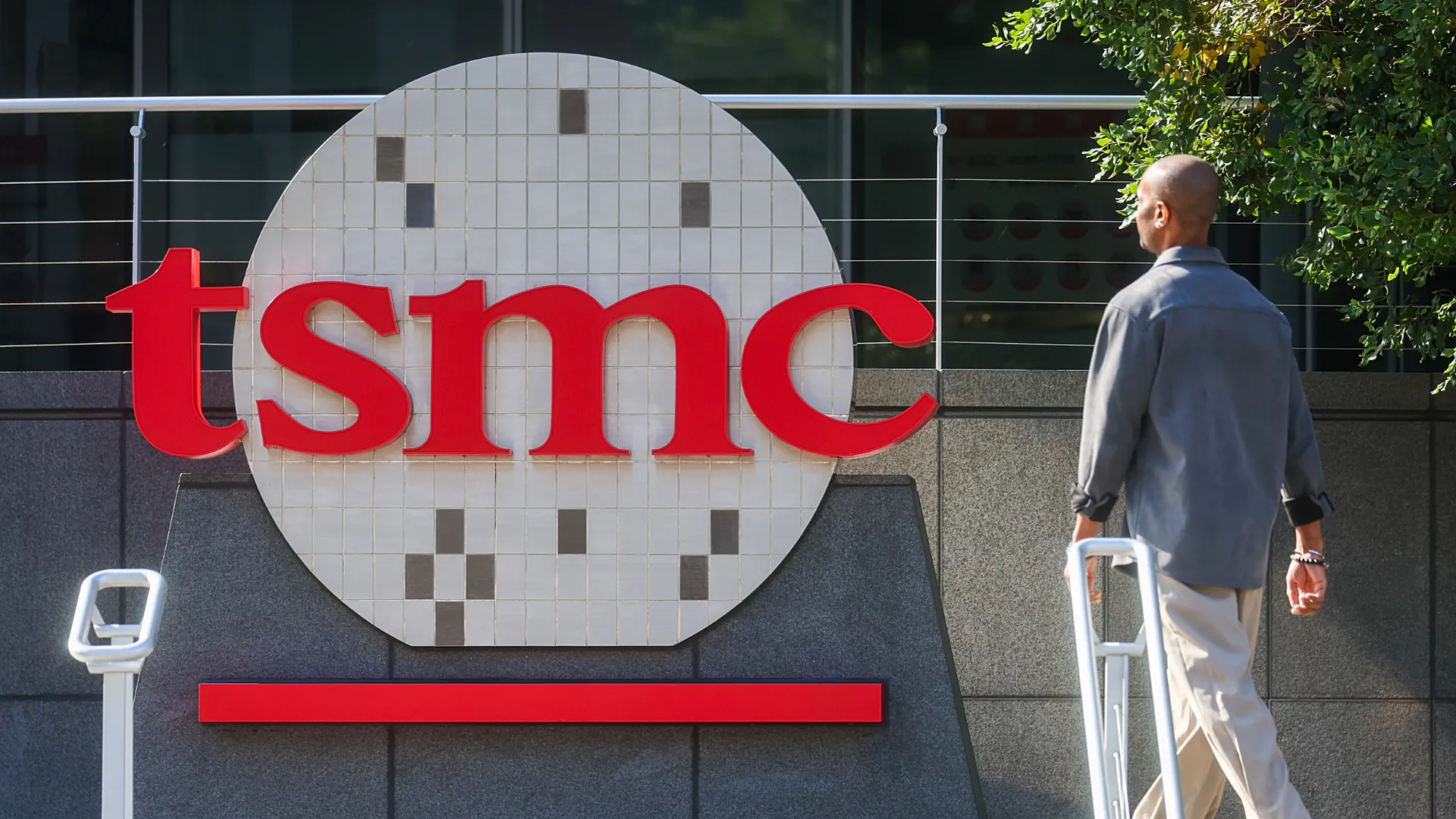
Chip demand is reshaping the global technology order.
Hsinchu, April 2026. Taiwan Semiconductor Manufacturing Company posted a sharp jump in first quarter profit, confirming that the global AI boom is concentrating extraordinary value in the companies that control advanced chip production. The world’s largest contract chipmaker reported a 58.3 percent increase in net profit, reaching 572.48 billion New Taiwan dollars and marking its fourth consecutive quarter of record earnings. The result reflects more than a strong business cycle. It shows how artificial intelligence is strengthening the industrial core of the digital economy rather than only its software layer.
The scale of the result matters because TSMC no longer functions simply as a highly successful manufacturer. It sits at the center of the modern computing chain, linking major technology firms, cloud infrastructure and the hardware race now driven by AI expansion. The company indicated that nearly three quarters of its revenue came from advanced chip technologies of seven nanometers or below, a sign that the most sophisticated segment of semiconductor manufacturing is capturing the strongest momentum. This is where strategic value is accumulating. In the current cycle, the real scarcity is not enthusiasm for AI, but the capacity to fabricate the chips that make it possible.
Management also signaled that the demand behind the quarter is not fading. The company’s leadership described AI related demand as exceptionally strong and maintained a confident outlook for the following quarter, supported by sustained appetite for leading edge process technologies. That guidance reinforces a broader reality in global technology markets. The AI race is no longer defined only by model developers and platform companies. It is increasingly shaped by the foundries capable of transforming design ambition into physical computing power at industrial scale.
At the same time, the quarter revealed an important asymmetry inside the broader tech sector. TSMC is benefiting from the expansion of AI infrastructure, but not every branch of electronics is moving with the same force. The company has also pointed to pressures such as higher memory prices that may weigh on consumer electronics demand. This means the semiconductor boom is not evenly spread across the market. It is becoming more selective, with AI related investment creating a premium growth corridor while other segments remain exposed to softer spending and tighter margins.
There is also a geopolitical dimension beneath the earnings story. TSMC acknowledged that tensions in the Middle East could raise the cost of some chemicals and industrial gases used in semiconductor production, even if no immediate disruption is expected. The company stressed that it relies on diversified suppliers across regions and maintains safety inventories for key materials. That language is significant. In 2026, resilience is not an auxiliary concern in chip manufacturing. It is part of the strategic architecture of profitability, continuity and global bargaining power.
This is why TSMC’s result should be read as more than a corporate success story. It captures the new hierarchy of the technology economy, where advanced chipmakers occupy a position of unusual leverage between commercial growth, geopolitical uncertainty and industrial dependency. AI may be marketed as a revolution in software and intelligence, but its real speed is still governed by factories, materials, engineering precision and the limited number of companies capable of producing at the frontier. The more AI demand grows, the more power shifts toward those who control the bottlenecks beneath it.
That shift carries long term consequences. As governments and corporations compete to secure computing capacity, advanced fabrication becomes not just a business advantage but a strategic asset with global implications. TSMC’s performance shows that semiconductor leadership is no longer a specialized industrial issue hidden behind consumer brands. It is now one of the clearest indicators of where technological power is being consolidated. In the age of AI, chips are not just components. They are the infrastructure of influence.
Truth is structure, not noise. / Truth is structure, not noise.