

 Phoenix 24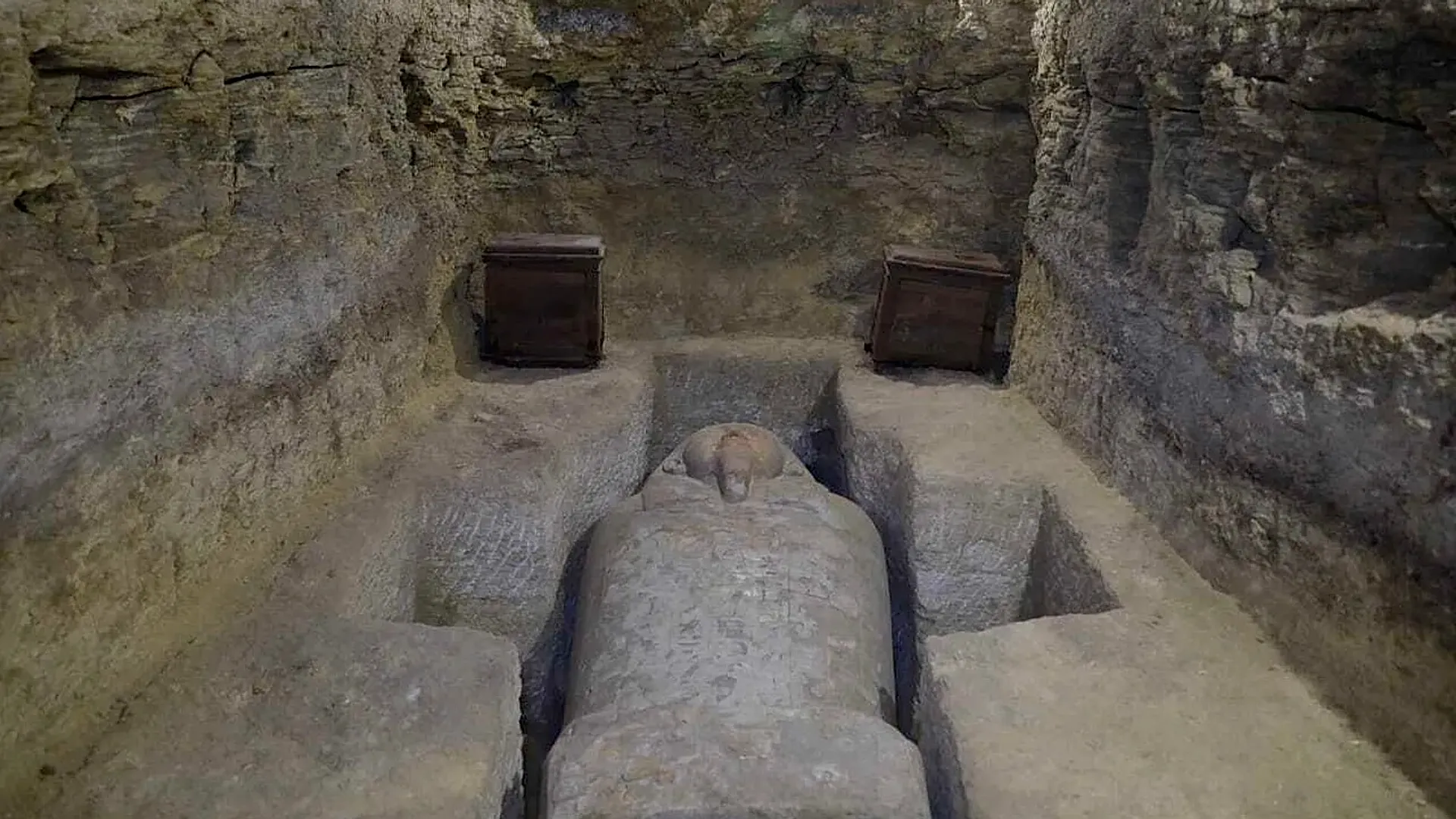
Ancient walls preserve faith, family and social identity.
Luxor | July 2026
Egyptian authorities have announced the discovery of a tomb approximately 3,000 years old near Luxor, offering new evidence about religious rituals, private burial traditions and social life during the pharaonic period. The monument was uncovered by a Dutch archaeological mission from Leiden University working in the Sheikh Abd el-Qurna necropolis on Luxor’s western bank. Researchers believe the tomb belonged to a man named Baser.
The discovery forms part of an archaeological project that has operated in the area since 2018. Excavations were conducted beside Theban Tomb 45, where the mission had already been carrying out documentation and field research. The newly identified structure expands understanding of a necropolis used by members of ancient Egyptian society beyond the royal family.
Specialists dated the tomb to the Ramesside period, corresponding broadly to Egypt’s Nineteenth and Twentieth Dynasties. Its age was established through the artistic style of the surviving inscriptions, decorative scenes and architectural characteristics. These elements connect the monument with the final centuries of the New Kingdom, one of ancient Egypt’s most influential historical eras.
The tomb follows a design commonly associated with private burials in ancient Thebes. An open courtyard leads toward a chapel carved into the rock and arranged in the form of an inverted letter T. Beneath the floor are funerary chambers where the deceased and possibly other individuals were placed.
Several architectural elements remained sufficiently preserved to help researchers reconstruct how the complex originally functioned. Archaeologists found a mud-brick mastaba in the courtyard that was designed to support a funerary stela. They also uncovered a staircase bordered by ramps leading toward the entrance.
These details reveal that private tombs were carefully organized spaces rather than simple containers for human remains. Their architecture guided relatives, priests and visitors through areas associated with remembrance, offerings and ritual communication with the dead. The visible chapel served the living, while the underground chambers protected the deceased.
The surviving inscriptions provide the strongest evidence concerning the tomb’s owner. Scenes bearing Baser’s name portray him performing offerings and religious rituals before several deities. Other images show him seated beside his wife in front of a table filled with offerings.
The representation of the couple is particularly significant because Egyptian funerary art often connected personal identity with family continuity. Appearing beside his wife allowed Baser to be remembered not only as an individual, but as part of a household and social structure. The images suggest that companionship, status and ritual participation remained important beyond death.
The offering table carried both symbolic and practical meaning within ancient Egyptian belief. Food, drink and ceremonial objects were represented so that the deceased could receive nourishment in the afterlife. Written prayers and visual scenes were intended to preserve those provisions even when physical offerings were no longer regularly presented.
Baser’s exact occupation and social position have not yet been determined. Researchers are continuing to examine the inscriptions, burial chambers and surrounding archaeological material for evidence about his identity. His ability to commission a decorated tomb, however, indicates that he possessed access to resources and to skilled artisans familiar with the religious conventions of the period.
The archaeological team is also attempting to identify the other people buried within the complex. Private tombs could be used across generations or contain individuals connected through family, employment or social position. Establishing the number and identity of those interred may reveal whether the site functioned as a personal monument or a broader family burial space.
Excavation will continue during the coming months, accompanied by documentation and conservation work. Archaeologists must record walls, objects and structural relationships before removing material because the original position of every element can provide important evidence. A fragment separated from its context may retain artistic value while losing much of its historical meaning.
The location of the tomb increases its importance. Luxor and its western bank contain one of the world’s largest concentrations of temples, royal burial grounds and private funerary monuments. The region includes archaeological landscapes shaped by centuries of construction, reuse, looting, excavation and environmental change.
Discoveries involving private individuals complement the better-known histories of pharaohs and royal dynasties. Monumental temples and royal tombs reveal how rulers presented power, but private burial sites show how officials, families and other members of society understood religion and personal legacy. Together, these different sources create a more complete picture of ancient Egypt.
The find also forms part of Egypt’s wider effort to strengthen cultural tourism through archaeological research. New discoveries attract international attention and reinforce Luxor’s status as a major destination for historical travel. They can also encourage investment in museums, conservation, research and the infrastructure surrounding heritage sites.
Tourism objectives, however, must remain compatible with scientific protection. Newly discovered monuments may be vulnerable to humidity, unstable rock, uncontrolled access and the deterioration caused by exposure. Preservation requires specialists to balance public interest with the long-term survival of paintings, inscriptions and architectural surfaces.
Egypt has announced several important archaeological developments in recent years. A monumental tomb belonging to Pharaoh Amenhotep III reopened after more than two decades of restoration, while excavations in northern Egypt uncovered material from Greek and Roman burial contexts. Such findings demonstrate that the country’s archaeological record extends across thousands of years and multiple cultural transformations.
The Baser tomb is important precisely because it does not depend on royal fame. Its walls preserve the life of a person whose name survived even though his complete biography disappeared. Through his image, his wife, his offerings and the structure created for his burial, archaeology can begin reconstructing a human story hidden for three millennia.
The discovery reminds the modern world that ancient Egypt was built not only by pharaohs whose names dominate history books. It was also inhabited by families who feared death, honored their gods and created spaces where memory could continue. Baser’s tomb has reopened that private world, allowing faith and identity to speak again through stone.
La memoria también gobierna el presente. / Memory also governs the present.