

 Phoenix 24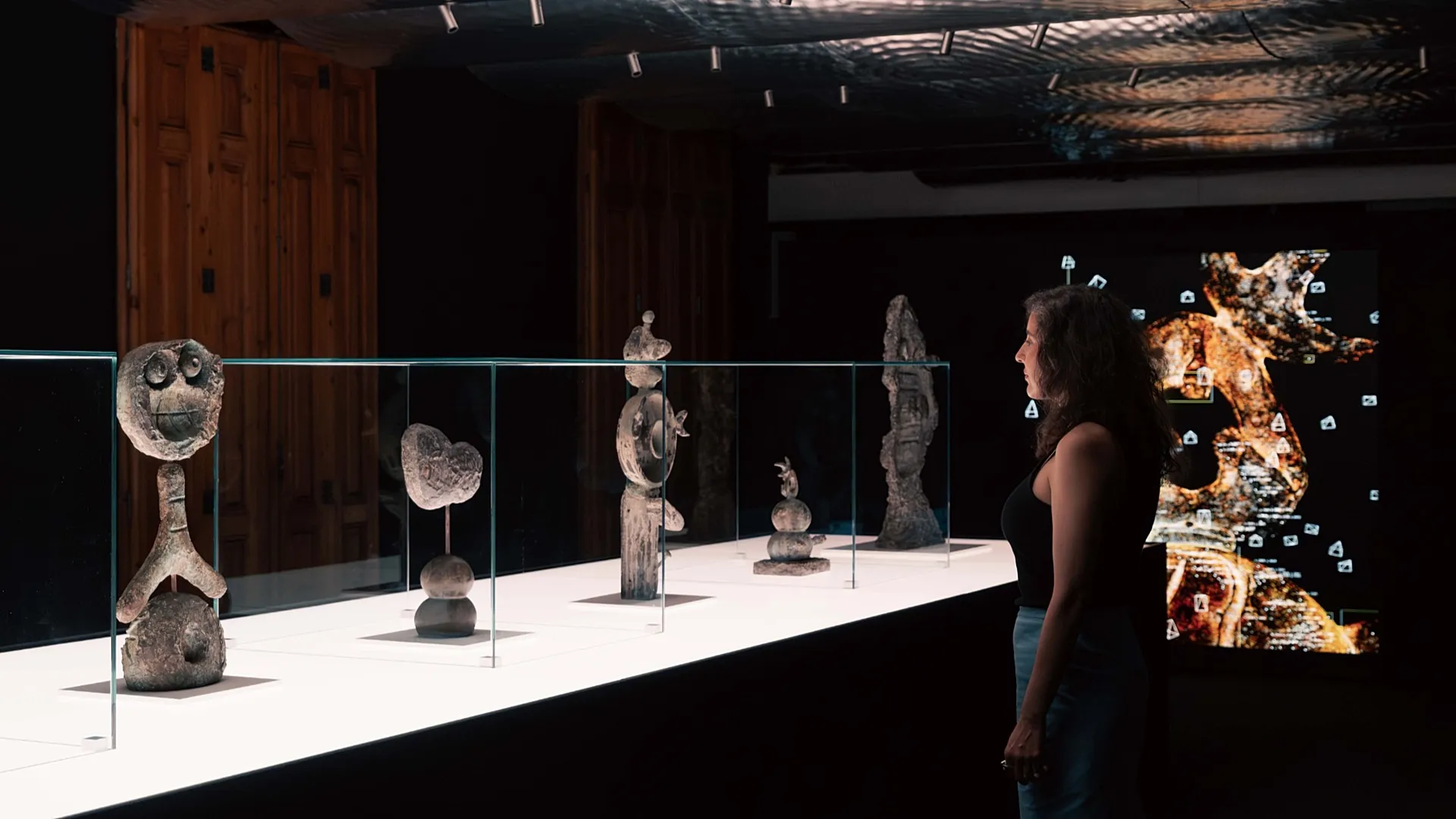
Hidden details emerge when heritage meets computational vision.
Barcelona | July 2026
Casa Batlló has opened an immersive exhibition combining historic artworks with artificial intelligence, high-resolution photogrammetry and three-dimensional scanning to reveal connections among Antoni Gaudí, Joan Miró and photographer Joaquim Gomis. Titled “Gaudí–Miró–Gomis: Deconstructed,” the project explores how architecture, sculpture and photography shaped the international understanding of Catalan modernism.
The exhibition occupies the recently restored third floor of Gaudí’s celebrated Barcelona building. It was developed with the Fundació Joan Miró and creative studio Tomorrow Bureau, which designed the digital installations, spatial environment and soundscapes. The result places physical objects beside technological reinterpretations intended to expose details that ordinary observation may overlook.
Gaudí and Miró are internationally recognized figures, but Gomis remains less familiar outside specialized cultural circles. The photographer documented Gaudí’s buildings when parts of Barcelona’s artistic establishment still regarded the architect’s work as eccentric rather than visionary. His images preserved textures, structures and ornamental details while helping later generations reinterpret Gaudí’s importance.
Gomis was also a close friend of Miró and became an essential witness to the artist’s creative environment. His photographs connected architecture, objects, personalities and cultural spaces at a moment when Catalan modernism was developing its international identity. Without his archive, the visual history surrounding Gaudí and Miró would be considerably less complete.
The new exhibition reimagines an earlier Fundació Joan Miró project that examined the dialogue among the three creators. Casa Batlló expands that concept through digital installations that allow visitors to approach the works from perspectives impossible within a conventional display. Technology does not replace the original objects, but creates another layer through which they can be studied.
Miró’s sculptures were scanned in high resolution for the first time. Digital models expose tool marks, material erosion and surface irregularities that may remain difficult to perceive when viewing the physical pieces from a fixed distance. Visitors can observe enlarged details, rotate virtual objects and examine forms without touching or endangering the originals.
This freedom is particularly valuable in heritage conservation. Museums must protect fragile works from excessive light, movement, physical contact and environmental change. A digital counterpart can be manipulated, enlarged or repositioned without placing the original object at risk.
Photogrammetry reconstructs three-dimensional forms from multiple photographs taken at different angles. Combined with advanced scanning, it can create detailed representations preserving surface, scale and spatial relationships. In the Casa Batlló exhibition, these methods transform Miró’s sculptures into explorable digital artifacts rather than static images.
Artificial intelligence is used differently with Gomis’s photographic archive. Historic images, many created during the 1940s, have been organized and reinterpreted through generative processes. The exhibition turns the collection into a living visual database capable of producing new associations while maintaining a connection to the original material.
A digital carousel also makes a larger portion of the archive accessible than could be presented through traditional physical displays. Wall space places strict limits on the number of photographs a museum can exhibit, while a digital system can organize extensive collections through themes, sequences and visual relationships. Visitors can therefore encounter material that remained unavailable even during the earlier exhibition.
The use of generative technology introduces an important curatorial responsibility. Artificial intelligence can expand access and stimulate new readings, but it can also alter images or create interpretations that appear historically authentic without being original documents. Clear distinctions between archival material and computational reconstruction are essential to preserving public trust.
The project avoids treating technology as a spectacle disconnected from artistic history. Its purpose is to investigate a shared creative language based on curiosity, experimentation and close observation of the natural world. Gaudí translated organic structures into architecture, while Miró drew inspiration from natural forms as he moved from painting toward sculpture and bronze.
Miró’s connection with Gaudí was explicit. He studied the architect’s organic vocabulary, created sculptures influenced by similar forms and produced a series of etchings titled “Gaudí.” Their work belonged to different disciplines and generations, but both rejected rigid convention in favor of imaginative systems grounded in craftsmanship and nature.
Gomis contributed another experimental language through photography. His compositions sometimes resembled collages or forms of visual calibration developed decades before digital editing became common. His camera did not merely record completed works; it selected fragments, textures and perspectives that changed how those works were understood.
The exhibition’s digital methodology reflects that same willingness to cross boundaries. Scanning, artificial intelligence and immersive sound are presented as contemporary extensions of an experimental tradition rather than as external additions imposed upon historic art. The technology becomes meaningful because it serves questions already present within the work.
Casa Batlló provides an unusually appropriate setting for this dialogue. The building itself demonstrates Gaudí’s rejection of straight lines, standardized surfaces and conventional domestic architecture. Its fluid forms, playful details and references to marine and organic structures create an environment in which physical space already operates as an artistic experience.
The exhibition also challenges assumptions about simplicity. Miró’s visual language can appear spontaneous or childlike, while Gaudí’s decorative forms may seem playful. Behind that apparent ease lies extensive experimentation with materials, proportion, symbolism and natural structure.
Digital enlargement helps expose that complexity. Tool marks reveal the physical labor involved in sculpture, while close examination of architectural and photographic details shows how carefully each visual decision was constructed. What appears effortless from a distance often becomes technically intricate under magnification.
The project illustrates a broader transformation occurring inside museums and heritage institutions. Digital tools are increasingly used not only to recreate lost environments, but also to examine surviving objects with greater precision. They can support conservation, accessibility, academic research and public interpretation when applied transparently.
Technology cannot reproduce the material presence of a sculpture, photograph or building. Texture, scale and physical atmosphere remain essential to experiencing art. The exhibition instead proposes an equilibrium in which digital artifacts make the originals more legible without claiming to replace them.
“Gaudí–Miró–Gomis: Deconstructed” will remain open at Casa Batlló until January 2027. Visitors may explore the artists’ biographies, examine Gomis’s archive or experience the installations as an immersive encounter connecting architecture, images, sound and movement.
Its most important contribution may be the recovery of Gomis as more than a supporting witness. His photographs helped establish the visual memory through which Gaudí’s architecture and Miró’s artistic world reached wider audiences. Technology now returns attention to the photographer whose own act of looking helped history recognize two celebrated visionaries.
La tecnología revela, pero la memoria interpreta. / Technology reveals, but memory interprets.