

 Phoenix 24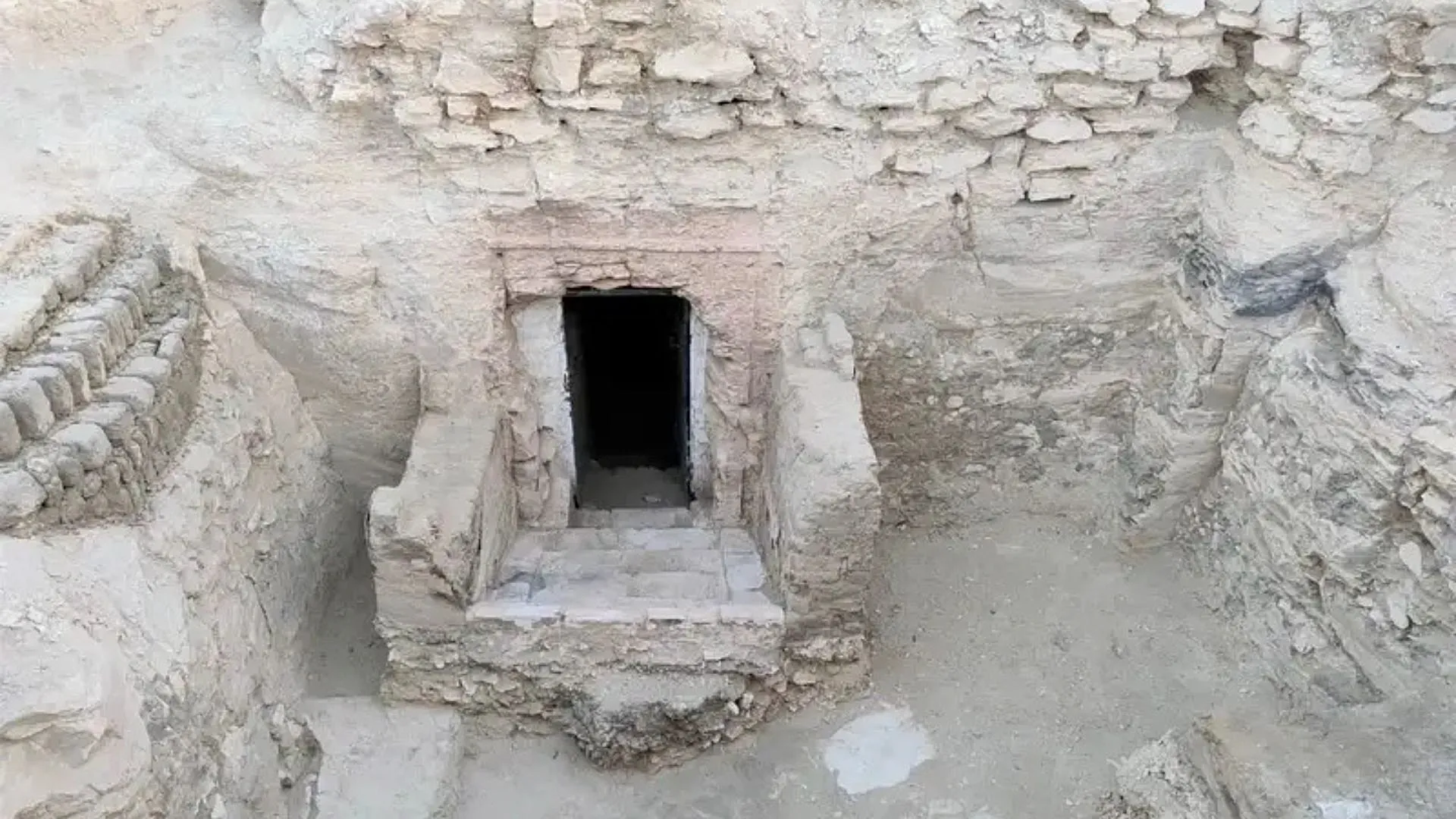
Ancient color preserves the authority of a forgotten official.
Luxor | July 2026
Archaeologists have uncovered a 3,000-year-old tomb containing remarkably preserved paintings and inscriptions near Luxor, one of Egypt’s most important archaeological regions. The burial complex was found in the Sheikh Abd el-Qurna necropolis on the western bank of the Nile. Preliminary evidence indicates that it belonged to Paser, a senior official who lived during the Ramesside period.
The discovery was made by a Dutch archaeological mission from Leiden University working in cooperation with Egyptian antiquities authorities. Researchers identified the tomb’s owner through surviving hieroglyphic inscriptions, despite extensive deterioration caused by time, environmental exposure and later human activity. Further excavation and documentation will be required to determine who else may have been buried within the complex.
Paser held titles connecting him to both civil government and religious administration. Inscriptions describe him as mayor of Thebes and overseer of the Temple of Amun, positions that would have placed him among the most influential officials of his time. His responsibilities likely involved managing public affairs while supervising institutions associated with one of ancient Egypt’s most powerful religious centers.
The tomb dates to the Ramesside period, approximately 1292 to 1069 BCE, covering Egypt’s 19th and 20th Dynasties. This era included rulers such as Ramesses II and was characterized by monumental construction, military campaigns and the continued importance of Thebes as a religious capital. Elite officials played a central role in sustaining the administrative systems supporting royal authority.
Unlike the royal tombs of the nearby Valley of the Kings, Paser’s burial place belonged to a member of the governing elite rather than a pharaoh. Such tombs reveal how political prestige, professional identity and religious belief extended beyond the royal family. They also preserve information about the administrators who transformed royal decisions into the daily operation of the Egyptian state.
The structure includes an open courtyard followed by interior rooms and underground burial chambers. This layout allowed the site to function as both a resting place and a ritual environment where relatives, priests and visitors could perform ceremonies for the deceased. The tomb was designed as an active sacred space rather than a sealed container intended only to protect a body.
Its surviving paintings are among the discovery’s most visually significant features. The decorated walls present funerary imagery associated with death, transformation and passage into the afterlife. Even after three millennia, portions of the original color remain visible, preserving evidence of the artistic techniques and symbolic language used by ancient Egyptian craftsmen.
For the Egyptians, images placed inside a tomb were not merely decorative. They participated in the spiritual survival of the deceased by representing offerings, divine protection and the continuation of life beyond death. Written formulas and visual scenes worked together to help the tomb’s owner navigate the dangers of the next world and obtain acceptance among the gods.
The concept of the afterlife depended on order, preparation and correct ritual performance. The deceased required food, protection and knowledge of sacred language, while the preservation of identity was connected to names, images and inscriptions. A tomb therefore operated as a carefully constructed system intended to secure existence beyond physical death.
Paser’s titles would have reinforced that expectation of permanence. By recording his public roles on the walls, the tomb preserved not only his name but also the status through which he wished to be remembered. Administrative authority became part of his eternal identity, connecting the professional world of Thebes with the sacred geography of the afterlife.
The discovery may also provide new evidence about the relationship between government and the Temple of Amun. During the Ramesside period, temple institutions controlled land, labor, workshops and substantial economic resources. An official overseeing such an organization would have occupied a position where religious authority, public administration and material wealth converged.
Archaeologists must now stabilize the vulnerable surfaces before extensive study can continue. Ancient pigments can deteriorate rapidly after changes in humidity, airflow or exposure to modern light. Conservation therefore requires balancing scientific access with the need to protect the very evidence researchers hope to understand.
Digital photography, three-dimensional scanning and pigment analysis may help document details that cannot be safely examined through repeated physical contact. These methods can reveal earlier painting phases, damaged inscriptions and changes made during the tomb’s use. They also create permanent records in case portions of the decoration continue to deteriorate.
The underground chambers may contain additional archaeological material, although no major funerary objects have yet been publicly confirmed. Pottery, fragments of coffins, human remains or ritual objects could clarify how many individuals were buried there and whether the tomb was reused during later periods. Reuse was common in the Theban necropolis, where valuable burial spaces remained important across generations.
Sheikh Abd el-Qurna contains one of the largest concentrations of private tombs in the Theban region. Its decorated chambers preserve the lives of scribes, governors, priests, military officers and administrators whose work supported the Egyptian monarchy. Each new investigation expands historical knowledge beyond the familiar stories of kings and queens.
Luxor, known in antiquity as Thebes, continues to produce discoveries because large portions of its archaeological landscape remain incompletely documented. The area includes Karnak, Luxor Temple, the Valley of the Kings and extensive cemeteries built across the western desert. Beneath and between those monuments are thousands of years of construction, burial and ritual activity.
The discovery also strengthens Egypt’s efforts to preserve and present its cultural heritage. Archaeology contributes to scientific research while supporting tourism, education and international cultural cooperation. Yet public interest must be managed carefully because increased attention can create pressure on fragile sites before conservation work is complete.
Paser’s tomb is significant precisely because it restores individuality to a person separated from the modern world by three millennia. He was not a legendary pharaoh, but an official whose authority once shaped one of ancient Egypt’s greatest cities. His name, titles and painted vision of eternity survived after the institutions he served had disappeared.
The vivid scenes near Luxor demonstrate that archaeology does more than recover objects from the ground. It reconstructs how people understood power, death and the possibility of continued existence. Paser prepared his tomb to preserve his identity forever, and after 3,000 years, its walls have begun speaking again.