

 Phoenix 24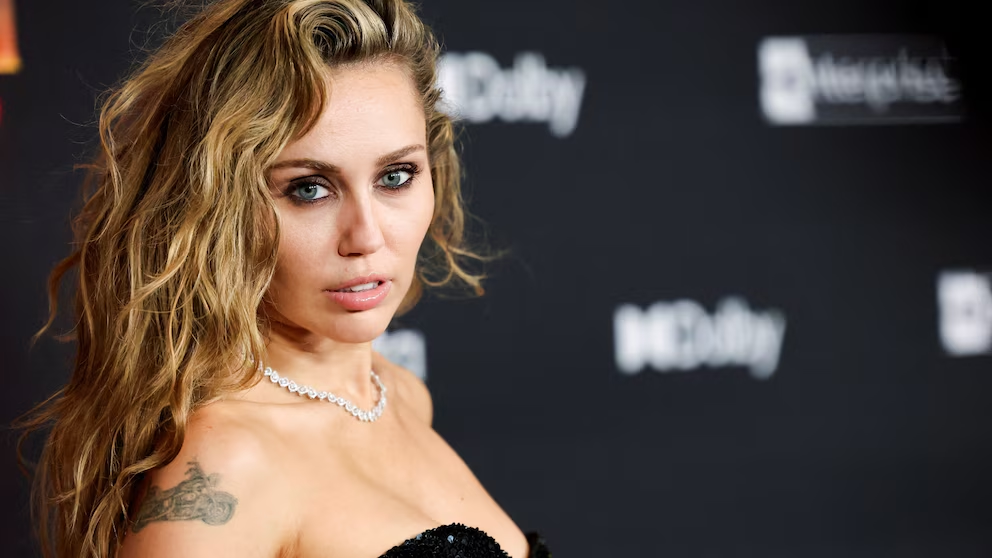
When extraordinary personal narratives surface in public view, they blend identity, belief and controversy into a story that challenges verification and perception.
Los Angeles, December 2025
A controversial personal claim has emerged online involving Jayme Lee, a woman who asserts that she is the biological mother of globally known entertainer Miley Cyrus, a figure whose career spans pop music, television and cultural influence over more than a decade. The assertion, disseminated through social media channels and gaining traction among certain online communities, has drawn attention not only for its sensational nature, but for the broader questions it raises about personal identity, familial history and the intersection of celebrity and internet culture. Amid the rapid circulation of unverified narratives, legal and public response mechanisms have been activated to address both the substance of the claim and its potential impact on the individuals involved.
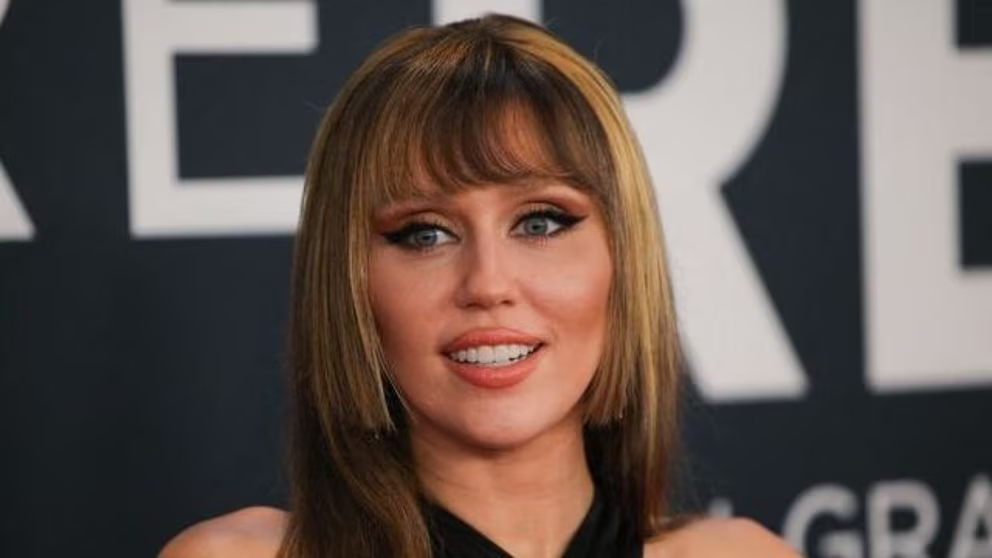
Jayme Lee’s statement, which surfaced with accompanying personal testimony, alleges a maternal connection based on events she describes as suppressed or obscured during Cyrus’s early life. Lee’s account includes recollections and interpretations of interactions and timelines that she believes support her claim. These narratives are presented alongside fragments of purported personal documentation, photographs and anecdotal references to shared events. However, independent verification of these elements — through established legal documentation, DNA testing or corroboration from neutral third parties — has not been substantiated in any credible public forum to date.
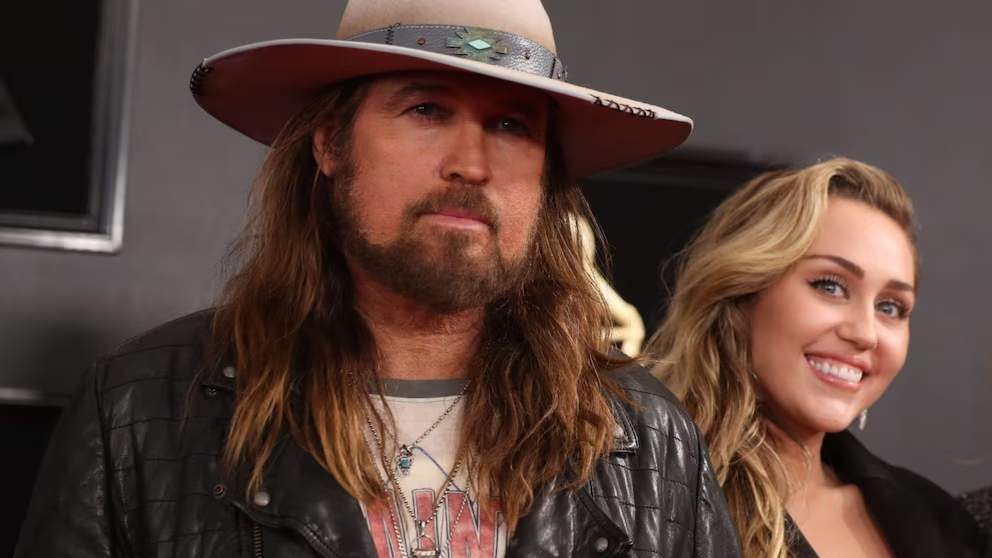
In response to the circulation of this claim, representatives for Miley Cyrus have categorically denied any familial or biological connection to Lee. Official statements emphasise that the performer’s parentage and upbringing are well-documented and have been part of public understanding throughout her career. Interviews, biographical accounts and legal records associated with Cyrus’s family structure, including her mother and father and their respective roles in her life, have been consistent in identifying her lineage. In that context, the denial from Cyrus’s camp frames the claim as unsubstantiated and not grounded in evidence verifiable through recognized legal or scientific channels.
Observers in celebrity culture and media ethics highlight that the proliferation of personal claims such as Lee’s reflects broader patterns in which narratives about public figures can gain momentum regardless of evidentiary support. Digital platforms that allow direct publication of testimony or personal narratives can amplify voices that might otherwise remain private, creating a space where unverified assertions are rapidly disseminated and debated. While some audiences engage with these stories out of curiosity or as cultural spectacle, others point to the need for critical scrutiny, especially when claims intersect with individual privacy rights and reputational interests.
Beyond the specifics of the claim, the situation underscores the tension between digital virality and factual accountability. In an era where sensational stories can spread through networks before basic verification occurs, the mechanisms for correction — including public statements by the individuals involved, legal repudiation, and investigative reporting by established media outlets — become central to shaping public understanding. In the case of Lee’s assertion, the swift response from Cyrus’s representatives and the absence of independent corroboration serve to contextualise the claim as part of an ongoing dynamic between personal narrative and public scrutiny.
Legal experts note that claims asserting biological relationships have implications that extend beyond public opinion, potentially engaging family law statutes, defamation considerations and privacy protections. In jurisdictions where paternity or maternity assertions are contested, courts typically require clear evidentiary standards such as genetic testing administered through accredited institutions. Without such verification, allegations remain within the realm of personal testimony rather than enforceable legal fact. The distinction matters not only for the individuals at the centre of such stories, but also for audiences who interpret them through cultural frameworks in which celebrity identity and personal history are closely scrutinised.
Sociologists and scholars of popular culture further observe that the public’s fascination with celebrity lineage reflects deeper questions about identity, belonging and narrative construction. Stories about origins, parentage and hidden histories resonate because they touch on foundational aspects of human experience — who we are, where we come from, and what shapes our lives. In the context of a well-known figure like Miley Cyrus, whose own career has involved public exploration of identity, genre and personal evolution, additional claims about origin stories can ignite discussion about the nature of authenticity in public life.
As the story continues to be referenced in online conversations, its traction highlights persistent challenges in distinguishing between verified biography and emergent narrative. The role of platforms in moderating unverified claims, the responsibility of audiences to evaluate sources critically, and the capacity of individuals to assert personal testimony into public discourse all intersect in ways that shape the reception of such claims. In the absence of conclusive evidence, the assertion by Jayme Lee remains a contested narrative that contrasts sharply with documented accounts of Miley Cyrus’s family history.
Phoenix24. Lo visible y lo oculto, en contexto. / Phoenix24. The visible and the hidden, in context.