

 Phoenix 24
Distance stopped functioning as a shield.
Galle, March 2026
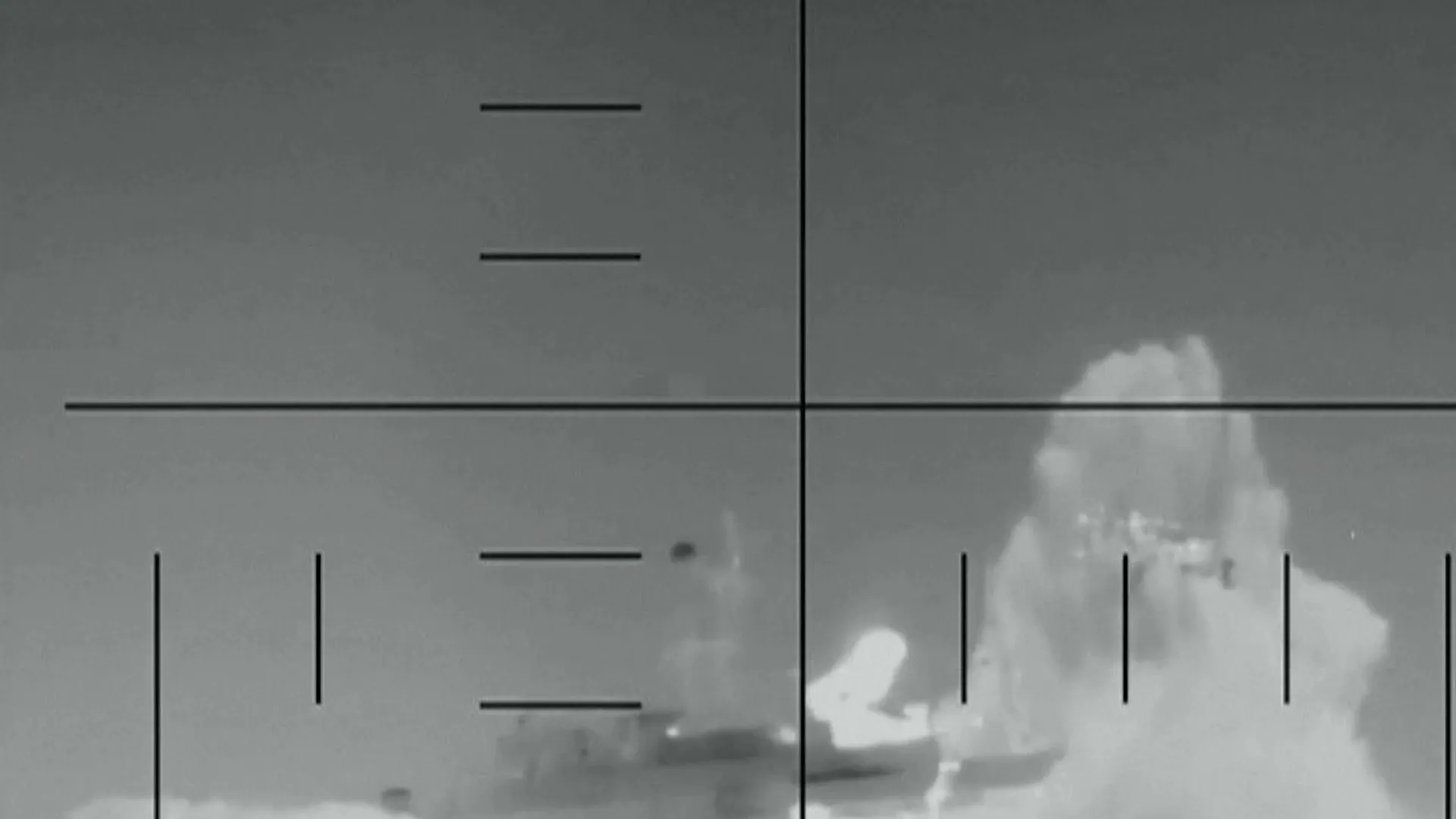
The reported sinking of an Iranian warship by a United States submarine in the Indian Ocean is not only a dramatic naval episode. It is a geographic escalation with strategic consequences, because it extends the conflict’s operational footprint far beyond the Gulf and into maritime space often treated as secondary to missile exchanges and air campaigns. Reports indicate the vessel was the IRIS Dena and that the strike occurred in international waters off Sri Lanka, with U.S. officials publicly acknowledging a torpedo attack and Sri Lankan authorities drawn into rescue operations after a distress signal. That combination of military symbolism and third country involvement turns the event into more than a battlefield update. It becomes a systems level warning about how quickly war can migrate across maps that markets and governments still describe as peripheral.
What changed here is the perceived perimeter of the conflict. Public attention had been concentrated on missile and drone strikes, air defense saturation, and the infrastructure war linking Iran, Israel, and the Gulf corridor. A submarine launched torpedo strike near Sri Lanka signals something different: the maritime dimension is no longer confined to expected chokepoints. Once a conflict demonstrates undersea reach in the wider Indian Ocean, shipping routes, naval planners, and regional governments begin recalculating exposure across a broader arc. The issue is not only what was hit, but where it was hit, and how far from the familiar escalation script it occurred.
The operational symbolism is unusually strong. A torpedo attack carries a different psychological weight than an airstrike because it highlights stealth, tracking, and undersea dominance rather than visible bombardment. It tells regional actors that the United States is willing to project force through submerged platforms under active escalation conditions and across extended sea lines. That matters beyond the tactical result. It alters expectations about how deterrence may be enforced in coming days, especially for military and dual use vessels moving through international waters under the assumption that distance from the Gulf lowers immediate risk.
Sri Lanka’s role in the aftermath reveals the deeper pattern. Even without being a combatant, it was pulled into the incident through search and rescue responsibilities, survivor treatment, body recovery, and the political management that follows any high profile military event near its coast. This is how regional wars begin to impose costs on nonbelligerent states. They do not need to be attacked directly to become operationally involved. Proximity alone can force them into humanitarian response, diplomatic signaling, and domestic security management, especially when casualties are high and international media attention converges rapidly.
There is also a commercial layer that may move faster than official doctrine. Once naval combat and rescue activity appear in the Indian Ocean narrative, insurers, shipping operators, and commodity traders start reassessing route risk over a wider geography. Markets react not only to interdictions or formal closures, but to demonstrated range and uncertainty. A single strike can trigger revised assumptions about escort needs, transit timing, and exposure to follow on incidents. In modern conflict systems, perceived reach can reshape commercial behavior before governments issue any formal maritime advisories of consequence.
An additional source of instability is the still incomplete public picture of the ship’s mission profile at the moment of the attack. If the vessel was transiting after multinational naval engagement activity, the strike will be read differently than if it was assessed as part of an active Iranian military posture tied to the current war. That uncertainty gives room for competing narratives, including deterrence signaling, punitive action, and sea control demonstration. In high velocity conflicts, these interpretive gaps matter because political audiences and adversaries often react to inferred strategic meaning before forensic clarity is available.
For Washington, the strike appears to function on two levels at once. Tactically, it removes a naval asset and demonstrates credible undersea lethality. Strategically, it communicates that escalation management will not remain bounded by the most expected theaters. If the message is cumulative pressure across domains, then this event is not a standalone maritime headline. It is part of a broader campaign logic in which air, sea, and potentially inland operations are narrated as a connected framework of degradation. That kind of signaling is designed not only to affect Iranian calculations, but also to shape allied confidence and adversary uncertainty.
For Tehran and regional observers, the more uncomfortable lesson is that maritime vulnerability is now visible at longer range and in less predictable locations. A conflict once read primarily through missile exchanges and air defense layers now includes distant naval exposure during transit in international waters. This does not automatically create a permanent Indian Ocean war theater, but it does move the threshold. Once a precedent like this is established, future ship movements, port calls, and naval exercises will be interpreted through a harsher strategic lens, and diplomatic deniability becomes harder to sustain.
The deeper pattern is structural rather than episodic. The conflict is expanding not only in intensity, but in geometry, drawing neutral and noncombat spaces into its operational shadow through rescue chains, market anxiety, and signaling spillover. That kind of shift changes state behavior even where no formal combat has begun, because it alters assumptions about distance, exposure, and maritime normalcy. In that sense, the torpedo strike matters less as an isolated naval event and more as a marker that the war’s map now extends wherever undersea reach and strategic messaging can intersect.
Phoenix24: claridad en la zona gris. / Phoenix24: clarity in the grey zone.