

 Phoenix 24
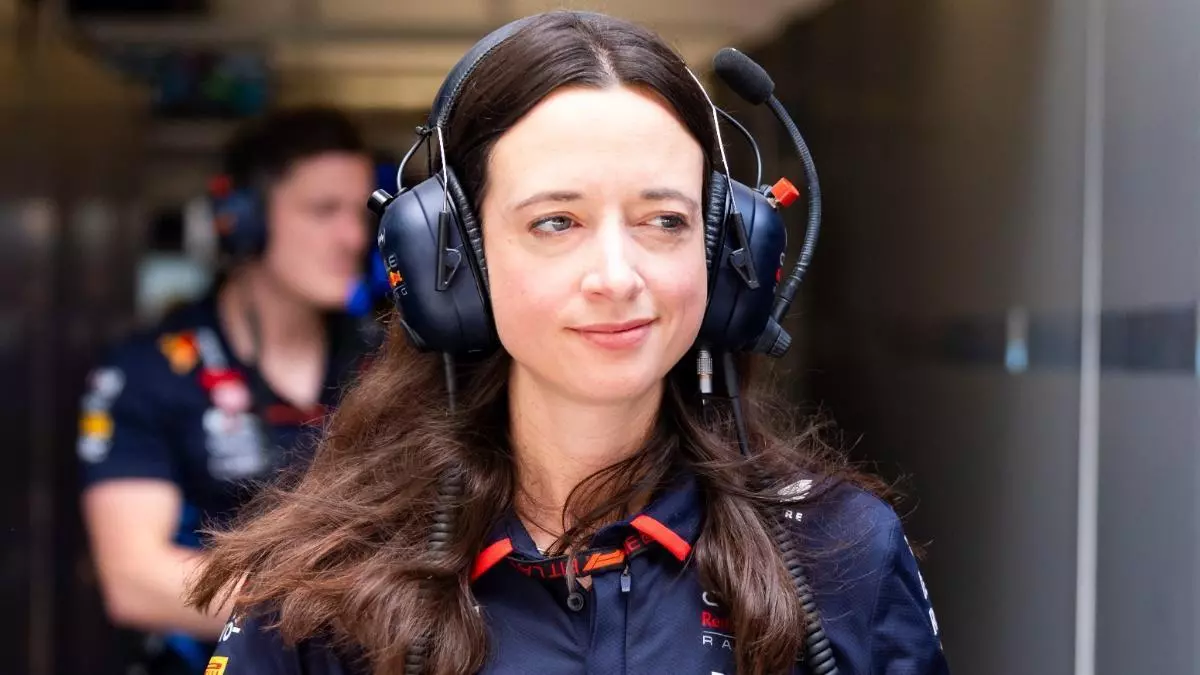
Race pace is measured long before lights out.
Milton Keynes, March 2026
The growing attention around the woman behind Red Bull’s strategy room is not only a human interest angle inside Formula 1. It reflects a deeper shift in how the sport is beginning to explain power to its audience. For years, fans were encouraged to focus on drivers, lap times and pit stops as if race outcomes emerged mostly from reflexes and machinery. What recent coverage and official recognition around Hannah Schmitz make harder to ignore is that modern F1 is also won in the realm of probabilistic decision-making, simulation logic and split-second strategic judgment under uncertainty.
That matters because strategy in Formula 1 is no longer a back-office function with occasional influence. It is now a core competitive weapon that can reorganize an entire race once safety cars, tire degradation, track position and rival behavior begin to interact. Red Bull’s own team materials highlight Schmitz’s long tenure and central role in race operations, while Formula 1 has recently elevated her visibility further through symbolic recognition tied to International Women’s Day. The significance is not merely representational, although that is part of it. The bigger story is that F1 itself is increasingly acknowledging that technical cognition, not only mechanical speed, is one of the sport’s decisive theaters.
This visibility comes at a strategic moment for the championship. Formula 1 has become a global media product with a broader audience, including more viewers interested in how decisions are made rather than only who crosses the line first. In that context, figures like Schmitz help translate the sport’s hidden architecture into something legible: the race as a living optimization problem. Every strategy call balances incomplete information, shifting weather, tire windows, traffic risk and the likelihood that rivals will react differently than expected. The public often sees the outcome in a few seconds on screen. The actual work is a layered process of preparation, simulation and real-time recalibration.
There is also a structural reason this story resonates beyond Red Bull. F1 teams increasingly operate as data-intensive organizations where competitive advantage comes from the integration of engineering, software, logistics and decision systems. A strategist sits at the intersection of those layers. That role is not simply to choose a pit stop lap. It is to convert streams of telemetry, scenario models and race context into an actionable call while the cost of hesitation rises every second. In other words, strategy leadership in F1 resembles high-pressure command work more than the old stereotype of “team tactics” from the pit wall.
The focus on Schmitz also intersects with a wider change in motorsport culture. For decades, women in Formula 1 were more visible in communications narratives than in the public imagination of technical authority. That imbalance has been slowly shifting, and recent coverage around strategists, engineers and race-side leadership reflects a sport that can no longer credibly frame technical excellence as a male-coded domain. The importance of this shift is practical, not just symbolic. When F1 normalizes women in visible command and technical decision roles, it expands the pipeline of who can imagine themselves in those jobs, from engineering students to younger fans following the sport’s talent ecosystem.
Still, visibility cuts both ways. Public recognition in elite sport often creates simplified narratives, especially when media coverage tries to personalize what is actually a team-based systems process. No strategist wins alone, and no single decision can be detached from the institutional machinery behind it, including simulation teams, race engineers, analysts and operational staff. Yet simplification does not erase significance. If anything, it reveals how star-driven sports are slowly learning to narrate intelligence as part of performance, even when they still struggle to explain the collective nature of technical work.
From a Phoenix24 perspective, the more important pattern is this: Formula 1 is becoming a showcase not only of speed and engineering, but of decision architecture under pressure. The spotlight on a strategist such as Schmitz marks a cultural update in how authority is perceived in the sport. The driver remains the visible executor, but the strategic command layer is now part of the mainstream storyline. That shift matters because it aligns F1 with a broader reality across industries, where elite outcomes increasingly depend on people who can interpret complex systems faster and more accurately than competitors.
What appears on television as a dramatic undercut or a perfectly timed stop is often the final expression of a hidden cognitive chain. The renewed attention on the minds behind those calls, including women in top technical roles, does more than diversify the narrative. It improves it. It makes Formula 1 look more like what it really is: a competition of machines, humans and decisions, all operating at the edge of timing.
Phoenix24: periodismo sin fronteras. / Phoenix24: journalism without borders.