

 Phoenix 24
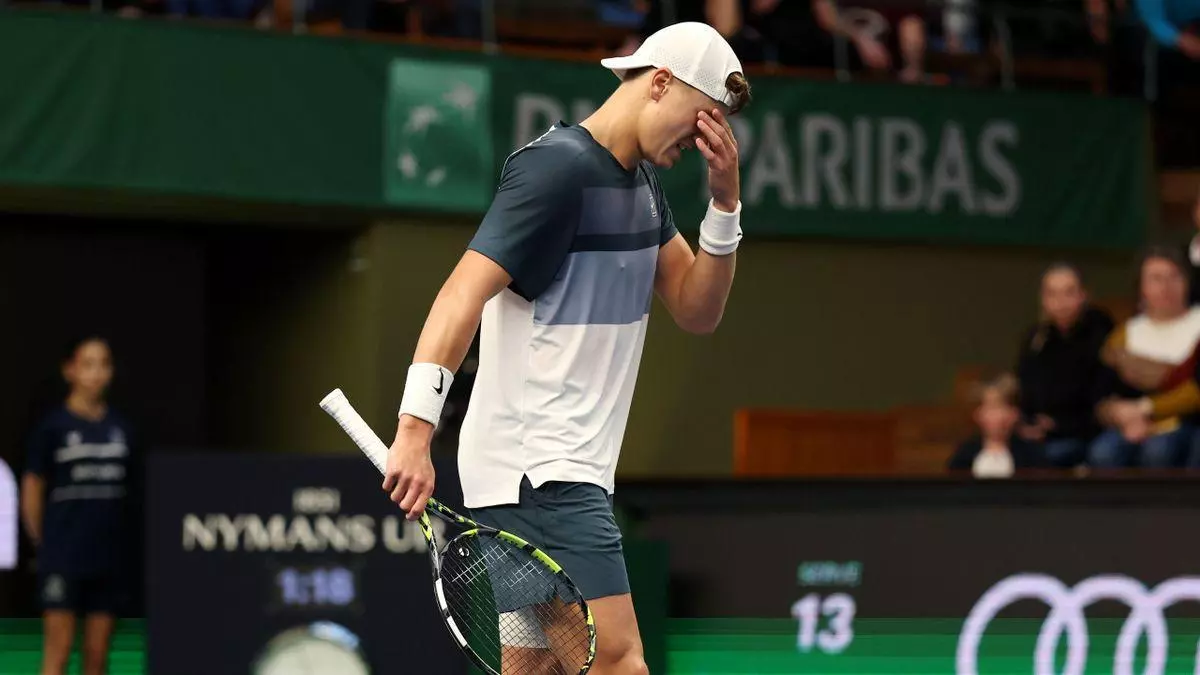
Training stops being routine when airspace becomes a battlefield.
Doha, March 2026
Holger Rune’s message from Doha confirming that he and his team were safe did more than reassure tennis fans. It exposed how quickly elite sport can be absorbed by a regional security crisis, even when the athlete is not competing, not traveling and not officially part of a tournament operation that day. The image of a top player in rehabilitation watching missile interceptions over a Gulf capital compresses two worlds that are usually narrated separately: high performance sport and hard geopolitical risk. What happened around Rune is not only a personal episode of uncertainty. It is a reminder that the global tennis circuit depends on routes, hubs and host cities that can shift from normality to emergency in a matter of hours.
The immediate facts are straightforward, but their implications are not. Rune reportedly shared video from Doha while missile interceptions were visible over the city, later indicating that everyone with him was safe. That public reassurance became part of a much larger information flow shaped by airspace closures, flight disruptions and rapidly escalating tensions across the Gulf. In practical terms, his post functioned as both a personal update and an accidental field report from within a strategic corridor under stress. When athletes begin communicating safety status instead of training status, the story has already moved beyond sport.
What makes this episode structurally important is the setting. Doha is not a peripheral stop in global tennis logistics. It is a recurring high-level venue with strong training infrastructure, international connectivity and a reputation for hosting elite players across ATP and WTA calendars. That is precisely why the shock carries weight. A city built to project reliability, efficiency and premium event capacity suddenly appeared in global sports feeds through the language of interceptions, sirens and uncertainty. The disruption is symbolic because it touches a node the circuit treats as stable.
Rune’s situation also highlights a less visible reality of modern tennis: many players are not simply moving from tournament to tournament. They live in mobile performance ecosystems that include rehab plans, private training blocks, physios, sparring partners and carefully timed returns to competition. When a regional crisis hits, the risk is not limited to one match being postponed. It can interrupt recovery timelines, medical routines, travel windows and scheduling logic for an entire comeback process. In that sense, the Doha episode is not just a dramatic anecdote. It is a disruption to a performance architecture built on predictability.
There is a broader pattern here that extends well beyond one player. Recent reporting across the sports world has shown athletes, coaches and support staff in multiple disciplines facing uncertainty in Gulf transit hubs as airspace restrictions and closures ripple through the region. For tennis in particular, this matters because the calendar is global, dense and unforgiving, and because ranking pressure often forces narrow planning margins. Even when a player is physically safe, logistical instability can still produce competitive costs through delayed departures, lost preparation time and forced adjustments to tournament commitments. Safety and continuity are related, but they are not the same thing.
The public reaction to Rune’s message reveals another important layer. Fans read the post first as a human reassurance, which is natural and appropriate, but the industry should read it as an operational warning. Tennis has spent years globalizing its footprint, expanding commercial reach and deepening dependence on premium host locations across multiple regions. That strategy brings visibility and revenue, but it also concentrates exposure to geopolitical shocks that have little to do with the sport itself. The more international the circuit becomes, the more likely it is that player welfare, scheduling and competitive fairness will be affected by crises unfolding far outside the lines of the court.
There is also a media dimension worth noting. In another era, an athlete caught in a geopolitical disruption would have been described later through official statements or tournament briefings. Now the athlete becomes an immediate broadcaster of the moment, shaping perception in real time through short videos and social media updates. That changes the rhythm of crisis communication around sport. Institutions no longer control the first narrative. Players do, sometimes unintentionally, and often while still processing the situation themselves. Rune’s message was reassuring, but it also instantly made visible how close the circuit sits to strategic volatility.
None of this means the tennis world should overstate the event or collapse every regional crisis into sports drama. It does mean the old assumption of separation is harder to sustain. When a recovering top player in Doha is posting from beneath active interceptions, the issue is no longer whether geopolitics affects sport in theory. It is whether global sport has built enough resilience for a world in which security shocks can interrupt training weeks, freight routes and return-to-play plans with almost no warning. That is a governance question as much as a scheduling one.
Rune’s post will likely be remembered publicly as a brief moment of relief, and in human terms that is fair. But beneath that relief sits a harder lesson for tennis. The circuit’s real vulnerability is not only injury, form or rankings pressure. It is the invisible dependence on stable corridors, stable hubs and stable assumptions in an increasingly unstable strategic environment. When those assumptions crack, even a quiet rehab session can become a geopolitical headline.
Phoenix24: claridad en la zona gris. / Phoenix24: clarity in the grey zone.