

 Phoenix 24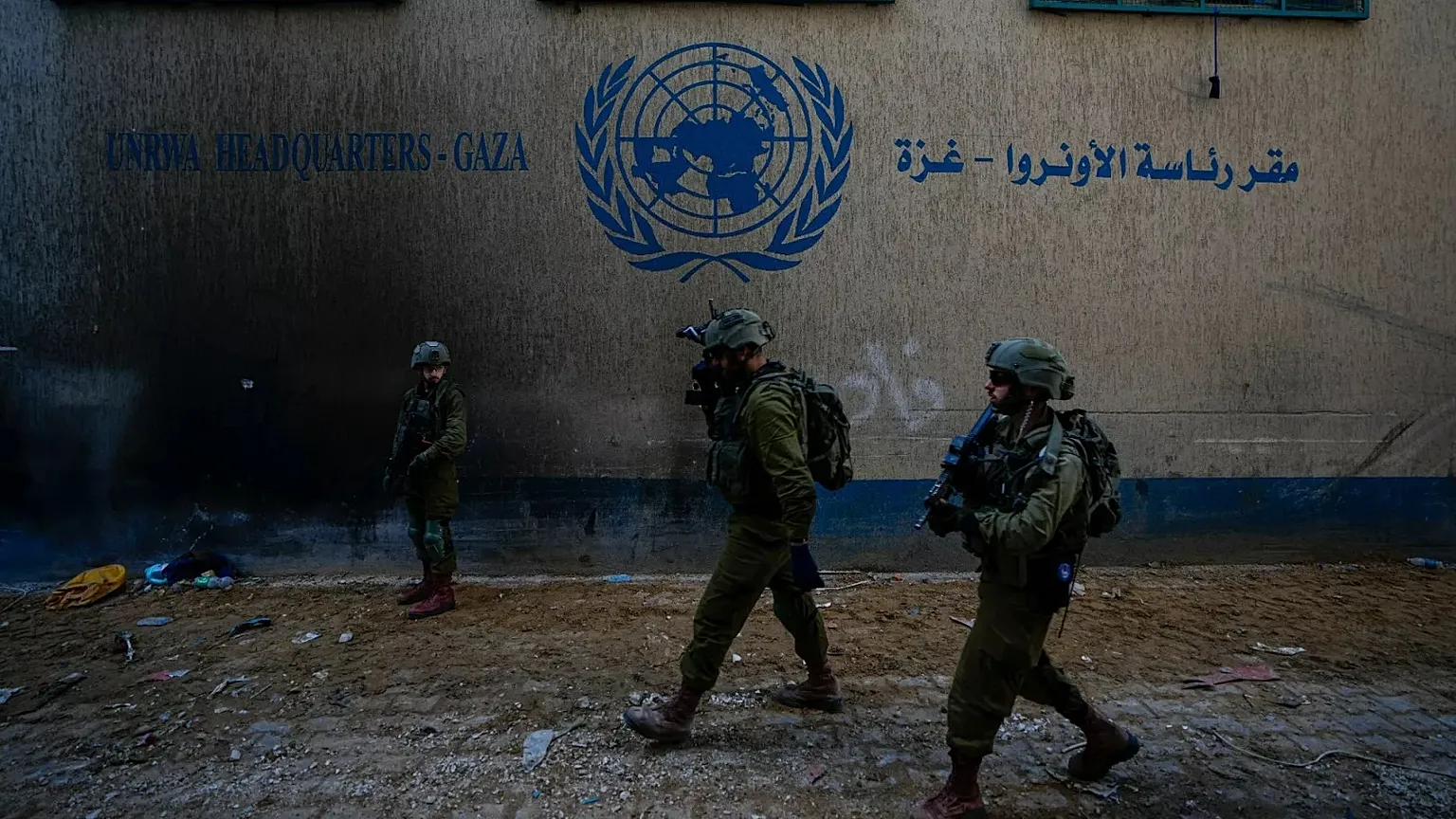
When law tries to pierce the walls of war, justice itself becomes part of the battlefield.
The Hague, October 2025.
In a ruling that reverberated through diplomatic corridors from Geneva to Washington, the International Court of Justice ordered Israel to immediately allow the entry of humanitarian aid from the United Nations Relief and Works Agency for Palestine Refugees, UNRWA, into the Gaza Strip. The decision, delivered by Judge Yuji Iwasawa, redefines the fragile boundary between national sovereignty and international humanitarian law. It declares that Israel must “facilitate, not obstruct” UN operations providing food, medical assistance, and reconstruction materials to more than two million civilians trapped in an enclave devastated by months of siege.
The ruling arrives amid a precarious cease-fire mediated by the United States and Qatar, and after nine months of near-total closure that the UN says pushed Gaza to the brink of famine. Satellite imagery released by humanitarian observers shows entire districts leveled, hospitals barely functional, and hundreds of thousands displaced toward the southern corridor of Rafah. According to the UN Office for the Coordination of Humanitarian Affairs, less than fifteen percent of planned relief convoys entered the territory in the past quarter.
Israel immediately rejected the court’s authority, calling it “politically biased” and accusing UNRWA of infiltration by Hamas operatives. Government spokesperson Eyal Sarfati stated that “Israel will not cooperate with any organization that endangers its citizens,” arguing that the agency’s facilities had been used for militant purposes. Yet the ICJ’s order is binding under Article 94 of the UN Charter, and non-compliance could escalate Israel’s isolation within the international legal system.
In Geneva, UN Secretary-General António Guterres welcomed the judgment as “a reaffirmation of the humanitarian imperative.” European Union diplomats described the verdict as a turning point that “restores minimum accountability to an unbearable situation.” From Washington, the U.S. State Department issued a cautiously worded statement urging “practical implementation that ensures both humanitarian access and Israeli security.” The measured tone reveals the tension between alliance politics and the mounting global pressure to end the blockade.
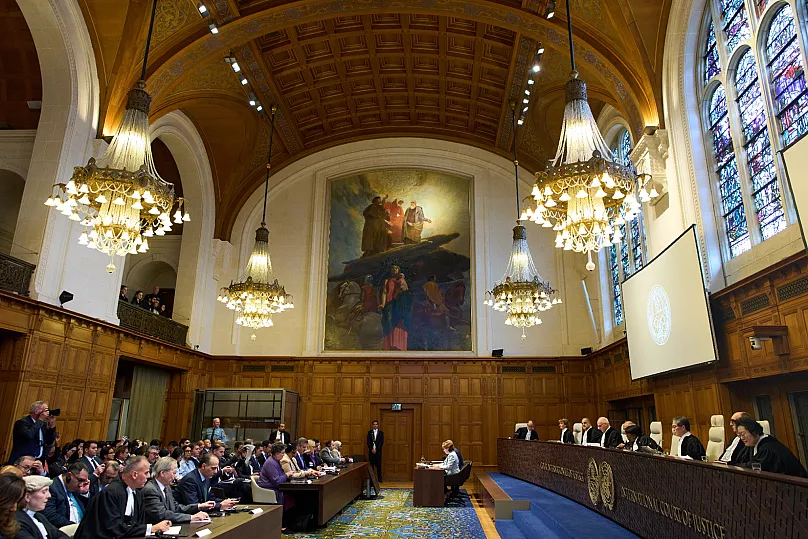
In parallel, Arab League representatives called the decision “a test for the credibility of the international order.” Egypt and Jordan, both central to the cease-fire framework, offered logistical cooperation for aid convoys through the Kerem Shalom and Rafah crossings. In Doha, Qatari mediators noted that “the humanitarian dimension can no longer be separated from the political one.” For its part, the UNRWA announced it was ready to resume full operations within seventy-two hours if granted safe passage.
Behind the legal language lies a deeper moral dilemma. The ICJ cannot enforce its own verdicts without the political will of member states. Yet every ruling it issues adds a layer of symbolic pressure that shapes the global narrative on legitimacy and impunity. For Israel, already facing investigations before the International Criminal Court regarding civilian casualties, this order compounds reputational risk and exposes the fracture between its security doctrine and humanitarian obligations. For Palestinians, it represents perhaps the first institutional acknowledgment of their collective suffering since the current escalation began.
Analysts at the London School of Economics described the decision as “a rare assertion of multilateral ethics in an era of fragmented diplomacy.” At the same time, defense observers at Stratfor warned that humanitarian access without parallel security guarantees could strain the already fragile cease-fire architecture. The ruling thus sits at the intersection of law, logistics, and geopolitics — a reminder that in conflicts of asymmetry, even humanitarian corridors become strategic terrain.
From a psychological perspective, the verdict also signals a shift in the global perception of the Gaza conflict. Public fatigue with abstract statistics is giving way to moral urgency. Images of malnourished children and hospitals running on candlelight have re-humanized what had turned into a geopolitical abstraction. In major Western capitals, civil society organizations are demanding measurable outcomes rather than diplomatic statements. This growing empathy pressure functions as an informal check on state behavior, complementing the legal one issued by the ICJ.
Still, history offers a sobering lesson. Similar humanitarian orders — Bosnia 1993, Myanmar 2020 — were met with partial compliance or prolonged defiance. What determines their impact is not the text of the law but the alignment of political incentives. Should Israel ignore the ruling, it risks deepening its diplomatic isolation and amplifying debates within the United Nations about sanctions or aid conditionality. Should it comply, even minimally, it may regain limited legitimacy in the eyes of states seeking to preserve the remnants of a two-state framework.
For now, the humanitarian trucks remain idle at the Egyptian border, their engines off but their symbolism alive. The Hague has spoken, yet its voice must still cross checkpoints guarded by soldiers who measure justice in liters of fuel and boxes of rice. Between the letter of international law and the reality of a besieged city, the world watches once again how slow justice moves when the gates of Gaza remain closed.
Phoenix24: clarity in the grey zone. / Phoenix24: claridad en la zona gris.