

 Phoenix 24
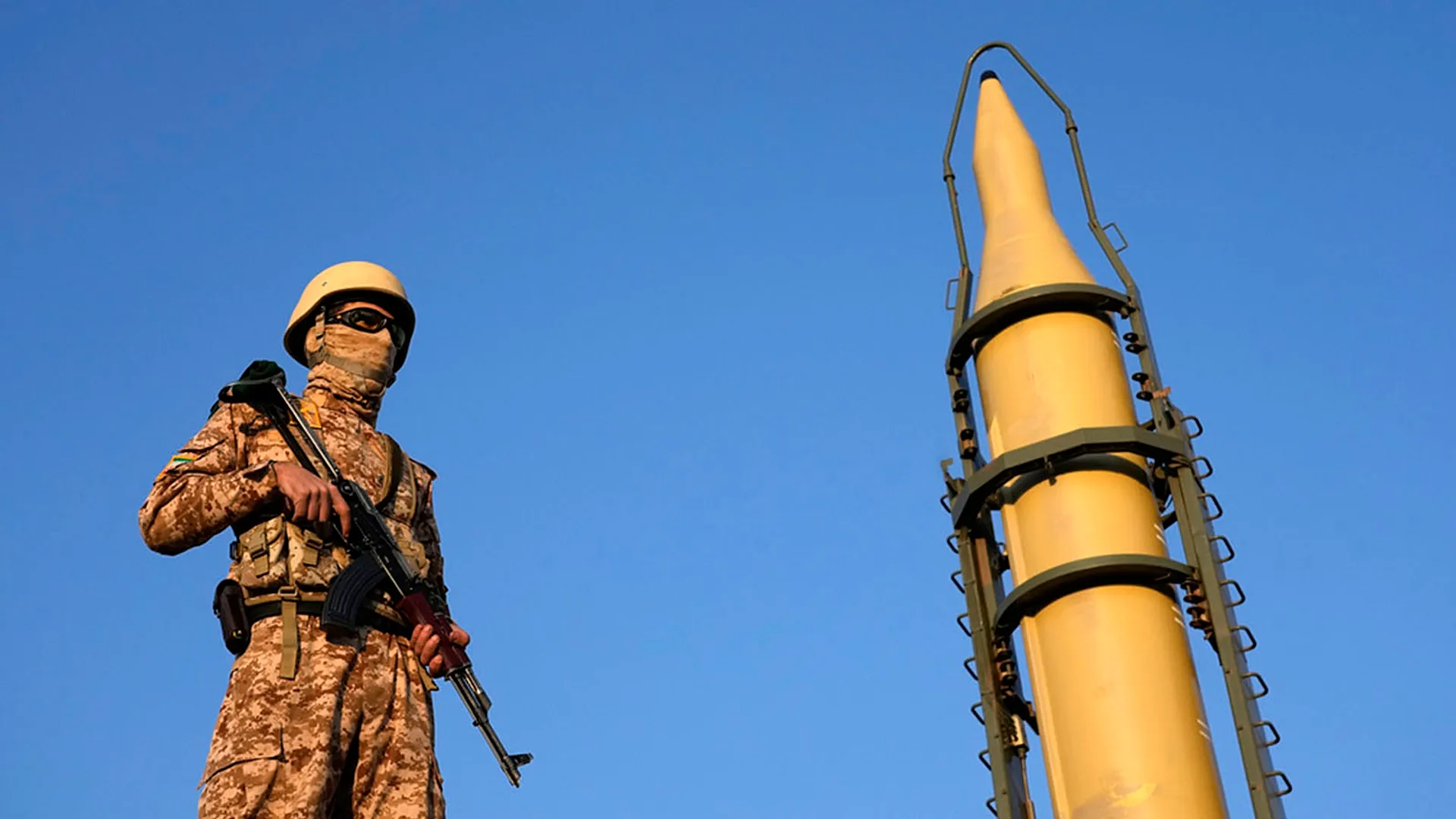
Warnings escalate fastest when entry lines to war remain ambiguous.
Brussels, March 2026
Tehran’s warning that it could attack European countries if they join the war against Iran is more than a retaliatory soundbite. It is a deliberate attempt to shape European decision-making before any direct military participation takes form, using strategic ambiguity as pressure. Euronews reported that Iran’s foreign ministry warned European governments that any intervention would be treated as an act of war, effectively widening the conflict’s deterrence perimeter from the Gulf to the European political arena.
The immediate context matters. The threat came after European powers, including France, Germany, and the United Kingdom, signaled that “defensive action” could be considered in response to Iran’s missile-launching capabilities, even as European governments continued emphasizing restraint and a diplomatic track. That combination of conditional language and de-escalation messaging created exactly the kind of gray zone Tehran could exploit rhetorically. Iran is responding not only to military risk, but to the possibility that Europe’s posture could shift from diplomatic containment to operational support.
This is where the strategic significance deepens. Tehran’s statement is not simply aimed at deterring airstrikes or direct intervention. It is also designed to test Europe’s internal cohesion by raising the cost of even discussing military options. In alliance politics, explicit threats can produce opposite outcomes. They may intimidate some actors into caution, but they can also harden positions in capitals that view coercive messaging as proof that deterrence must be reinforced. The result is often not immediate escalation, but accelerated policy sorting inside alliances.
The wording attributed to Iranian officials is especially important because it frames European involvement as legal and political complicity, not just battlefield participation. That framing broadens the target set conceptually. It suggests Tehran is signaling that support roles, enabling functions, or military cooperation with Washington and Israel could be interpreted as entry into the war. In practical terms, this increases pressure on European governments to clarify what counts as defensive support, what remains diplomatic posture, and where they draw their red lines.
There is a parallel European vulnerability exposed here: strategic messaging has become harder to control than force posture. The European Union’s public line in recent days has emphasized maximum restraint, respect for international law, and concern over regional spillover, yet individual states retain different threat perceptions, military capabilities, and political appetites. Tehran’s warning works precisely because Europe is not a single military actor in operational terms. It is a coalition space with overlapping institutions, national doctrines, and uneven exposure to retaliation risk.
The threat also has a domestic European audience. By naming the possibility of attacks on European cities, Tehran injects fear directly into public debate, where governments must balance alliance obligations, legal constraints, and voter sensitivity to war spillover. In modern conflicts, this informational effect can be almost as important as the military one. States under pressure do not need to strike immediately to shape behavior. They only need to make the prospect of escalation feel plausible enough to alter political calculations in rival capitals.
At the same time, the warning may backfire strategically if it reinforces the perception that Iran is expanding coercion rather than containing the conflict. Recent reporting already points to growing concern across Europe over missile threats, regional instability, and the economic consequences of a wider war. If Tehran’s rhetoric is read as an attempt to intimidate Europe into paralysis, it could strengthen arguments in favor of tighter coordination with Washington, expanded air defense cooperation, and a more explicit deterrent posture, even if Europe still avoids direct participation.
Another layer is economic signaling. Europe’s governments are already managing energy, inflation, and market stress linked to the conflict’s impact on Gulf shipping and oil flows. A direct threat against European countries raises the psychological risk premium even without a kinetic event, because markets price not only actual attacks but the probability of wider theater involvement. In that sense, Tehran’s warning operates on two fronts at once: strategic deterrence toward governments and risk amplification toward economies.
For Phoenix24, the structural pattern is clear. This is not only a headline about Iran threatening Europe. It is a live example of how wars expand through language before they expand through deployments. Tehran is trying to move Europe from observer-pressure mode into self-deterrence, while European capitals are trying to preserve diplomatic maneuvering space without appearing weak or divided. The next phase will depend less on rhetoric alone and more on whether Europe can maintain a coherent line under simultaneous military, political, and economic pressure.
Geopolitics, unmasked. / Geopolitics, unmasked.