

 Mario López Ayala, PhD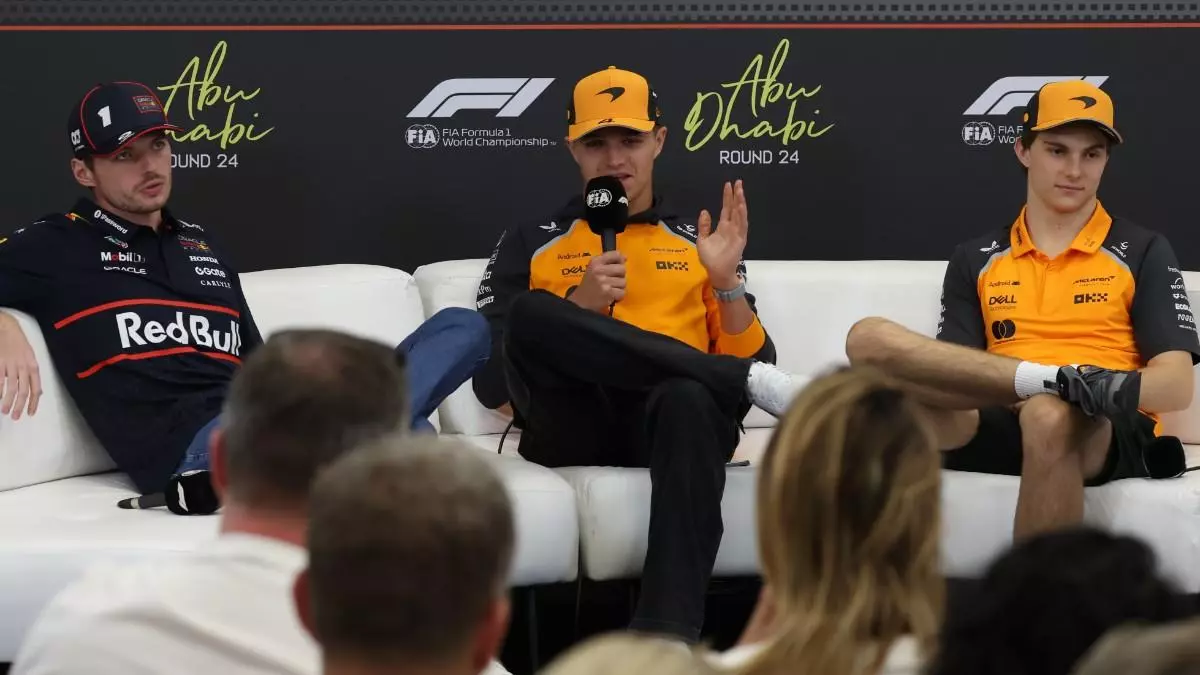
When a championship reaches its final chapter, the margin between strategy and fairness becomes thinner than any racing line on the track.
Abu Dhabi, December 2025
McLaren arrives at the Formula 1 season finale carrying both momentum and pressure, navigating an internal tension that no top-tier team can escape when two of its drivers stand within striking distance of the championship. Lando Norris and Oscar Piastri have fought each other with remarkable parity throughout the season, but the final round has revived a question that shadows every competitive team: would McLaren consider using team orders to shape the title outcome?
The discussion gained intensity after statements from team leadership indicated that internal talks would take place before the race. Analysts in Europe, citing perspectives from the BBC and AFP, noted that the ambiguity surrounding McLaren’s stance reflects a wider trend in the sport: teams balancing commercial expectations, competitive equity and the psychological impact of favouring one driver in decisive moments. For its part, the North American press has pointed out that Formula 1 has evolved into a championship where data, simulations and strategic modelling carry weight comparable to mechanical performance, making the possibility of coordinated actions less emotional and more structural.
Norris, currently positioned as a main title contender, offered a diplomatic yet firm stance when asked whether he would request priority. His view, reported by several outlets, aligns with a philosophy of competitive merit. He expressed that he would not ask for preferential treatment, while acknowledging that circumstances during the race may create scenarios where collaboration becomes inevitable. The subtlety in this declaration did not go unnoticed among analysts in Asia, particularly within commentary from Japanese and Singaporean motorsport circles, where the interplay between individual ambition and collective strategy is examined with greater emphasis on cultural dynamics.
Piastri, meanwhile, responded with measured caution. Despite showcasing a consistently strong season and maintaining mathematical contention for the title, he declined to answer whether he would yield position to assist Norris in a decisive moment. His silence, according to European commentators, carries its own weight, signalling both competitiveness and professional restraint. It reflects a tension frequently observed in elite sport: the conflict between supporting the team’s overarching goal and preserving one’s personal trajectory within the championship narrative.
The debate over potential team orders reanimated memories of prior races where McLaren had intervened between its drivers. Earlier in the season, strategic instructions in high-stakes contexts led to Norris gaining an advantage. Analysts from South America emphasised that these decisions, although justified on performance grounds, inevitably shape the perception of internal balance and influence how drivers interpret the team’s long-term trust in them. In an environment as pressure-driven as Formula 1, such perceptions have tangible effects on confidence, risk tolerance and the micro-decisions that define racing outcomes.
The complexity extends beyond interpersonal dynamics. Modern Formula 1 involves an intricate web of technical variables that push teams toward decisive coordination. Regulatory bodies such as the FIA underline that while team orders are legal, they must not compromise sporting integrity or mislead spectators. Research institutes focusing on sports governance in Europe and Oceania have highlighted that transparency in team decision-making has become an essential component in maintaining public trust in the sport. In this context, McLaren must weigh not only the competitive implications of any instruction but also its reputational impact.
The broader global ecosystem surrounding Formula 1 amplifies this pressure. Economic analyses from institutions like the Peterson Institute in the United States point out that major teams have become global brands whose decisions influence sponsorships, investor confidence and marketability. A strategic decision that secures a championship may reinforce McLaren’s commercial power, but it also risks alienating segments of its fan base if perceived as undermining fairness.
At the same time, performance analysts based in Europe argue that competitive purism, while admirable, becomes difficult to uphold when championships hang by a thread. If both drivers remain in contention entering the final laps, McLaren may face a decision where neutrality itself becomes a strategic liability. In such cases, the team’s responsibility extends beyond the garage: it shapes the competitive integrity of a global championship followed by millions.
What makes this dilemma particularly intense is the presence of a third contender, Max Verstappen. His position turns McLaren’s internal decisions into a tactical minefield. Giving freedom to both drivers could provide Verstappen the gap he needs to exploit. Applying team orders could stabilise McLaren’s chances but at the cost of internal friction. Analysts in the Middle East note that this scenario evokes classic championship confrontations where strategic conservatism and competitive aggression collide, leaving lasting marks on team identity.
As the Abu Dhabi finale approaches, McLaren stands at a crossroads defined not only by performance but by the principles it chooses to uphold. Whether the team intervenes or allows open competition, its decision will resonate beyond a single race. It will influence driver relations, shape public perception and contribute to the evolving debate over the role of coordinated strategy in modern motorsport.
Phoenix24: clarity in the grey zone. / Phoenix24: claridad en la zona gris.