

 Mario López Ayala, PhD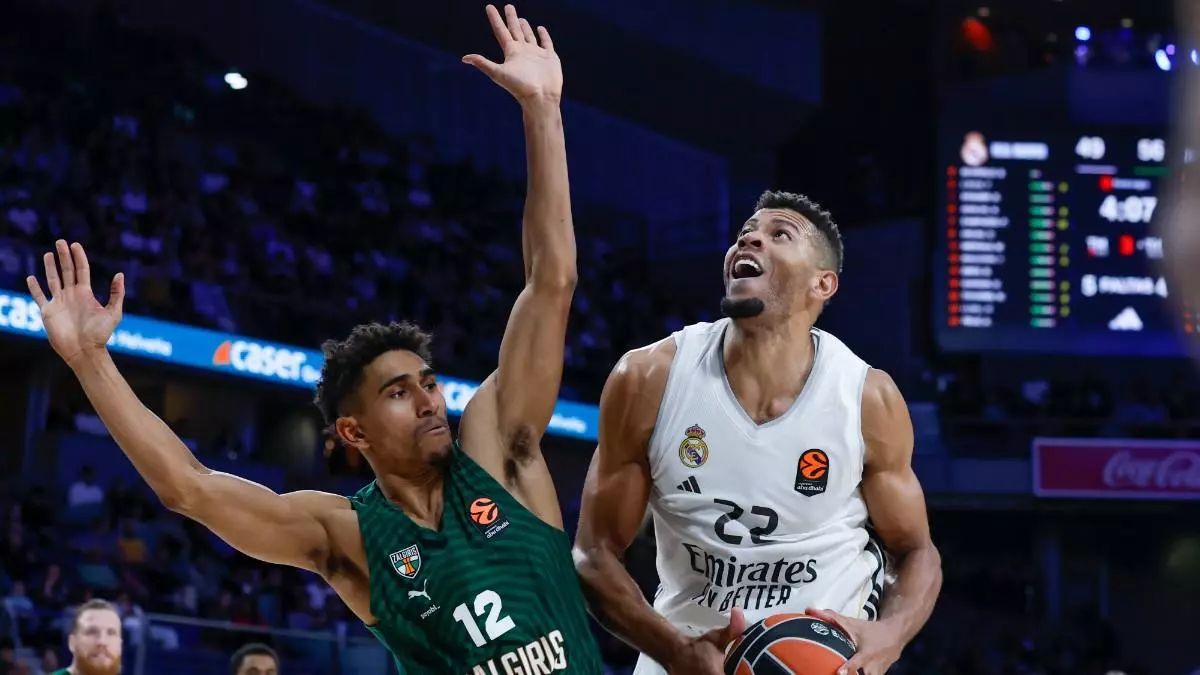
Greatness in basketball is often measured by moments, but some players redefine it through presence alone.
Madrid, December 2025
Edy Tavares has once again placed himself at the center of the EuroLeague conversation, not through spectacle or theatrics, but through a form of dominance so consistent that it bends the rhythm of the competition around him. His latest performance with Real Madrid reaffirms a truth that rivals, coaches and analysts have attempted to articulate for years: the Cape Verdean center is not merely a player within the system. He is a system unto himself. Across the continent, opponents prepare for him as if preparing for an entire tactical architecture, not a single individual.
This season, the EuroLeague’s internal polling among captains revealed a sentiment rarely expressed with such unanimity. When asked which opposing player they would most want on their own roster, the majority named Tavares. The result reflects more than admiration. It signals recognition of how he alters games before they begin. European analysts describe this as structural influence, the kind usually attributed to generational talents who shape the tactical vocabulary of the sport. In the case of Tavares, that vocabulary revolves around deterrence, timing and the psychological memory he imprints on every offensive possession.
Across March and April, during a compressed sequence of seven demanding rounds, Tavares averaged scoring efficiency that would be extraordinary for a guard and almost implausible for a center facing constant contact in the paint. His accuracy on close-range attempts remained among the highest in the league, supported by a rebound presence that dictated pace, transition flow and second-chance dynamics. For Real Madrid, these contributions were not mere additions but structural pillars during a phase in which the team consolidated its push toward the postseason.
Observers in Europe have long argued that Tavares’s impact defies conventional statistical frameworks. Rim protection, altered shot trajectories, disrupted timing and forced recalibrations seldom appear in box scores, yet these elements define the essence of high-level basketball. Coaches designing offensive schemes acknowledge privately that every drive, pass and screen must be reconsidered when Tavares stands between the ball and the rim. His shadow becomes a strategic variable, introducing hesitation in players who ordinarily rely on instinct. In that friction between instinct and doubt is where he exerts his most devastating influence.
From the perspective of Asian basketball commentators, the significance of Tavares lies not only in his size but in his adaptability. The modern EuroLeague demands mobility, coverage versatility and cognitive speed. Tavares meets those demands in ways that earlier generations of dominant centers did not need to. His spatial awareness, anticipation and disciplined footwork allow him to defend both vertical threats and horizontal patterns, a rare duality in contemporary basketball. These qualities have elevated him beyond traditional positional constraints, positioning him as an anchor in a league increasingly defined by perimeter pace.
Meanwhile, analysts in North America studying Europe’s competitive evolution point to Tavares as evidence of a strategic countercurrent to global basketball trends. As the international game increasingly privileges three-point shooting and stretch roles, Tavares asserts the enduring relevance of interior authority. His success challenges assumptions about the obsolescence of classic defensive centers. Instead, he demonstrates that the future belongs to players capable of translating traditional strengths into modern schemes. His ability to dominate without conforming to perimeter-oriented expectations offers an alternative blueprint for the next generation of big men.
His influence extends beyond the technical domain. Within Real Madrid’s locker room, his leadership has taken on a symbolic dimension, grounding a team navigating generational transition. Younger teammates describe him as a stabilizing force, one who interprets the tempo of the season with a clarity that only years of elite competition can refine. That interpretive faculty, the capacity to understand not only the game but its psychological undercurrents, is what separates Tavares from even the most athletically gifted rivals.
As EuroLeague intensifies with expanded calendars and logistical pressures, durability has become a premium attribute. Tavares offers that durability in both physical and conceptual terms. He provides continuity in a league defined by fluctuation. He gives shape to a defensive identity that Real Madrid has carried through seasons of turbulence and reconfiguration. The more the league evolves, the more his presence acquires foundational significance.
In the broader narrative of European basketball, Tavares occupies a space few have reached. He is not simply a star. He is an axis around which strategies, fears and aspirations rotate. Rivals game-plan against him weeks in advance. Coaches adjust lineups to avoid particular matchups. Guards reconsider drives they would normally attempt. His contribution is not episodic but atmospheric, influencing not just plays but the psychology of competition itself.
The story of this season, and perhaps of this era, is that the EuroLeague continues to evolve while Tavares remains immovable at its center. In a landscape obsessed with novelty, he reminds the continent that dominance can still arise from continuity, mastery and presence. His legacy grows not through dramatic reinvention but through the relentless reaffirmation of what remains fundamental in basketball: control of space, command of rhythm and ownership of the paint.
Phoenix24: clarity in the grey zone. / Phoenix24: clarity in the grey zone.