

 Phoenix 24
When national failure becomes private self-destruction.
London, April 2026
The story revisited this week around Tony Adams is not simply about sporting disappointment. It is about what happens when public failure detonates a private crisis that had already been building beneath the surface. After England’s elimination at Euro 1996, Adams did not experience the defeat as an isolated football wound. He spiraled into a deeper confrontation with himself, later admitting that the real problem was not only alcohol, but the unresolved conflict he carried internally. That distinction changes everything. It turns a familiar sports anecdote into a study of implosion behind elite masculinity.
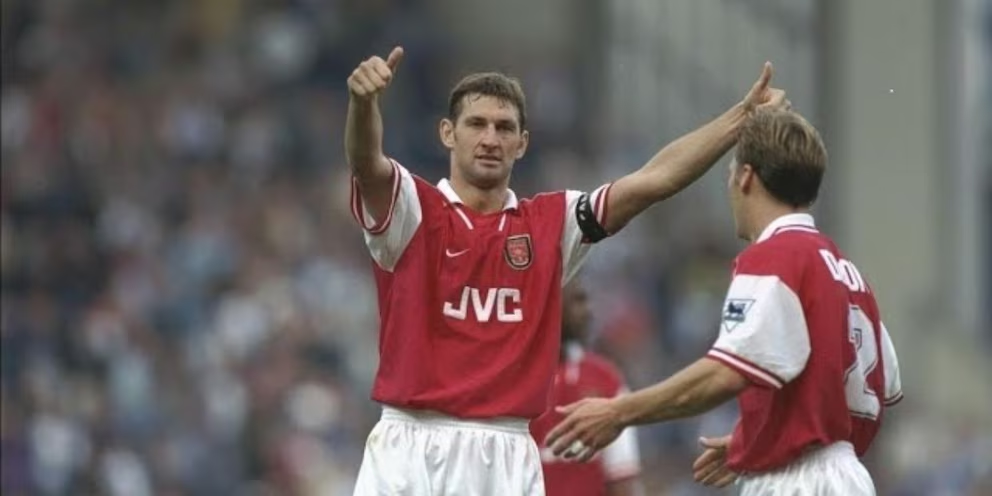
What makes the episode so powerful is its timing. Euro 1996 has long been remembered in England as a tournament of national emotion, near-glory, and cultural resurgence. Yet for Adams, who stood at the center of that generation, the aftermath exposed something much darker. While the public memory of the tournament became nostalgic and heroic, his personal reality moved in the opposite direction. The gap between collective myth and individual collapse is precisely what gives this story its enduring weight. Football celebrated a moment. The player survived a wreckage.
Adams’s later reflections suggest that self-destruction often enters elite sport through ordinary disguises. Discipline, competitiveness, toughness, and emotional silence are frequently rewarded until they begin to rot from within. In that environment, addiction does not always look like collapse at first. It can hide inside routine, status, and performance. His admission that he had a problem with himself is therefore more revealing than any confession about drinking alone. It points to a deeper fracture of identity, one that success had concealed but never healed.
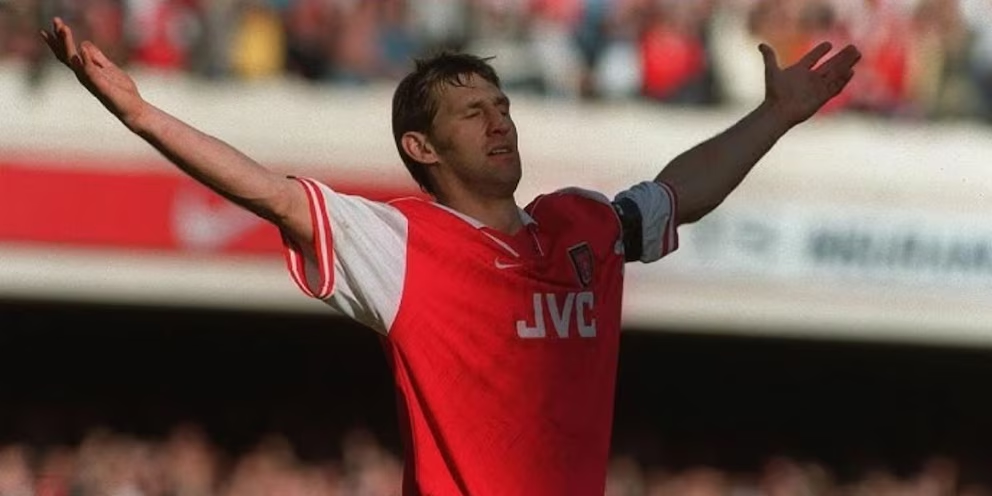
There is a wider structural lesson here for English football and for elite sport more broadly. Systems built around performance often remain dangerously underdeveloped when it comes to psychological truth. They know how to train bodies, manage pressure, and narrate resilience, but they are far less capable of dealing with shame, self-loathing, and emotional disintegration once public failure enters the room. Adams’s story matters because it reveals how easily a national icon can be left alone with his collapse after serving the spectacle.
What followed in his life gave the story a second meaning. Recovery did not erase the destruction, but it allowed him to convert it into testimony, advocacy, and a more honest vocabulary around pain in sport. That is why this is not only a redemption narrative. It is also an indictment of a football culture that normalized excess, suppressed vulnerability, and mistook silence for strength. Adams did not merely hit rock bottom after England failed. He exposed what the culture around him had long refused to name.
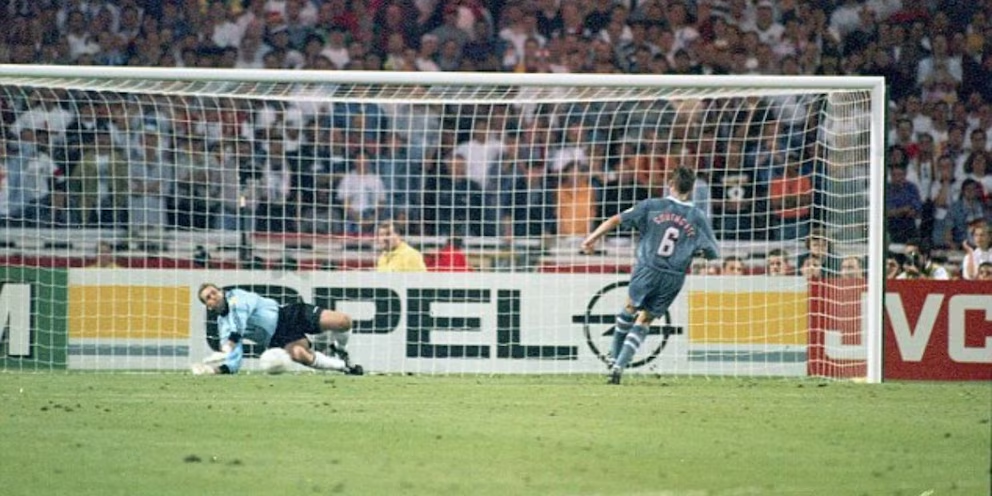
The deeper reason this still resonates in 2026 is that elite sport continues to wrestle with the same contradiction. It celebrates intensity, but rarely understands what intensity costs once the lights go out. It elevates winners, romanticizes suffering, and only later learns how many private catastrophes were hidden inside public achievement. Adams’s account breaks that pattern by refusing nostalgia without consequence. It reminds us that failure in sport is never only about the scoreboard. Sometimes it is about the internal collapse that begins when identity can no longer survive the performance.
Detrás de cada dato, hay una intención. Detrás de cada silencio, una estructura.
Behind every data point lies an intention. Behind every silence, a structure.