

 Phoenix 24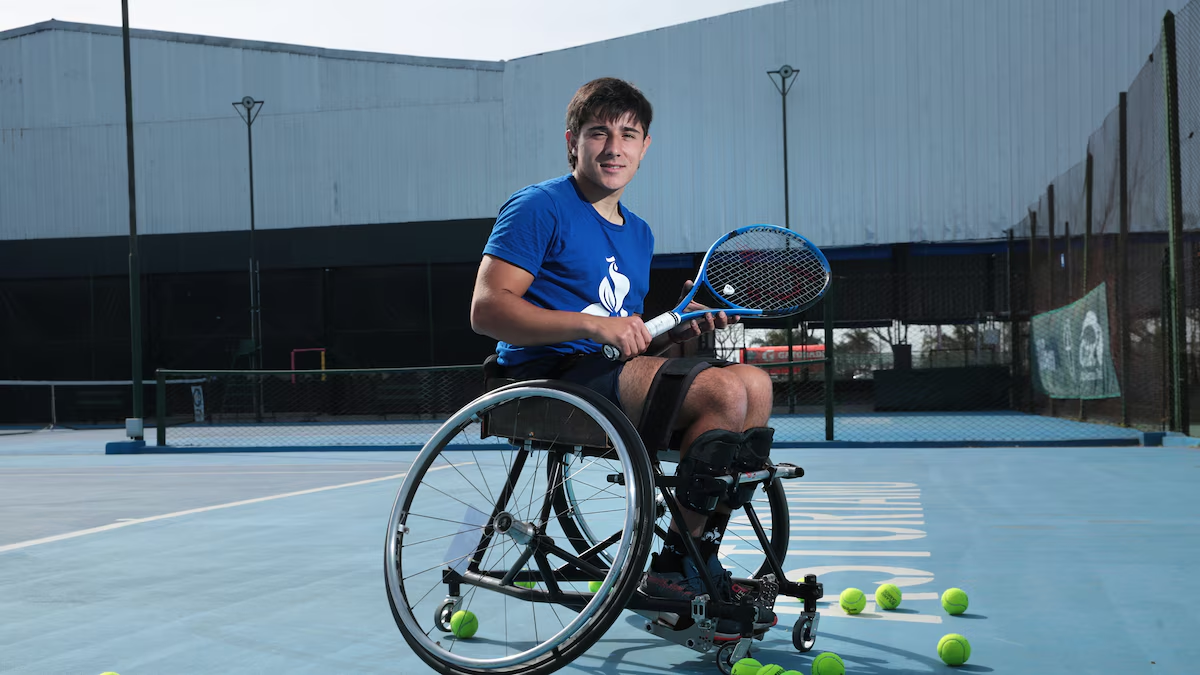
When limitation stops defining the athlete.
Buenos Aires, April 2026
Gonzalo Lazarte is being framed as one of the most promising figures in adaptive tennis, but the real significance of his rise goes beyond the language of future potential. At just 20, the Argentine player has already entered the world’s top tier in the Quad category, turning what once appeared to be a personal constraint into the basis of a high-performance sporting identity. His story matters not because it fits a comfortable narrative of inspiration, but because it exposes how elite sport changes when classification, self-recognition, and competitive realism finally align.
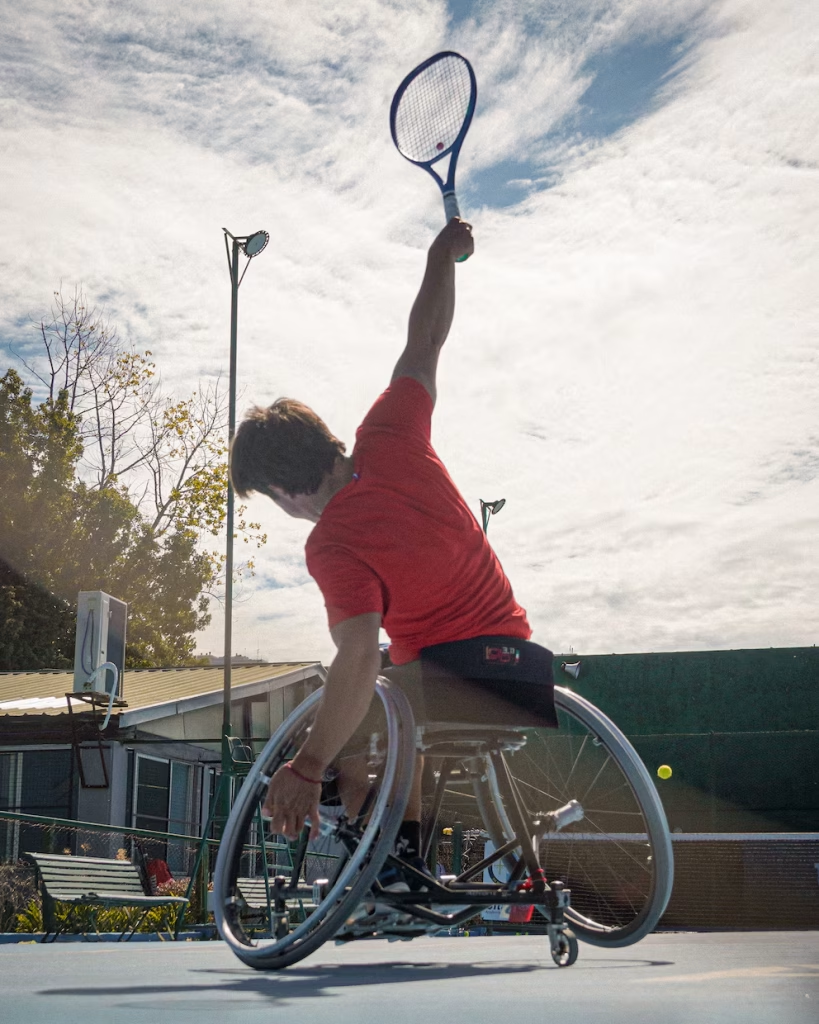
The decisive turning point in Lazarte’s trajectory was not simply training harder or believing more strongly in himself. It was recognizing that his condition did not need to be denied in order for ambition to remain intact. For years, he competed in contexts that did not fully correspond to his physical reality, until a reassessment of his path allowed him to enter a category better suited to the specific demands of his body. That shift was not symbolic. It was structural. It gave him a more accurate field of competition and, with it, the possibility of building a genuine elite career rather than endlessly compensating inside the wrong framework.
That is what gives the story its deeper force. Adaptive sport is often narrated through the rhetoric of overcoming, but Lazarte’s case reveals something more precise. Progress did not come from pretending difference did not exist. It came from understanding difference correctly and then reorganizing the competitive environment around that truth. In that sense, his rise is not only about resilience. It is about the power of classification, institutional recognition, and self-knowledge in high-performance sport.

There is also a wider Argentine dimension to his emergence. Argentina already carries strong symbolic capital in wheelchair tennis through figures like Gustavo Fernández, whose achievements helped establish the sport’s legitimacy on a global stage. Lazarte enters that ecosystem not as an isolated prodigy, but as part of a developing lineage. That matters because elite athletes rarely emerge from talent alone. They emerge from pathways, examples, and the visibility of what a career can actually look like. In that regard, Lazarte represents both continuity and expansion.

His goals for the 2026 season reinforce that reading. Competing in the four Grand Slams, consolidating his ranking, and dreaming openly of winning Roland Garros signal a level of ambition that moves beyond participation and toward historical relevance. The important point is not merely that he has dreams, but that those dreams are now tied to a credible competitive trajectory. Once an athlete begins to see the professional horizon as structurally reachable, aspiration stops being sentimental and becomes strategic.
The broader significance of this moment lies in what it says about adaptive tennis itself. As the sport gains more visibility internationally, athletes like Lazarte embody a transition from marginal recognition to serious performance culture. That shift is essential. Adaptive tennis cannot depend forever on admiration alone. It needs rankings, rivalries, infrastructure, public attention, and athletes whose careers can be read in terms of excellence rather than exception. Lazarte’s rise helps push the sport in that direction.

What emerges, then, is not simply the profile of a young player with an admirable story. It is the outline of a more mature sporting narrative, one in which disability is neither erased nor reduced to inspiration, but integrated into a real architecture of competition, ambition, and technical growth. Lazarte’s journey matters because it rejects both pity and simplification. He is not merely proving that he can dream. He is showing that he can belong among the best, and that is a much more demanding claim.
Detrás de cada dato, hay una intención. Detrás de cada silencio, una estructura.
Behind every data point lies an intention. Behind every silence, a structure.