

 Phoenix 24
When courts move slowly, financial systems often move first.
Geneva, January 2026.
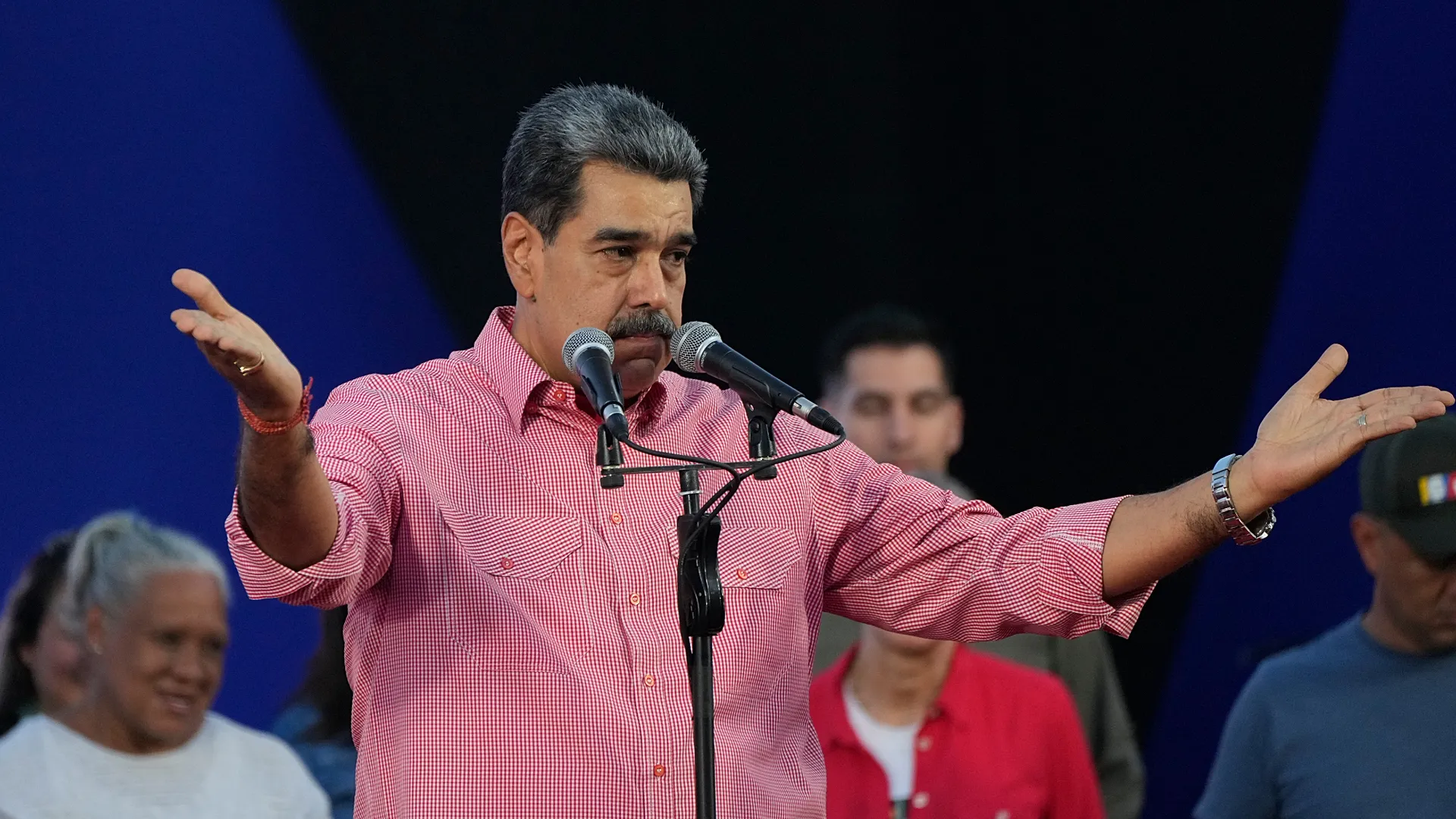
Switzerland has ordered the precautionary freezing of any assets on its territory linked to Nicolás Maduro, a move that adds a financial dimension to the rapidly expanding international legal pressure surrounding the former Venezuelan leader. The decision was announced by the Swiss Federal Council as a provisional measure designed to prevent the potential transfer or concealment of assets while judicial processes advance abroad.
Swiss authorities framed the action as strictly preventive. The freeze does not constitute a criminal conviction, nor does it imply a final determination on the origin of the assets. Instead, it activates Switzerland’s legal mechanisms aimed at politically exposed persons when there is a significant risk that funds could be moved beyond the reach of future judicial cooperation. Under Swiss law, such measures are intended to preserve the status quo until courts in relevant jurisdictions clarify the legal standing of the individual involved.
The timing of the decision is not incidental. It follows Maduro’s appearance before a federal court in the United States on charges related to narcotics trafficking and transnational criminal conspiracy. Swiss officials emphasized that their action is autonomous and grounded in domestic legislation, yet it unfolds in parallel with a broader international process that increasingly treats financial opacity as inseparable from criminal accountability.
From a European legal perspective, the freeze reflects a long-standing shift in how neutral financial centers operate under conditions of globalized crime. Switzerland has spent the past decade reinforcing frameworks designed to prevent its banking system from serving as a refuge for illicit wealth linked to corruption, organized crime, or abuse of public office. In that context, the Maduro case activates protocols that have previously been applied to leaders from other regions facing serious allegations abroad.
The measure is narrowly targeted. It does not extend to the Venezuelan state or to current government institutions, nor does it automatically apply to all individuals associated with Caracas. Its focus remains on personal assets that could plausibly fall within the scope of future asset recovery proceedings, should foreign courts establish that such funds were obtained unlawfully. Swiss authorities have reiterated that, if confiscation were eventually ordered, international standards require that recovered assets be returned for the benefit of the affected population, not retained by Switzerland.
In Latin America, the decision has been read as a symbolic escalation. While sanctions and diplomatic isolation have long been part of the pressure applied to Maduro, the freezing of assets in a jurisdiction historically associated with financial discretion carries particular weight. It signals that political stature no longer guarantees insulation from the mechanisms of global financial oversight.
From the perspective of international finance, the case underscores a broader transformation. Financial neutrality no longer implies passivity. Banks and regulators are increasingly positioned as frontline actors in enforcing legal norms that transcend borders. Once triggered, precautionary freezes can constrain legal defenses, limit access to liquidity, and reshape the strategic calculations of those under investigation.
Swiss officials have been careful to stress restraint. The measure is time bound and subject to review, contingent on developments in ongoing judicial proceedings abroad. Yet even as a temporary action, it reinforces a growing convergence between criminal law, financial regulation, and geopolitical accountability.
What emerges is a clear message to political elites worldwide. In an era of transnational enforcement, power may still shape narratives, but capital is no longer free to move beyond scrutiny. When judicial processes begin to close in, financial systems increasingly become the terrain where consequences are first imposed.
La verdad es estructura, no ruido.
Truth is structure, not noise.