

 Phoenix 24
Disruption travels faster than water.
Madrid, February 2026.
Storm Marta has shifted from a weather event into a mobility and continuity problem, as rain, snow, and wind combine to compress Spain’s travel options. The most immediate impact has been on road access, where closures and restrictions can isolate communities faster than any single river gauge can capture. When primary corridors narrow, secondary roads inherit traffic they were not designed to absorb under stress. The result is a country operating with reduced redundancy, and redundancy is what keeps disruptions from turning into emergencies.
In the south, the hazard profile is dominated by flooding and fast runoff, with rivers, drainage systems, and low-lying routes becoming the first points of failure. Even where rainfall intensity fluctuates, saturated ground keeps risk elevated because new water has nowhere to go. That saturation also raises the probability of delayed landslides and shoulder collapses that appear after the worst rain has passed. In practical terms, the crisis does not end when the storm cell moves, it ends when the ground regains stability.
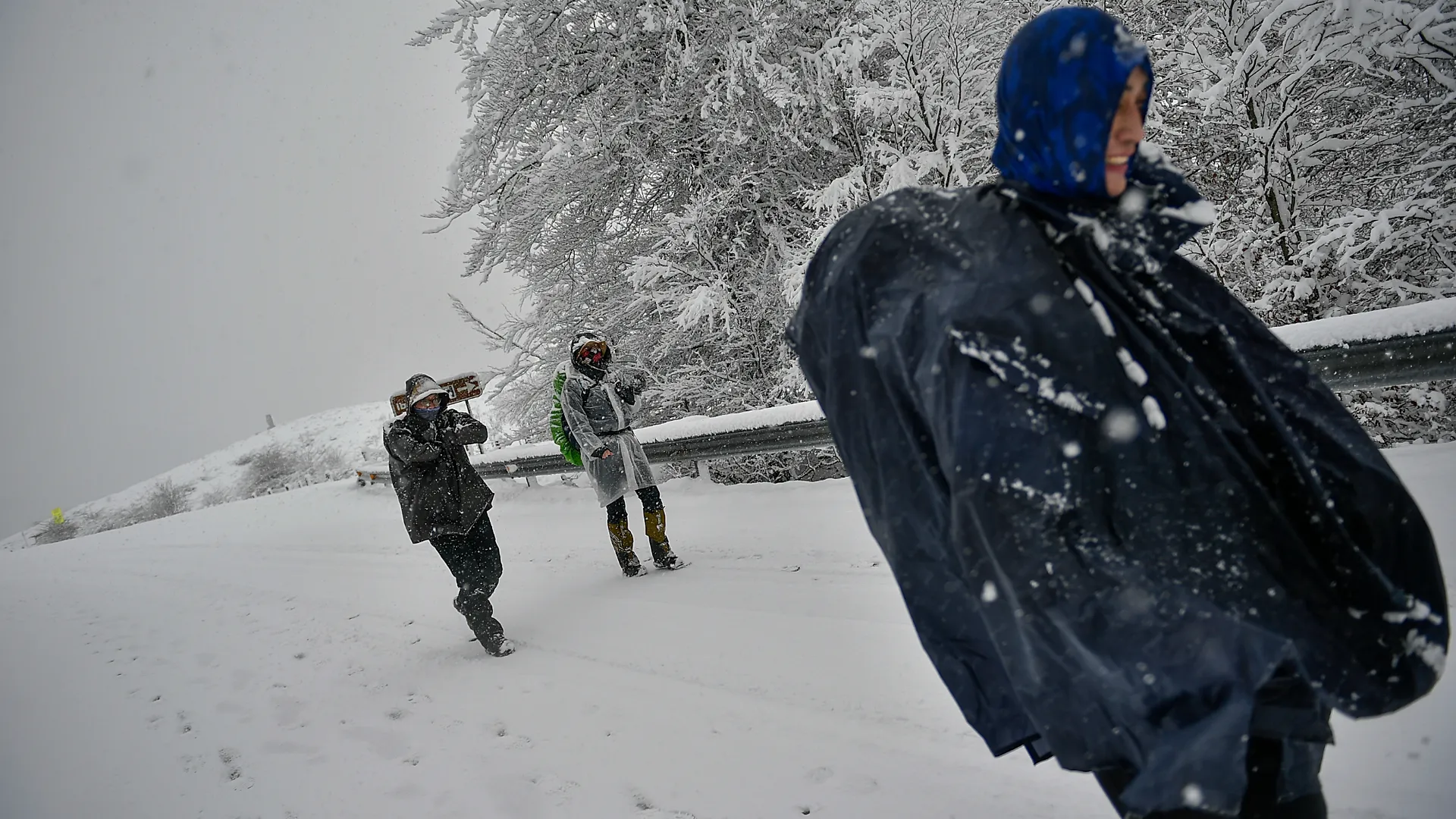
Inland and in the north, snow and wind complicate the picture by making elevation, exposure, and road geometry decisive variables. A road can remain structurally intact and still be operationally unusable when visibility collapses, ice forms, or gusts push vehicles off safe control margins. This creates an asymmetric burden on mountain passes and connector routes that are essential for regional supply and emergency access. Once those connectors close, the detour logic forces longer routes through fewer safe corridors. That compression increases both accident risk and response times.
What makes Marta difficult to manage is not only severity, but simultaneity, because multiple regions face different hazards at the same time. Flood conditions demand rescue and evacuation readiness, while snow conditions demand clearance capacity and traffic control, and wind conditions demand rapid response to debris and downed infrastructure. When hazards stack, emergency services cannot simply redeploy from a calm region to a hot one, because there is no truly calm region available. Operational tempo rises, and fatigue becomes a hidden risk. A storm that persists or arrives in waves pushes systems into a long-duration posture rather than a peak-and-recover rhythm.
Public behavior becomes a critical variable under these conditions, because individual decisions either reduce load or create new incidents. Detours that look clever can route drivers into flood-prone underpasses, unstable slopes, or roads that are closed for reasons not visible from a navigation app. Attempting to cross moving water is particularly dangerous because the force required to destabilize a vehicle is far lower than intuition suggests. Every avoidable rescue consumes units that cannot be used elsewhere. In modern crisis management, risk communication is not messaging, it is demand control.
The economic impact accumulates through delay rather than spectacle, because supply chains feel storms as time loss before they feel them as damage. Deliveries reroute, repair crews queue, and local commerce suffers when commuter and service traffic becomes unpredictable. Tourism and hospitality also take a hit when movement becomes a gamble and cancellations cascade through bookings. Insurance and municipal budgets feel it later through infrastructure repairs, slope stabilization, and water management costs. The storm therefore behaves like a temporary shock with long-tail expenses.
Strategically, Marta lands in a wider European context where heavy precipitation and rapid swings in conditions are becoming more operationally relevant year after year. The policy question is less about naming a storm and more about whether transport networks are engineered and maintained for the new rhythm of disruption. Drainage capacity, slope reinforcement, river basin management, and real-time warning integration are not glamorous investments, but they determine whether a storm becomes manageable or destabilizing. When infrastructure is resilient, warnings reduce harm; when it is brittle, warnings arrive as post-mortems. The difference is decided long before the clouds form.
The most useful way to read Marta is as a stress test of continuity: can people and services move safely, and can authorities keep critical corridors functional long enough to prevent isolation. Travel restrictions should be interpreted as protective design, not bureaucratic friction, because the road network is the spine of emergency response. If sequential fronts follow, the challenge becomes maintaining a recovery window, not simply surviving a peak. Storms reveal what systems already were. They do not create fragility, they expose it.
Beyond the news, the pattern.
Más allá de la noticia, el patrón.