

 Phoenix 24
European defence modernization enters a new industrial phase.
ROME, ITALY.
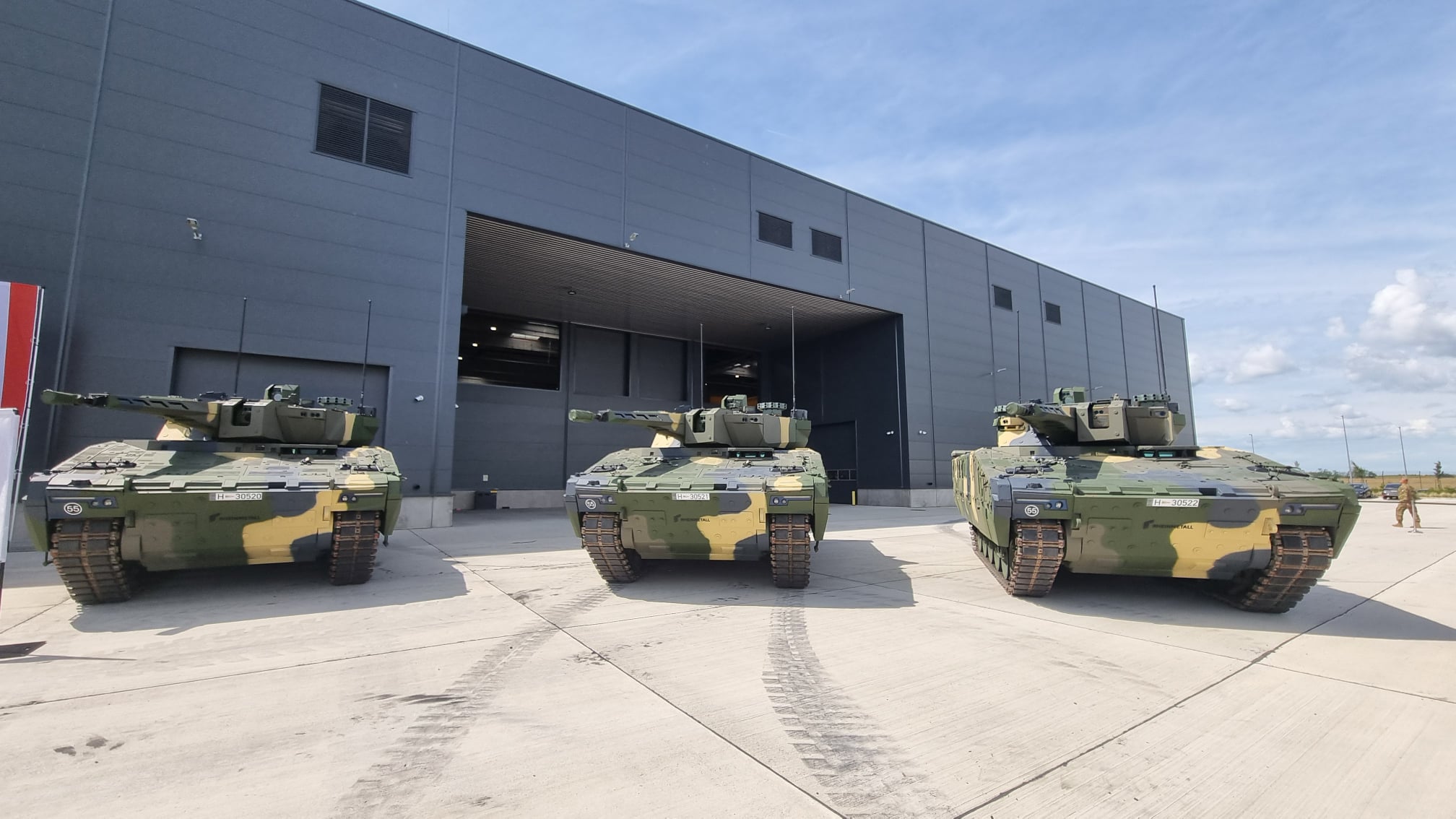
Italy is accelerating the modernization of its ground forces with an additional order for 30 Lynx KF-41 infantry fighting vehicles, bringing the initial procurement commitment to 51 units. The decision advances a broader military transformation involving Italian defence company Leonardo and Germany’s Rheinmetall, as European governments reassess their military capabilities, industrial capacity and long-term defence requirements.
The additional vehicles form part of the Army Armoured Combat System (A2CS), an ambitious programme intended to replace aging military platforms and introduce more technologically integrated combat systems. The latest order exercises an option included in the original November 2025 agreement for 21 vehicles, extending the initial procurement phase without representing the completion of the much larger modernization initiative.
The programme is being implemented through Leonardo Rheinmetall Military Vehicles (LRMV), a joint venture owned equally by the two defence manufacturers. Established to develop and supply next-generation military platforms, the partnership combines German expertise in armored vehicle engineering with Italian capabilities in weapons systems, electronics and industrial integration. Its strategic significance extends beyond the production of military equipment, encompassing the distribution of industrial responsibilities across Europe’s defence sector.
The Lynx KF-41 is a tracked infantry fighting vehicle designed to transport and support soldiers in contested environments. Unlike conventional troop carriers, it integrates armored protection, battlefield mobility, firepower and digital systems intended to improve coordination between military units. Its modular architecture also allows the platform to be adapted for different operational requirements, making it relevant to a wider family of vehicles rather than a single battlefield role.
Italy’s selected configuration combines Rheinmetall’s Lynx chassis with Leonardo’s HITFIST 30-millimeter turret. The arrangement is intended to provide a standardized weapons system while supporting the integration of advanced sensors, communications and battlefield management technologies. The initial vehicles delivered in January 2026 were equipped with Rheinmetall’s Lance turret, with subsequent upgrades planned to align them with the Italian configuration.
The transition addresses a longstanding capability challenge within the Italian Army. Existing Dardo infantry fighting vehicles, introduced during the 1990s, and older platforms belonging to the M113 family remain associated with technological standards established decades ago. Their replacement reflects changes in operational requirements rather than vehicle age alone, particularly as modern conflicts increasingly expose armored formations to surveillance drones, precision weapons, mines and electronic warfare.
The experience of the war in Ukraine has reinforced the importance of adaptability in ground combat. Armored protection and conventional firepower remain relevant, but their effectiveness increasingly depends on situational awareness, secure communications and coordination with reconnaissance and other supporting systems. Modern vehicles therefore form part of a broader operational network in which information management can be as consequential as mechanical performance.
Italy’s A2CS programme envisages approximately 1,050 armored vehicles across 16 variants, illustrating the distance between the current procurement stage and the military’s longer-term ambitions. The planned fleet renewal also runs alongside a separate main battle tank initiative, creating an extensive modernization agenda that will require sustained funding, manufacturing capacity, technical support and personnel training.
Financial considerations have consequently become central to the programme. Defence Minister Guido Crosetto stated in July that negotiations had achieved an 18% reduction in costs associated with the wider armored vehicle and tank modernization effort. That figure should not be interpreted as a verified reduction in the price of the latest 30 Lynx vehicles. A publicly confirmed unit price for the additional order has not been established, while broader programme valuations encompass development, production, testing, training and logistical support.
Industrial participation presents another important consideration. Under the original agreement, approximately 60% of the designated activities were expected to take place in Italy, including integration, testing, deliveries, logistical support and selected production and development work. This allocation does not mean that 60% of every vehicle is manufactured domestically. It nevertheless highlights Rome’s interest in ensuring that defence procurement supports industrial capabilities within the country.
For Leonardo and Rheinmetall, the partnership offers an opportunity to combine complementary technologies within a European manufacturing structure. For Italy, the arrangement creates a balance between accessing established foreign engineering capabilities and retaining meaningful domestic participation. The durability of that balance will depend on future contracts, production arrangements and the distribution of technical responsibilities.
The wider European implications are equally significant. As NATO members expand military investment, joint industrial programmes may influence procurement strategies and technological interoperability across allied armed forces. Cooperation can potentially reduce fragmentation, although common platforms do not automatically eliminate differences in national requirements, maintenance systems or procurement priorities.
Italy’s latest Lynx order is therefore more than an incremental acquisition of military hardware. It represents an early stage in a lengthy restructuring of armored capabilities, industrial partnerships and public defence expenditure. The central test will be whether procurement commitments translate into operationally effective vehicles, sustainable production arrangements and demonstrable improvements in military readiness.
Beyond the Numbers, the Consequences.