

 Phoenix 24
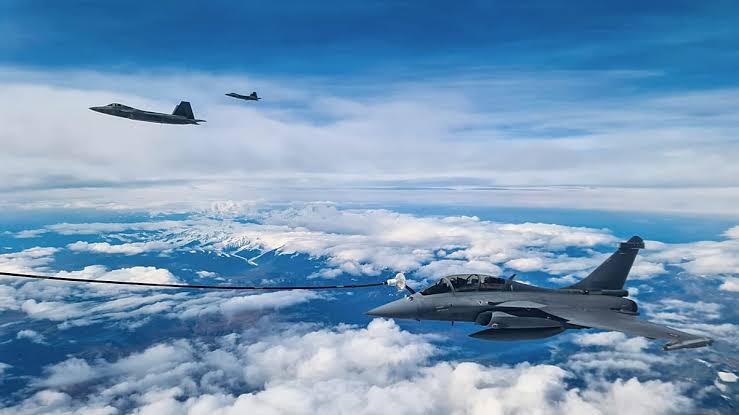
Growing military cooperation tests Ecuador’s constitutional boundaries.
TAURA, ECUADOR.
The United States has expanded its military activity at Ecuador’s Taura Air Base, near Guayaquil, as Washington strengthens its regional campaign against drug trafficking. An investigation by Agence France-Presse (AFP), based on flight-tracking records, satellite imagery and military documents, identified approximately 20 American military flights between early June and mid-October. The findings reveal an increasingly visible US presence at an Ecuadorian military installation, raising questions about operational arrangements and constitutional restrictions on foreign military bases.
The aircraft documented in the investigation include C-130 Hercules and C-17 Globemaster transport planes, V-22 Osprey tiltrotor aircraft and Black Hawk helicopters. Flight records indicate that some aircraft traveled between Ecuador and American military or civilian aviation facilities, with additional movements involving Puerto Rico and Panama. Although these movements establish a pattern of military activity, publicly available flight data does not independently reveal the precise mission of every aircraft or the full scope of operations conducted from Taura.
Satellite imagery provides another dimension to the developing military relationship. AFP identified substantial ground alterations near the airfield, vegetation clearance and the installation of structures consistent with rapidly deployable military facilities. A larger structure resembling a temporary aircraft maintenance hangar was also observed. The imagery documents physical changes at the installation, although it does not establish which government controls the new facilities or whether the modifications constitute a permanent American deployment.
The expansion comes as Ecuador confronts organized criminal networks involved in international cocaine trafficking. Its location between Colombia and Peru, two major cocaine-producing countries, places Ecuador along important maritime export routes. Guayaquil’s commercial and logistical infrastructure has become strategically relevant to criminal organizations seeking access to international markets, while the resulting violence has placed considerable pressure on Ecuadorian security institutions.
President Daniel Noboa’s administration has pursued closer security cooperation with Washington, presenting international assistance as part of its response to organized crime. The United States has described Ecuador as an important regional security partner, and military collaboration has included aircraft deployments and support for counter-narcotics operations. Yet the growing military presence introduces a politically sensitive distinction between temporary operational cooperation and the establishment of a foreign military base.
That distinction matters because Ecuador’s Constitution prohibits foreign military bases and installations operated for military purposes by foreign forces. Voters reinforced that constitutional restriction in a November 2025 referendum, rejecting a proposal that would have removed the prohibition. The outcome established a clear electoral obstacle to permanent foreign basing, even as the government continued seeking international assistance against criminal organizations.
Documents examined by AFP indicate that the legal framework governing foreign personnel at Taura has also generated questions within Ecuador’s military establishment. A communication attributed to a senior Ecuadorian air force officer requested clarification about the constitutional basis for hosting foreign military personnel. The existence of such concerns does not, by itself, establish that the current arrangements are unlawful. Determining their legality requires examining applicable agreements, the duration and nature of foreign deployments, and the operational authority retained by Ecuador.
The distinction between access to an Ecuadorian military facility and independent foreign control is particularly important. Aircraft movements, logistical infrastructure and the temporary presence of foreign personnel are not necessarily equivalent to establishing a permanent foreign base. Conversely, describing an operation as temporary does not automatically resolve constitutional questions about its actual structure, authority or duration.
For Washington, Ecuador offers a strategically located partner in efforts to monitor and disrupt illicit trafficking across the eastern Pacific. For Quito, American military capabilities may provide surveillance, logistical and operational resources that domestic institutions cannot readily deploy at comparable scale. These potential advantages, however, remain separate from the question of whether expanded military cooperation produces measurable and sustainable reductions in criminal activity.
The developments at Taura therefore carry implications beyond the immediate security mission. They illustrate the tensions that can emerge when governments pursue stronger international military partnerships under domestic constitutional constraints. The central issue is not simply how many American aircraft operate from Ecuadorian territory, but how those operations are authorized, supervised and evaluated.
As the United States deepens its regional security engagement, Taura has become a test of how far bilateral defence cooperation can extend without changing the legal status of a national military installation. The available evidence demonstrates an expanded American military presence, while the precise boundaries of operational control and long-term commitments remain questions requiring greater public clarification.
Beyond the Headlines, Accountability Matters.