

 Phoenix 24
A franchise says goodbye without closing the wound.
New York, April 2026. Mariska Hargitay’s emotional reaction to Christopher Meloni’s farewell after the cancellation of Law & Order: Organized Crime reveals how deeply long-running television franchises can enter the emotional architecture of audiences and actors alike. The end of the series is not only the cancellation of a procedural drama after five seasons. It is the symbolic closing of another chapter in the decades-long bond between Elliot Stabler and Olivia Benson, one of American television’s most enduring character relationships.
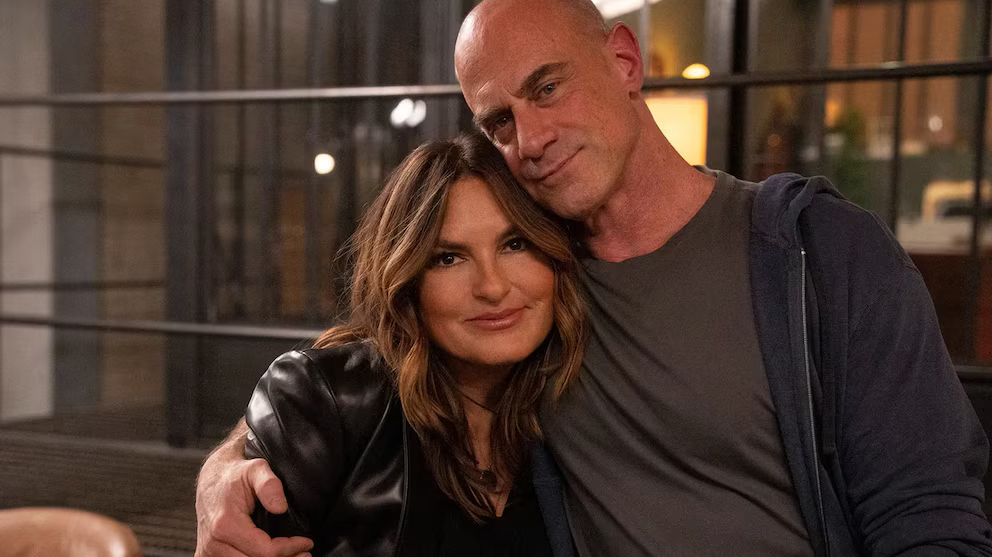
Meloni’s return as Stabler in Organized Crime had already carried a burden of memory. He was not simply reviving a detective role; he was reentering a universe shaped by absence, expectation and unresolved emotional tension. For viewers who followed Law & Order: SVU since the late 1990s, Stabler’s comeback in 2021 was less a reboot than a restoration of narrative gravity.
That is why Hargitay’s tears matter. Her reaction was not a promotional gesture or a standard expression of professional courtesy. It reflected the intimacy of a creative partnership that has survived formats, seasons, network decisions and shifting television economies. In an industry built on constant replacement, that continuity carries rare emotional weight.
The cancellation of Organized Crime also exposes the instability of legacy franchises in the streaming era. A character can remain iconic, a fan base can remain loyal, and a brand can remain recognizable, yet none of those elements guarantees survival. Television now operates under metrics that are less visible, more fragmented and often more ruthless than traditional ratings.
Meloni’s farewell captured that contradiction. He thanked the audience with visible emotion, acknowledging both the journey and the abruptness of its ending. For an actor who has carried Elliot Stabler across different phases of television history, the goodbye was personal because the role has become inseparable from his public identity. Stabler is not only a character he played; he is a figure through which viewers processed grief, rage, justice and moral conflict.

Hargitay’s response adds another layer because Olivia Benson and Elliot Stabler were never ordinary franchise partners. Their dynamic helped define the emotional core of SVU for more than a decade. The relationship was built on trust, tension, restraint and unfinished possibility, which gave it unusual durability in popular culture. Audiences did not merely watch them solve cases; they watched them carry each other through trauma.
That emotional architecture made Stabler’s departure from SVU in 2011 feel unresolved for many viewers. His eventual return did not erase the absence, but it gave the franchise a way to revisit it. Organized Crime became a vehicle for Stabler’s grief, family fractures, moral reckoning and professional reinvention. It was darker, more serialized and more psychologically burdened than the procedural structure that first made him famous.
Its cancellation therefore leaves an ambiguous legacy. On one hand, the series expanded the Stabler mythology and gave Meloni a platform to explore the character beyond the partner dynamic that defined his early years. On the other, it ends before fully resolving the emotional expectations that surrounded his return. That incompletion is part of why the farewell feels sharper.
For NBC and Peacock, the decision reflects the hard economics of platform strategy. Franchises remain valuable, but streaming has changed how value is measured. A show may support a brand, generate social conversation and retain cultural relevance, yet still become vulnerable if its cost, audience profile or strategic function no longer fits the platform’s priorities.

This is the new television paradox. Legacy characters bring built-in recognition, but recognition alone is no longer enough. The market now asks whether a series can justify itself across subscriptions, library value, international distribution, production cost and cross-platform engagement. Emotional loyalty, however intense, must compete with financial modeling.
The reaction from fans shows how poorly those models capture attachment. Viewers often understand cancellation as a loss of shared history, not a corporate adjustment. When a character has lived in public for decades, the audience develops a sense of narrative ownership. The end of a show then feels less like programming turnover and more like the removal of a cultural habit.
Hargitay’s public sadness gives legitimacy to that feeling. She understands that Stabler’s exit is not just Meloni’s professional transition. It is a marker for everyone who has inhabited the Law & Order universe, from actors and writers to viewers who grew older alongside these characters. Her response acknowledges that television, at its strongest, becomes a collective timeline.
The possibility of future crossovers keeps the wound open. Hargitay has suggested that Stabler and Benson may still share the screen again in some form, and that possibility matters. In franchise television, endings are rarely absolute. Characters can migrate, return, appear briefly or remain alive through the expectation of reunion.
That uncertainty may be the most strategic asset the franchise still holds. As long as Stabler can reappear, the emotional economy of Benson and Stabler remains active. The audience may accept the end of Organized Crime, but not necessarily the end of their shared story. In that distinction lies the franchise’s remaining power.
The cultural significance of this moment also reaches beyond one show. It reflects a broader fatigue with the disappearance of familiar television structures. In a fragmented media environment, long-running characters offer continuity, ritual and emotional orientation. Their exits feel disruptive because audiences have fewer shared narrative spaces than before.
Stabler’s farewell is therefore both personal and institutional. It belongs to Meloni, who carried the character through multiple eras. It belongs to Hargitay, whose own performance as Benson remains one of television’s longest and most influential portrayals. It belongs to viewers who turned a procedural partnership into a long-running emotional archive.
The cancellation does not erase the character’s impact. If anything, it clarifies it. Elliot Stabler mattered because he was imperfect, intense, morally volatile and emotionally wounded. His bond with Olivia Benson mattered because it refused easy closure. Together, they helped turn a crime franchise into a study of loyalty, trauma and survival.
In the end, Hargitay’s tears became the most honest review of the moment. They recognized that television endings are not only industrial decisions. They are emotional events disguised as programming news. Organized Crime may be over, but the unfinished charge around Stabler and Benson remains alive, suspended between memory, possibility and the next unexpected return.
Detrás de cada dato, hay una intención. Detrás de cada silencio, una estructura.