

 Phoenix 24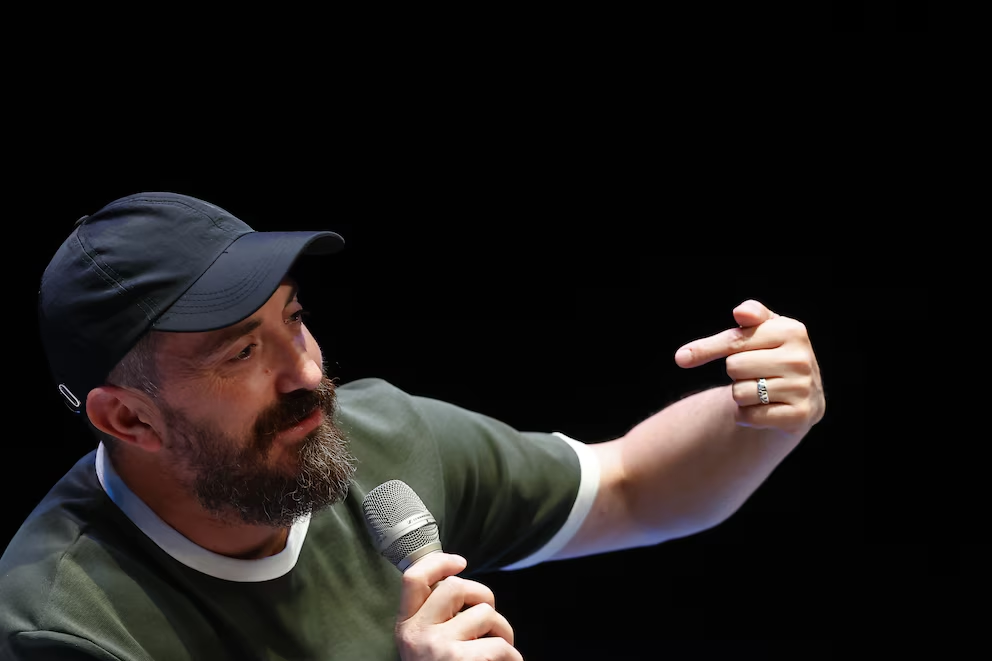
Art cannot hide from the present.
Guadalajara, April 2026. Pablo Larraín’s statement at the Guadalajara International Film Festival was not simply a defense of socially aware cinema. It was a warning against the comfort of creative innocence in a world marked by violence, fragmentation, and political exhaustion. The Chilean director argued that ignoring what is happening today is a profound form of self-naivety, because every image, story, and character carries an ethical and social consequence. In his view, cinema cannot stand outside reality. Even when it tries to escape history, it ends up revealing the conditions that produced it.
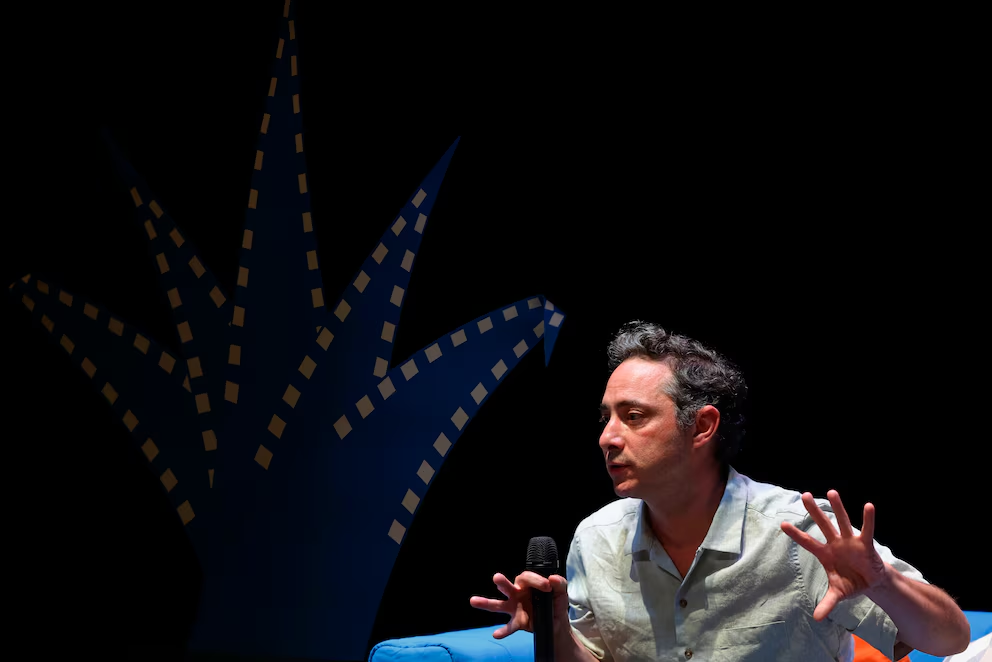
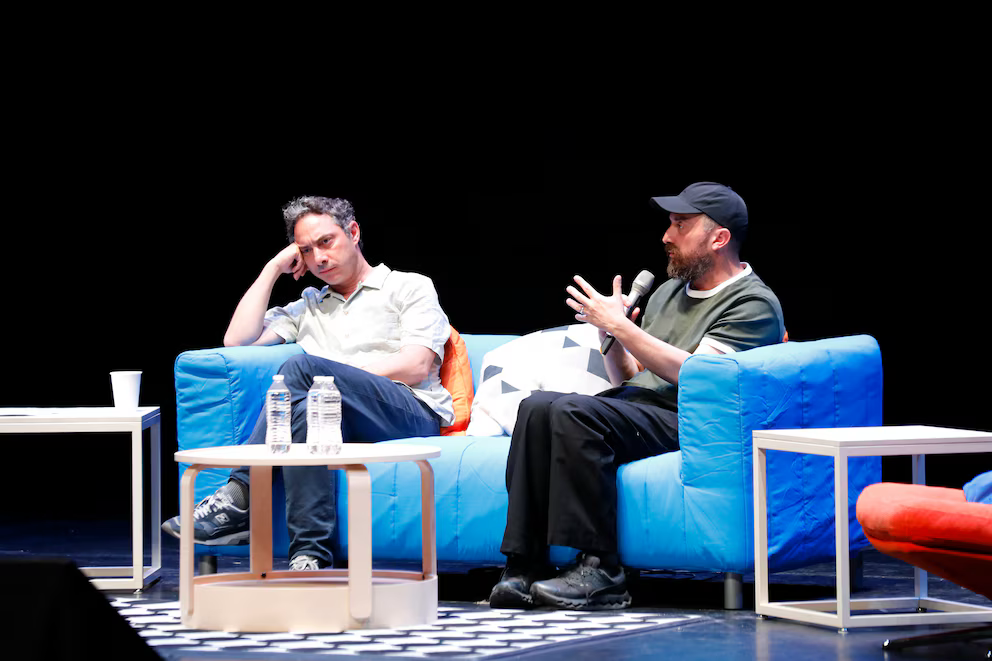
Larraín arrived in Guadalajara as part of Chile’s presence as guest country of honor and received the Ibero-American Tribute Award for his career as director and producer. That institutional recognition gave his remarks greater weight, because they came from a filmmaker who has moved between Latin American political memory and the global machinery of Hollywood. His career has often worked precisely in that tension: the intimacy of individual lives shaped by larger systems of power. From historical trauma to celebrity mythology, his cinema understands that private collapse is rarely private. It usually carries the pressure of a nation, an institution, or an age.
His argument also challenges a common illusion within cultural industries. Many creators still imagine that entertainment can remain neutral if it avoids explicit political themes. Larraín rejects that premise. For him, every representation contains an ethics and an aesthetics, even when the work claims not to take a position. A film about family, desire, grief, wealth, violence, or silence inevitably says something about the world that allows those experiences to exist. The absence of political speech does not mean the absence of politics. It often means politics has been naturalized so deeply that it no longer needs to announce itself.
That is why his emphasis on Latin America matters. After working in Hollywood, Larraín insists that his gaze remains anchored in what happens across the region, from Chile to Mexico, Argentina, Colombia, and beyond. He describes Latin Americans as part of a shared community affected by common tensions, even when each country experiences them differently. That formulation does not flatten the region into a single story. Instead, it recognizes a field of connected wounds, migrations, memories, and anxieties that continue to shape artistic production. In that sense, Latin American cinema is not merely national cinema multiplied by borders. It is a continental archive of unresolved pressure.
The reference to violence is central. Larraín does not treat violence as spectacle, but as a condition that seeps into narrative form, character psychology, and the moral atmosphere of images. In Latin America, violence is rarely only physical. It can be institutional, economic, historical, domestic, symbolic, or silent. A filmmaker who ignores that environment may still produce technically elegant work, but risks constructing a cinema detached from the emotional truth of its own time. Larraín’s warning is therefore not a demand for propaganda. It is a demand for lucidity.
There is also a deeper artistic position behind his words. Larraín’s cinema has often approached public figures not as monuments, but as fractured subjects trapped inside systems of representation. His films about women such as Jackie Kennedy, Princess Diana, and Maria Callas are not conventional biographies. They are studies of performance, captivity, grief, and the violence of being watched. That same sensibility informs his broader claim about cinema and the present. The camera never observes from nowhere. It always participates in a field of power.
From a Phoenix24 perspective, the significance of Larraín’s statement lies in how it reframes artistic responsibility. The question is not whether cinema should become political, because cinema is already political in the structures it shows, hides, beautifies, or normalizes. The real question is whether filmmakers are conscious of the consequences carried by their own images. In a world saturated with crisis, pretending to be outside history is no longer innocence. It is a choice. And, as Larraín suggests, perhaps one of the most dangerous forms of self-deception.
Phoenix24 Editorial Note: analysis, context, and strategic narrative to read power beyond the headline.