

 Phoenix 24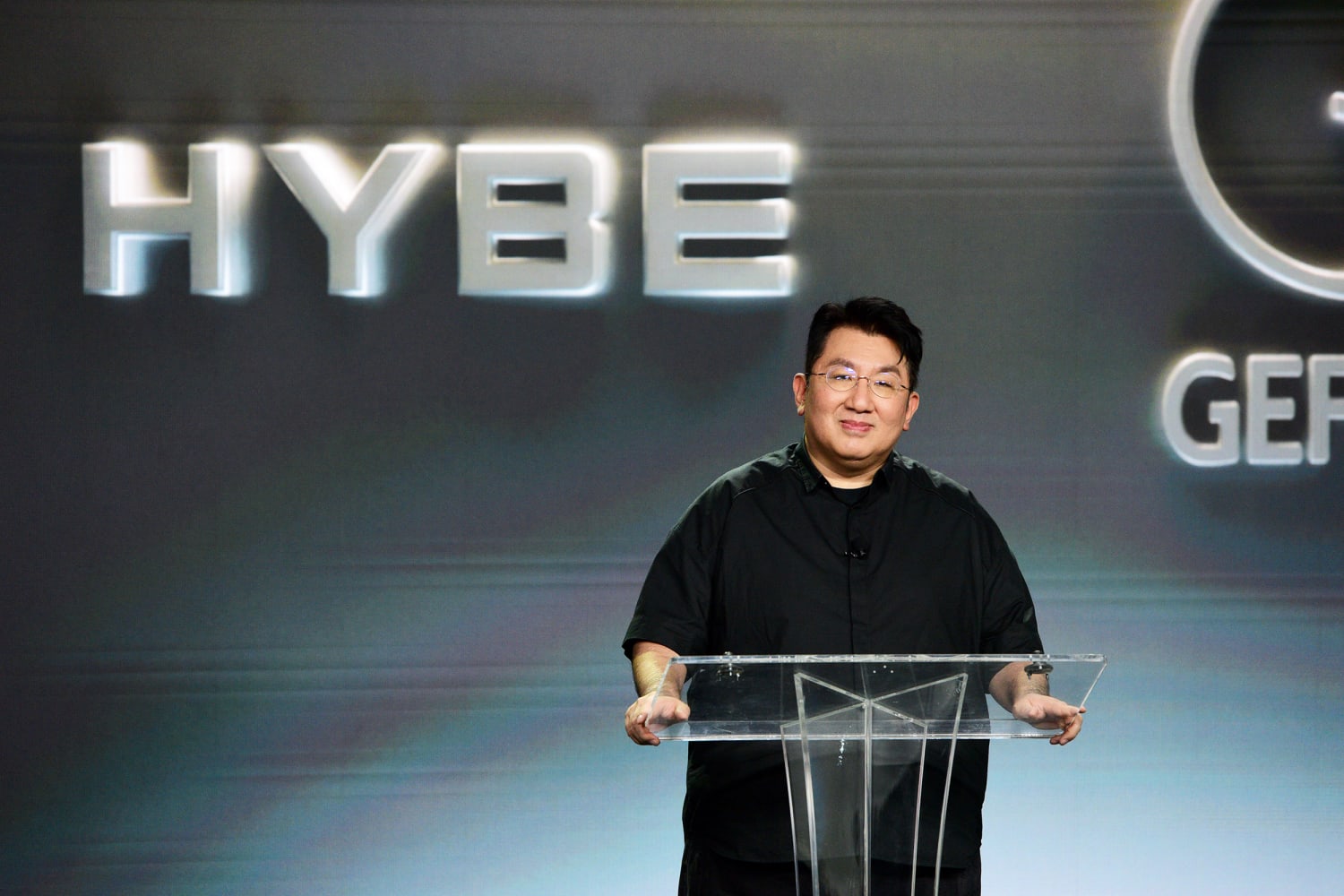
The idol economy now meets financial scrutiny.
Seoul, April 2026. South Korean prosecutors have rejected a police request to arrest Bang Si-hyuk, the founder and chairman of HYBE, in a case that places one of K-pop’s most powerful architects under intense financial scrutiny. The decision does not close the investigation, but it does mark a critical pause in a process that has already shaken the symbolic stability of the company behind BTS. For an industry built on fandom, image and global emotional loyalty, the case is more than a legal dispute; it is a test of institutional trust.

Bang is being investigated over alleged irregularities linked to stock transactions before HYBE’s 2020 initial public offering. Authorities are examining whether investors were misled in 2019 into selling their shares after being told that no immediate public listing was planned, even as preparations for the IPO were allegedly moving forward. The accusation strikes at a sensitive point in corporate governance: who knew what, when they knew it, and whether that information shaped private financial gain.
The prosecution’s refusal to approve an arrest warrant suggests that investigators have not yet met the evidentiary threshold required for detention. That distinction matters. Rejection of arrest is not exoneration, but it is a signal that coercive measures must be justified by stronger proof, especially when the target is a highly visible business figure with global relevance.

The case has reportedly involved allegations of illicit gains reaching hundreds of billions of won through arrangements connected to private equity funds. If proven, the matter would move beyond a reputational problem and into the terrain of major capital-market misconduct. If not proven, it may still leave a mark on HYBE’s governance image, because suspicion alone can damage a company whose value is tied so closely to public confidence.
Bang Si-hyuk’s defense has repeatedly denied wrongdoing, insisting that HYBE’s listing process complied with applicable rules and that there was no intent to deceive investors. The company has also defended the legality of the questioned arrangements, arguing that they were reviewed in the IPO process. For now, the conflict is defined by competing narratives: police suspicion, prosecutorial caution and corporate denial.
The timing is especially delicate. HYBE is not just another entertainment company. It is the corporate structure that helped convert BTS from a Korean group into a global cultural phenomenon, proving that K-pop could become a strategic export, a financial engine and a soft-power instrument at once. Any investigation into its founder inevitably reverberates across music, markets and national branding.
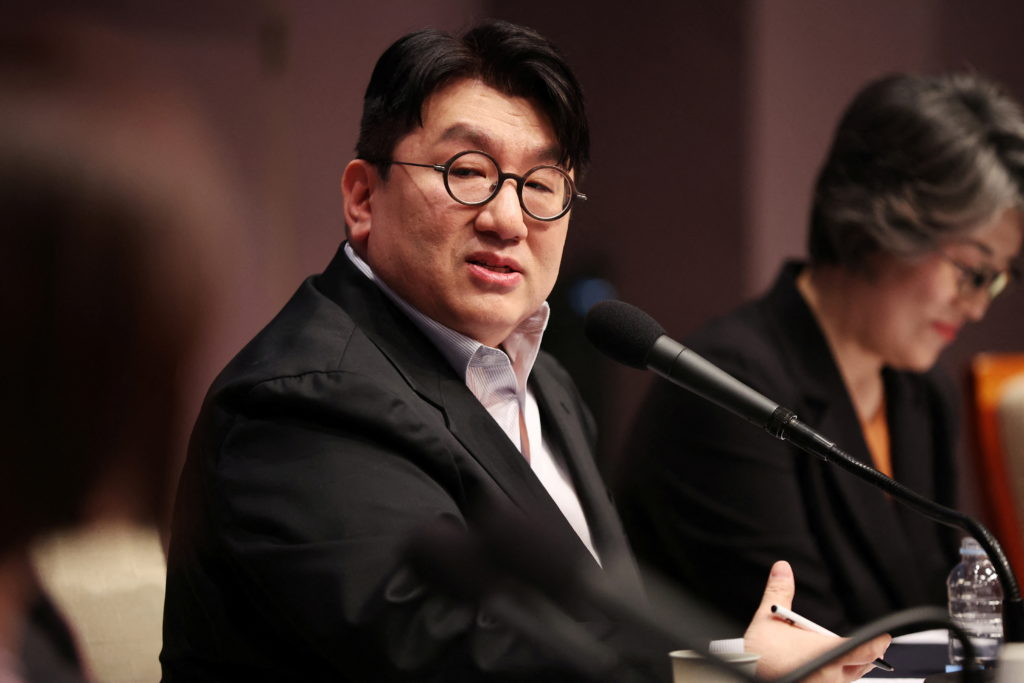
That is why the case cannot be read only through celebrity culture. K-pop has become an industrial system, and industrial systems depend on governance. Behind the choreography, fandom platforms and stadium tours lies a corporate architecture of investors, disclosures, valuations, contracts and market expectations. When that architecture is questioned, the glamour of the product cannot fully shield the institution.
The rejection of the arrest request gives Bang and HYBE temporary breathing room, but it also keeps the investigation alive. Prosecutors have asked for additional inquiry, which leaves open several outcomes: a renewed arrest request, a formal indictment without detention, or a slower evidentiary review. Each scenario carries different legal and reputational consequences.
For investors, the issue is uncertainty. HYBE’s market value depends not only on music releases and touring cycles, but also on confidence in management credibility. BTS’s return to full activity has the power to lift sentiment, but legal risk around the company’s founder can counterbalance that optimism. In modern entertainment markets, artists generate emotion, but governance sustains valuation.
The alleged involvement of pre-IPO transactions makes the matter particularly important for South Korea’s financial ecosystem. The country has spent years trying to strengthen transparency, investor protections and global confidence in its capital markets. A case involving one of its most internationally recognized companies becomes a public test of whether financial rules apply with equal force to cultural champions.
There is also a broader tension between national pride and legal accountability. HYBE and BTS helped expand South Korea’s global cultural influence, giving the country a level of soft-power visibility few entertainment companies can match. But that success also creates pressure. The more central a company becomes to national image, the more damaging any unresolved suspicion can become.
The controversy over a reported letter involving the US Embassy in Seoul adds another sensitive layer. HYBE has denied requesting diplomatic intervention to lift Bang’s travel restriction, and the matter remains politically charged because it touches the boundary between private business interests and international visibility. Even the perception of external influence can complicate a case already loaded with symbolism.
For fans, the investigation creates an uncomfortable separation between art and institution. BTS’s cultural impact remains real, but the company behind the group is now facing questions that belong to finance, law and corporate power. Mature fandoms may continue supporting the artists while demanding transparency from executives. That separation will be important if HYBE wants to protect its global credibility.
The case also shows how the K-pop industry has outgrown the category of entertainment. It now operates like a hybrid system: cultural production, platform economics, financial markets and geopolitical branding. In that system, founders are not only producers or visionaries. They become custodians of public trust, investor capital and national cultural capital.
Bang Si-hyuk’s legal position will depend on evidence, not mythology. His role in building BTS and HYBE cannot substitute for documentation, and accusations cannot substitute for proof. That is the point of the prosecution’s decision: the investigation continues, but arrest requires a stronger evidentiary foundation.
Still, the damage may not wait for a verdict. In industries built on trust, image and future expectations, uncertainty itself becomes an asset risk. HYBE must now manage not only legal defense, but narrative discipline, investor communication and the emotional stability of a global audience watching the case unfold.
The deeper lesson is clear. Cultural power does not exempt companies from financial scrutiny; it increases the need for it. The more globally influential an entertainment empire becomes, the more its governance must withstand inspection. K-pop’s next maturity test may not come from music charts, streaming records or stadium attendance, but from whether its institutions can remain credible when the spotlight shifts from idols to executives.
Detrás de cada dato, hay una intención. Detrás de cada silencio, una estructura.