

 Phoenix 24

A city becomes smart when power is reorganized.
Sincelejo, March 2026
Sincelejo’s emergence in Colombian coverage as a “smart territory” should not be read as a simple technology success story or as a local branding exercise dressed up in digital language. What is really at stake is a more strategic effort by a mid-sized city to reposition itself inside Colombia’s hierarchy of visibility, investment, and state modernization. The trigger is a public push backed by more than 9 billion Colombian pesos in technological infrastructure, alongside a narrative that places Sincelejo within the broader Latin American conversation on smart governance. That matters because cities like Sincelejo are rarely allowed to define the future; they are more often asked to catch up with it. A smart territory label, in that context, is not only a technical descriptor but also a bid for relevance.
The phrase itself deserves caution. “Smart city” and “smart territory” have become some of the most elastic formulas in the urban policy vocabulary, often stretched to cover everything from surveillance systems and connectivity upgrades to digital paperwork and traffic management. In practice, the difference between a meaningful transformation and a glossy slogan depends on whether technology changes the structure of public life or merely decorates municipal discourse. Sincelejo’s case becomes interesting precisely because it pushes that question away from the usual metropolitan suspects. When a city outside Colombia’s dominant urban triangle begins to claim smart status, the issue is no longer just innovation. It is territorial power.

That is why the investment figure alone is not the real story. Money can improve digital infrastructure, expand connectivity, and make administrative systems more efficient, but none of that automatically produces a genuinely intelligent territory. A city only becomes meaningfully smarter when technology alters the quality of governance, strengthens institutional responsiveness, and improves the citizen’s daily interaction with public systems. Otherwise, the term remains a promotional shell. Sincelejo now faces the classic Latin American test: whether digital modernization will become a lived civic experience or remain a narrative with cables underneath it.
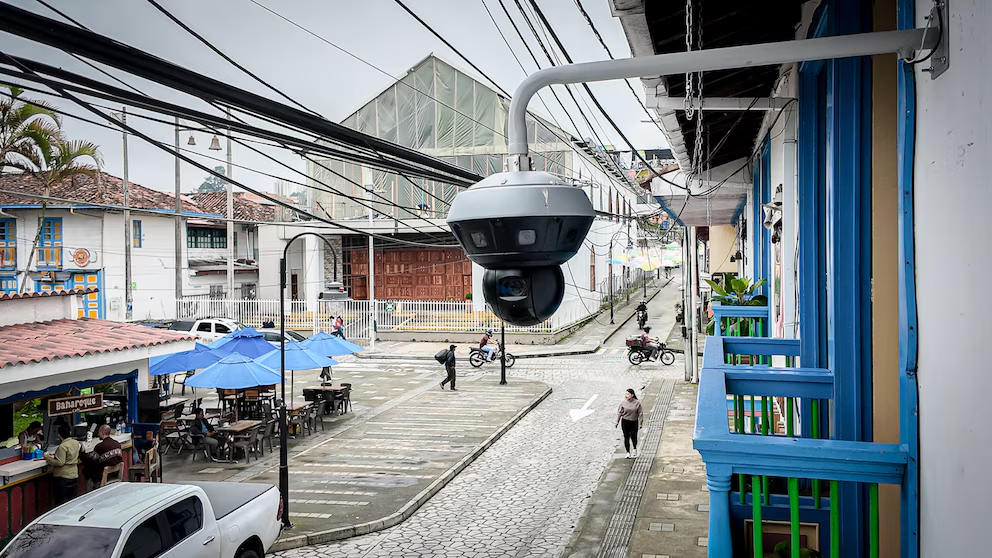
There is also a regional dimension that should not be underestimated. Latin America’s smart city discourse has long revolved around a small set of highly visible urban laboratories, above all Medellín, Bogotá, Santiago, and a few others that dominate the symbolic economy of innovation. For a city like Sincelejo to enter that conversation is, in itself, a challenge to the geography of technological prestige. It suggests that secondary cities increasingly understand that digital transformation is not only about efficiency, but also about escaping administrative invisibility. In countries with strong center-periphery asymmetries, a smart territory agenda can function as a political language of self-assertion.
Still, that language carries risks. Across the region, “smart” models have often arrived wrapped in promises of better security, cleaner mobility, and more agile public services, while quietly expanding systems of monitoring, data extraction, and technocratic control that citizens did not meaningfully debate. The smarter the city claims to become, the more important it is to ask who governs the data, who profits from the platforms, and how accountability is preserved. If the smart territory model in Sincelejo leans too heavily on infrastructure without democratic clarity, the project may modernize appearances faster than rights. In that sense, intelligence without civic transparency can become a very old form of power wearing a new interface.

At the same time, dismissing the initiative outright would be superficial. Mid-sized cities need tools to improve administration, attract investment, and narrow the developmental gap that keeps national opportunity clustered in only a handful of metropolitan areas. If digital systems help Sincelejo manage services more effectively, connect institutions better, and build stronger urban planning capacity, the label may eventually earn substance. The deeper opportunity lies in whether the city can use technology not simply to imitate bigger capitals, but to solve its own specific problems with greater precision. Smartness, after all, should not mean copying the model of someone else’s city.
What makes Sincelejo worth watching is that it exposes a broader shift in Latin America’s urban politics. The next wave of digital transformation may not be led exclusively by globalized capitals seeking to look futuristic, but by provincial and intermediate cities trying to renegotiate their place in the national map. For them, smart infrastructure is not only a matter of innovation policy. It is a way to signal seriousness, attract attention, and force the state and the market to look in their direction. In that sense, Sincelejo’s move says as much about Colombian territorial inequality as it does about sensors, networks, or data systems.
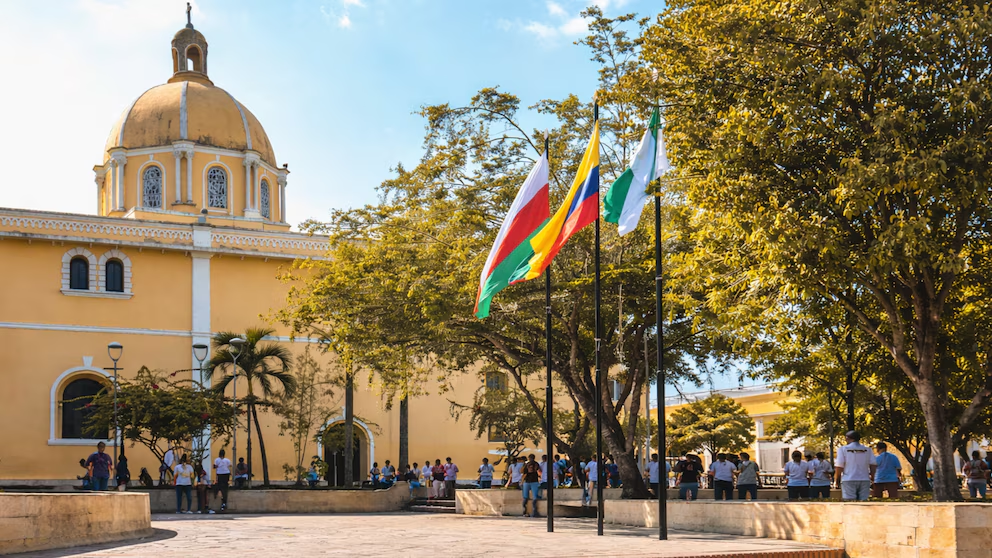
So the real meaning of this “smart territory” moment lies beyond the headline. Sincelejo is not simply being celebrated as technologically advanced; it is attempting to convert digital modernization into political repositioning. Whether that effort succeeds will depend less on the slogan than on what citizens actually experience in administration, mobility, service delivery, and public trust. If the transformation remains mostly rhetorical, the city will have gained a fashionable label and little else. But if the infrastructure is matched by governance depth, Sincelejo may prove that in Latin America the smartest territory is not always the richest or most famous, but the one that learns how to turn modernization into a new claim to centrality.
Detrás de cada dato, hay una intención. Detrás de cada silencio, una estructura.
Behind every datum lies an intention. Behind every silence, a structure.