

 Phoenix 24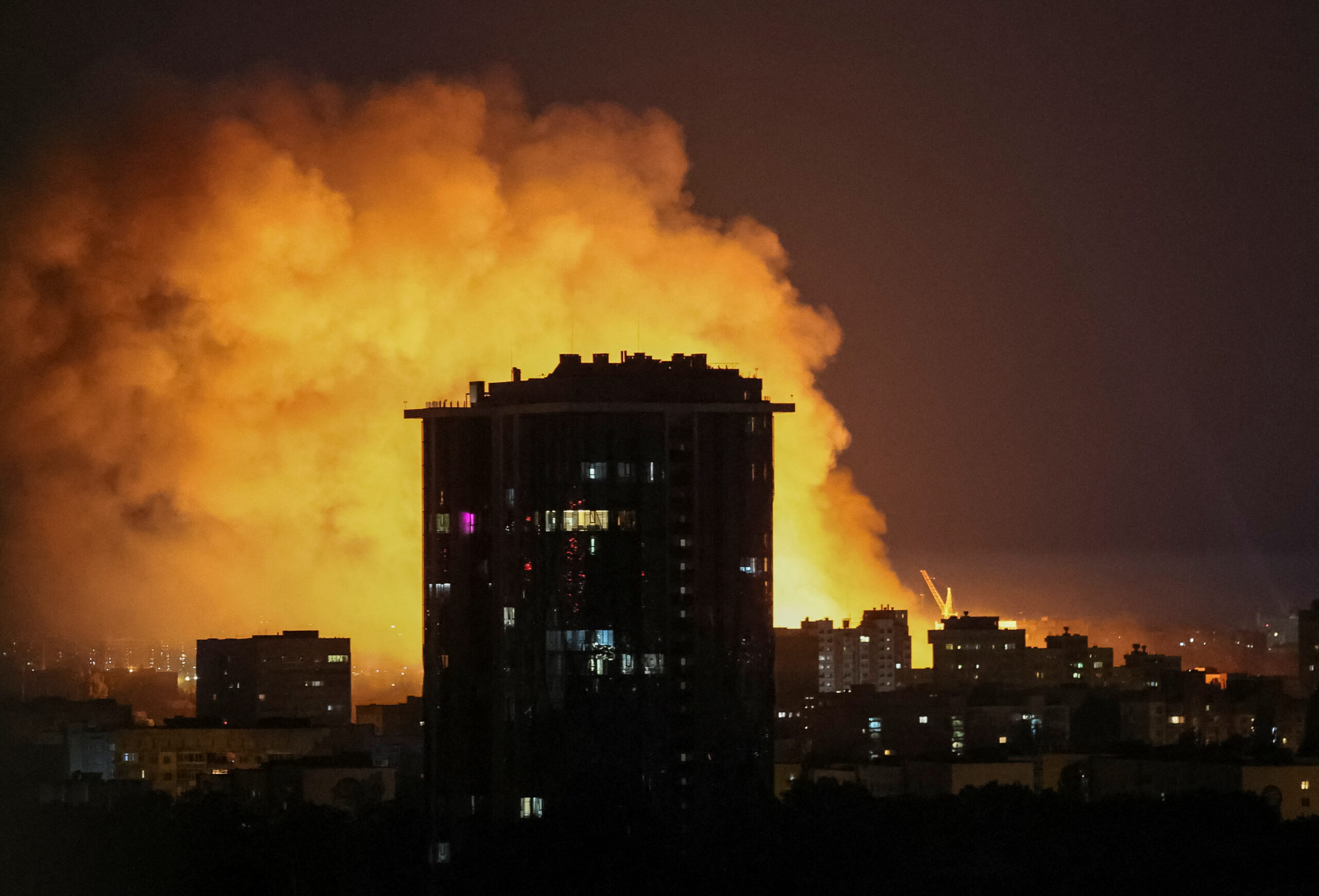
Mass bombardment now functions as political theater.
Kyiv, April 2026
Russia struck Ukraine with one of the largest recent aerial attack waves of the war, hitting Kyiv region and other parts of the country with a combination of drones and missiles in a campaign designed not only to damage infrastructure, but to extend fear across civilian life. Ukrainian authorities described the assault as massive and sustained, with damage reported in residential zones, emergency systems and local facilities as the country once again faced the pressure of absorbing violence at scale. The importance of the strike lies not just in the volume of weapons launched, but in the message embedded in that volume: the war is being pushed deeper into the rhythm of daily life.
What gives this barrage particular weight is the way it reflects the changing grammar of Russian air warfare. These attacks are no longer read merely as battlefield support or retaliatory pressure tied to a specific military development. They increasingly operate as demonstrations of endurance, spectacle and coercive visibility, showing that the objective is as much psychological as operational. When hundreds of airborne threats are launched in a compressed timeframe, the attack becomes a statement about reach, persistence and the cost of staying exposed.
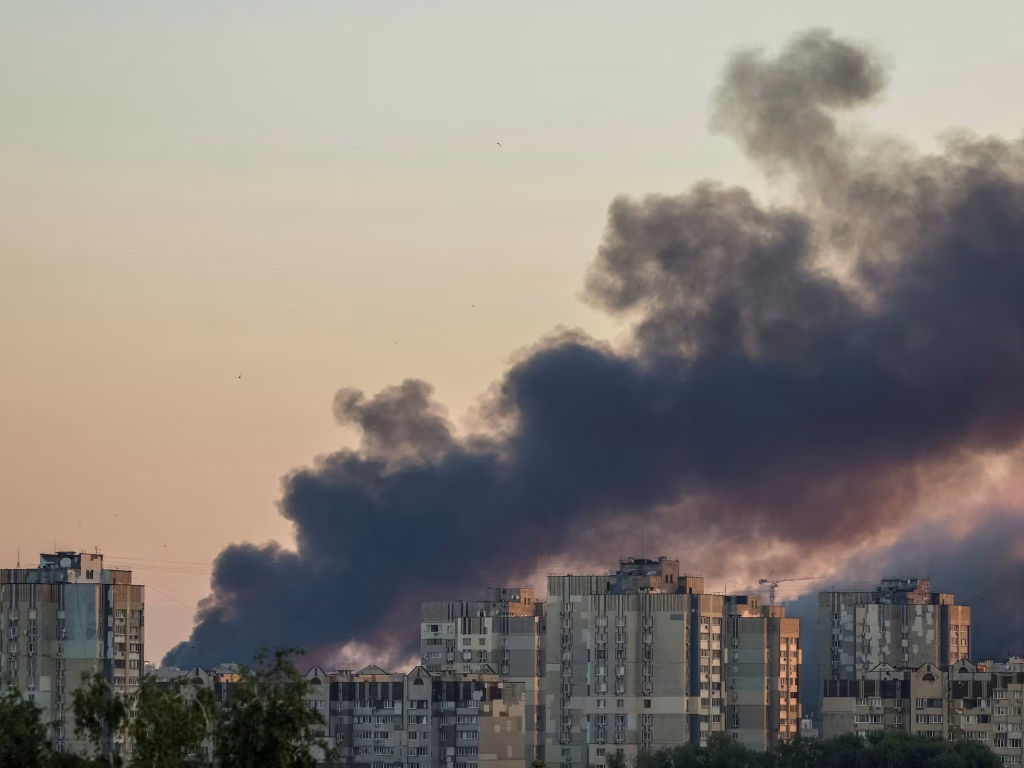
Kyiv remains central to that logic because it is both a capital and a symbol. Striking the region means targeting not only logistics and infrastructure, but also public morale, international attention and the image of state continuity under siege. Every large scale attack against the capital area reverberates beyond the immediate blast sites, because it forces Ukraine to defend not only territory, but the idea that governance, routine and public order can survive under relentless pressure. That is why barrages of this scale carry more than tactical meaning.
The broader context makes the assault even more revealing. Russia has steadily relied on drones as a key instrument in its long war strategy, using mass launches to stretch Ukrainian air defenses, impose recurring costs and create a climate of permanent alert. Missiles still matter, especially for destructive effect and symbolic escalation, but the drone has become central to a war of exhaustion in which repetition is itself a weapon. The aim is not always decisive breakthrough. Often it is cumulative strain.
That matters because Ukraine’s challenge is no longer limited to interception rates or technical defense capacity. Even when large numbers of incoming threats are destroyed, the attacks still leave behind fires, casualties, power disruption, shattered buildings and a constant renewal of civilian anxiety. In that sense, the Russian campaign is calibrated to exploit the gap between military success and social relief. A country can intercept much of what is launched and still be forced to live inside the consequences of saturation warfare.
There is also a diplomatic layer beneath the immediate destruction. Large attacks of this kind send a signal that Moscow remains committed to coercive leverage at a moment when calls for restraint, pauses or symbolic de escalation continue to circulate. That does not merely harden the battlefield. It narrows the psychological space in which diplomacy can appear credible, because every new strike reinforces the perception that pressure from the air remains one of Russia’s preferred tools for shaping the tempo of the conflict.
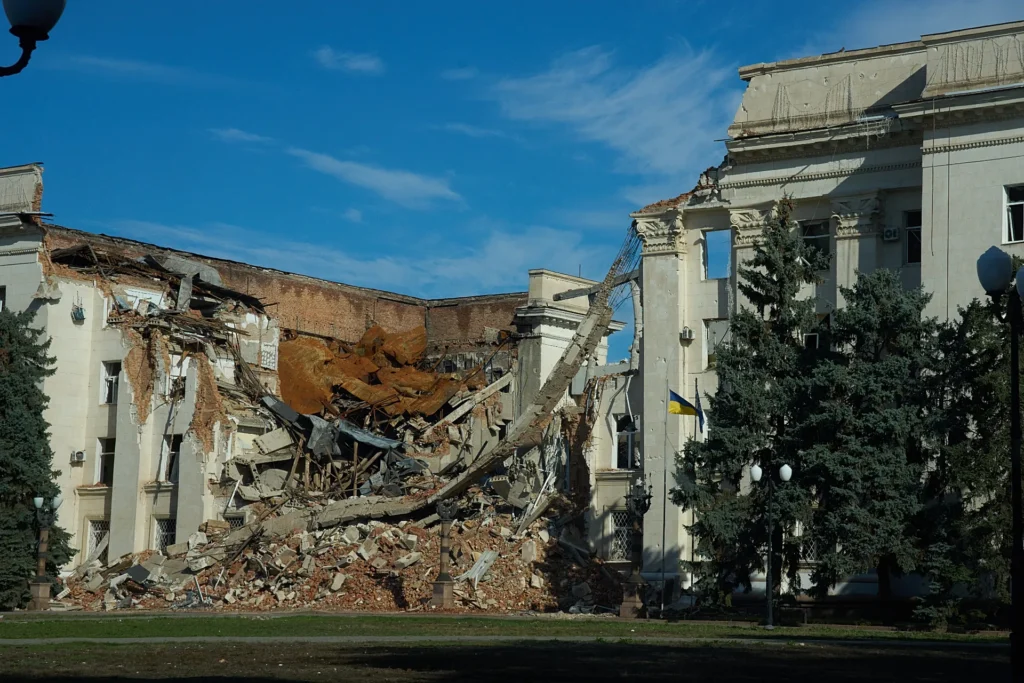
For Europe, these barrages are also a warning about the normalization of strategic violence near its political frontier. The issue is no longer only whether the front line shifts, but how sustained aerial pressure transforms civilian time, state resilience and regional security expectations. A war once narrated through maps and territorial control is now equally defined by what happens in the sky over cities, suburbs and infrastructure corridors. The battlefield has expanded upward, outward and inward at the same time.
That is why the assault on Kyiv region matters beyond a single day of war reporting. It shows that Russia’s air campaign has evolved into an instrument of attrition, spectacle and systemic fatigue, where the point is not simply to hit, but to keep hitting until shock becomes ordinary. For Ukraine, each such wave is both an emergency and a test of national stamina. For everyone watching from outside, it is another reminder that modern war is increasingly measured not only by land seized, but by how successfully terror can be routinized above civilian life.
Beyond the news, the pattern. / Más allá de la noticia, el patrón.