

 Phoenix 24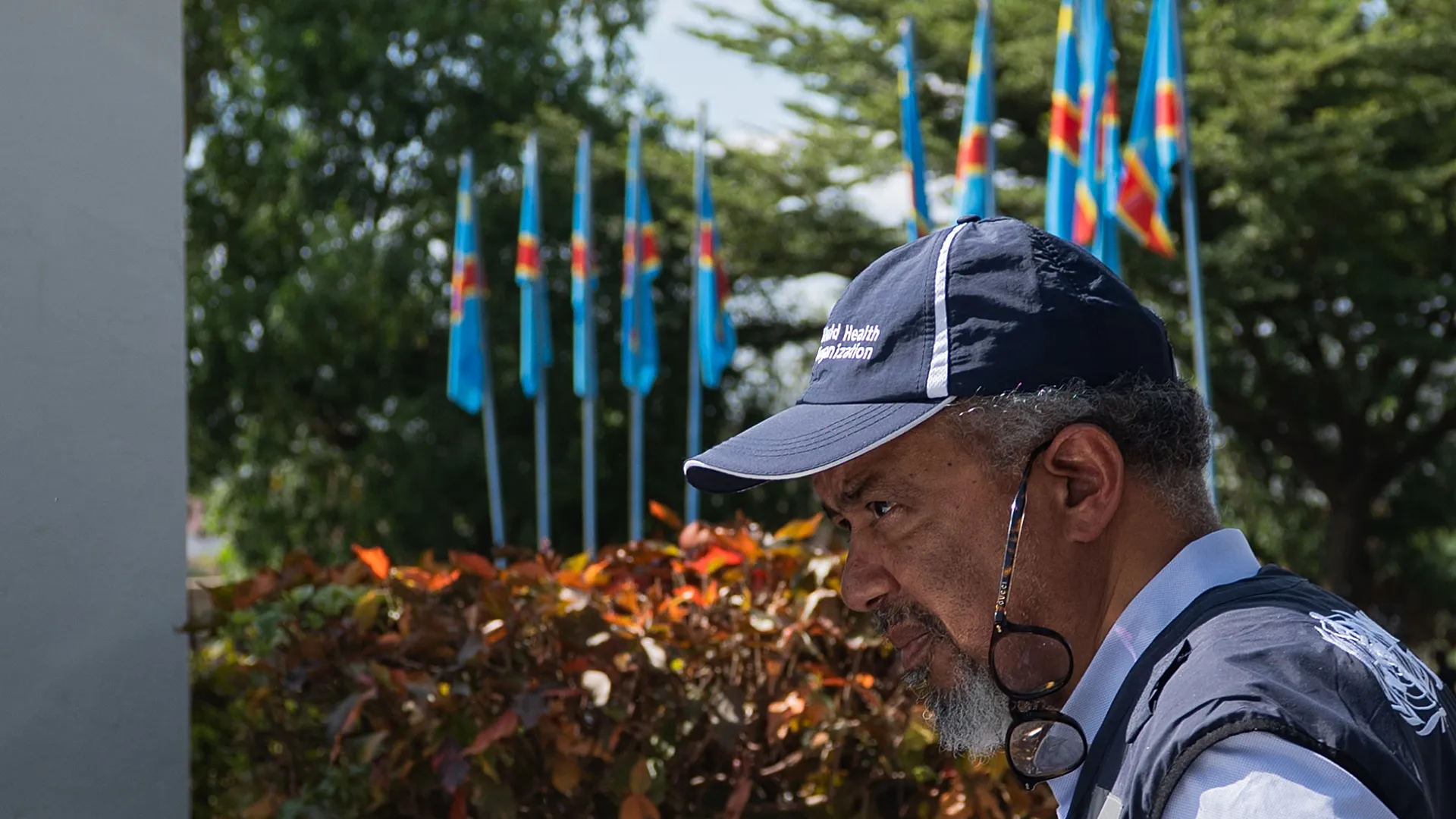
Health security begins with trust.
BUNIA, May 2026. The head of the World Health Organization, Tedros Adhanom Ghebreyesus, arrived in eastern Democratic Republic of Congo as a new Ebola outbreak placed Ituri province at the center of a dangerous public health emergency. His visit to Bunia carried a direct message: medical infrastructure alone will not stop the virus if communities do not trust, report, isolate and cooperate with health teams.
The outbreak involves the rare Bundibugyo strain of Ebola, a species for which there is no approved vaccine or specific treatment currently available. That reality makes early detection, supportive care and community engagement especially critical. In a region already strained by conflict, displacement and weak health systems, every delay in reporting symptoms can multiply transmission chains and deepen fear.
Health authorities have reported more than 1,000 suspected cases and more than 240 deaths, while confirmed figures continue to evolve as testing expands. The numbers reveal not only the biological threat of Ebola, but also the structural vulnerability of eastern Congo. Disease surveillance, laboratory confirmation, safe burials and patient tracing all become harder when communities are remote, under-resourced and exposed to armed violence.
Tedros emphasized that the response must become “everybody’s business,” a phrase that reflects the central lesson of previous Ebola emergencies. Outbreaks are not contained only by doctors in protective suits. They are contained when families trust health workers, when local leaders counter misinformation, when patients seek care early and when burial practices are adapted without humiliating communities already living through grief.
The danger is not limited to Congo. Neighboring Uganda has also reported infections, reinforcing concerns that cross-border movement, trade routes and family networks could widen the outbreak if coordination weakens. In central and eastern Africa, public health is never separate from geography, mobility or security. The virus moves through human systems before it becomes a statistic.
The announcement of early patient recoveries offered a narrow but important sign of hope. Even without a dedicated vaccine for this strain, timely supportive care can save lives when patients reach treatment centers early. That is why the opening of a new treatment facility in Bunia matters, not only as a clinical resource, but as a test of whether institutional response can move faster than fear.
This outbreak is also a warning to the international system. Congo has faced Ebola repeatedly since the disease was first identified in 1976, yet each new emergency exposes the same unresolved fractures: underfunded preparedness, fragile local trust, insecurity around health zones and delayed global attention until the numbers become politically impossible to ignore. The virus is biological, but the crisis is institutional.
The WHO chief’s visit therefore represents more than a health mission. It is a reminder that epidemic control depends on legitimacy as much as logistics. In Ituri, the fight against Ebola will be decided not only in treatment centers, but in households, markets, churches, roads and burial grounds where public trust either survives or collapses.
Against propaganda, memory. / Contra la propaganda, memoria.