

 Phoenix 24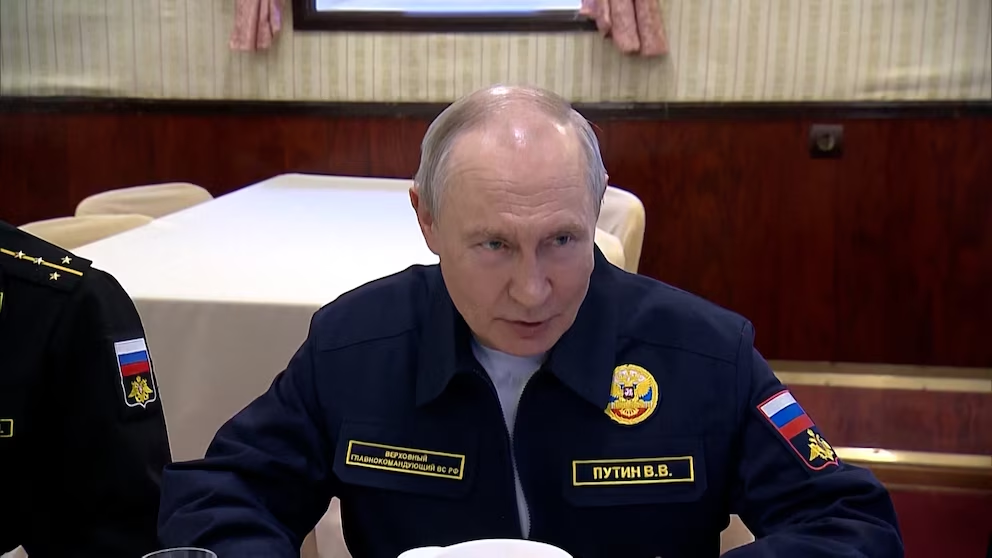
Private digital content becomes a new political battlefield.
Moscow, August 2026
Russian authorities are intensifying criminal action against women who produce adult content for platforms such as OnlyFans and Telegram. The campaign is formally based on Article 242 of Russia’s Criminal Code, which penalizes the illegal production and distribution of pornographic materials. Yet its acceleration reflects a wider political agenda promoted by President Vladimir Putin under the banner of protecting traditional spiritual and moral values. Conduct that previously occupied a legally ambiguous digital space is increasingly attracting searches, arrests, prosecutions and severe restrictions.
One prominent case involves 21-year-old creator Sofya Vershinina, known online as Sonya Marmeladova. A Moscow court convicted her of producing and distributing explicit videos, imposing a suspended three-year prison sentence, a substantial fine and a three-year prohibition on using the internet. Prosecutors had reportedly sought a custodial sentence of three and a half years. The internet ban effectively dismantles her source of income while transforming digital exclusion into an instrument of criminal punishment.
Authorities have also pursued influencer Diana Shurygina, who was placed under house arrest after being accused of distributing prohibited material through online channels. She faces between two and six years in prison if convicted under the aggravated provisions of Article 242. Model Anastasia Ovsyannikova, known as Nastya Kholod, and German producer Ludwig Krichker have reportedly been investigated in connection with the same broader case. Their legal responsibility remains for the courts to determine, but the expanding number of defendants suggests coordinated scrutiny of creators, collaborators and production networks.
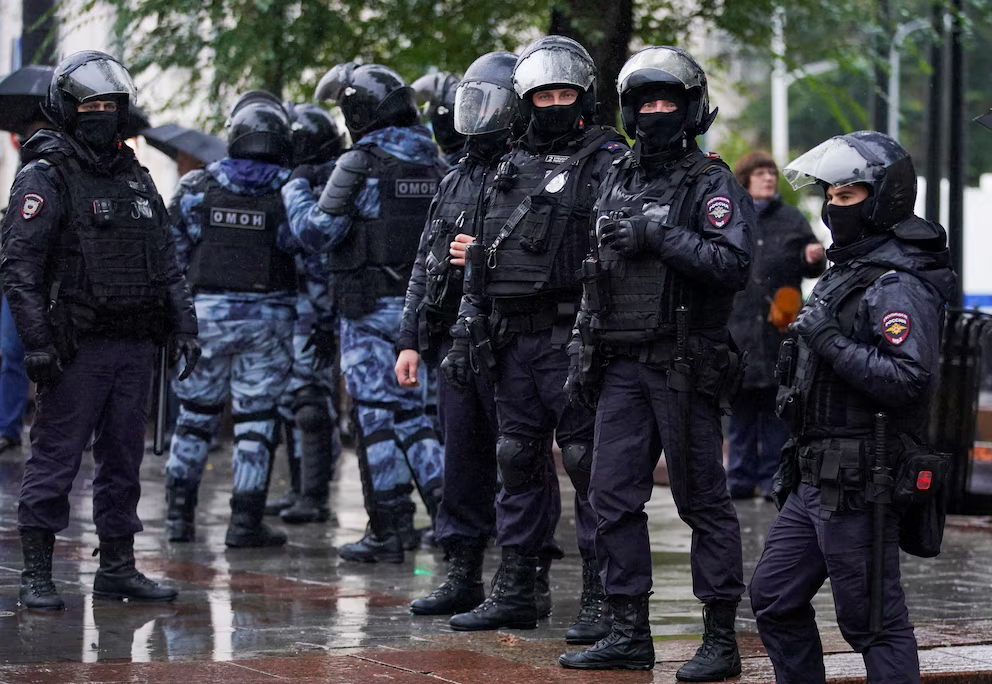
The prosecutions cannot be separated from Russia’s broader conservative transformation since the invasion of Ukraine. The Kremlin has increasingly presented Western cultural influence, LGBTQ+ visibility, voluntary childlessness and sexually explicit expression as threats to national identity and demographic survival. Regulations originally framed as protective measures have gradually developed into an extensive system governing culture, entertainment, private behavior and online communication. Women’s bodies and economic autonomy consequently occupy a central place in a state project that links morality, nationalism and population policy.

Adult-content regulation exists in many countries, particularly to prevent exploitation, trafficking and harm to minors. The Russian campaign raises different concerns because broad legal definitions, selective enforcement and political rhetoric can blur the boundary between legitimate regulation and ideological control. Digital platforms once allowed creators to operate beyond traditional cultural gatekeepers, but they also provide authorities with financial records, communications and permanent evidence. Russia’s crackdown therefore signals more than a dispute over pornography: it demonstrates how moral language can legitimize surveillance while converting personal conduct into an issue of political loyalty.
Phoenix24: journalism without borders. / Phoenix24: periodismo sin fronteras.