

 Phoenix 24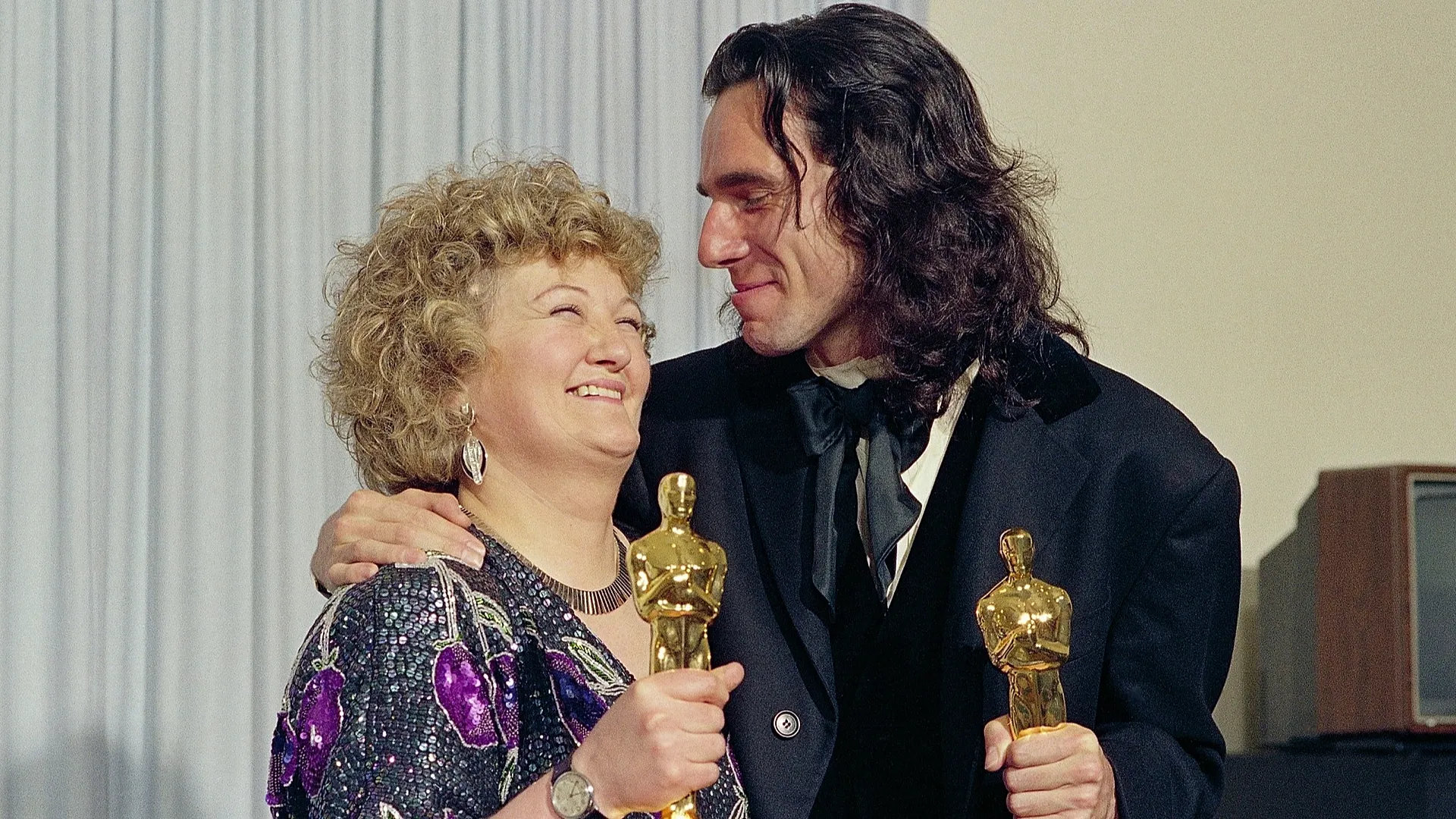
Her quiet intensity created unforgettable characters across generations.
Dublin | July 2026
Brenda Fricker, the acclaimed Irish actress whose deeply human performance in My Left Foot earned her an Academy Award and whose portrayal of the Pigeon Lady in Home Alone 2 became beloved by generations of viewers, has died at the age of 81.
Her representative, Phil Belfield, confirmed that Fricker died following a period of ill health. In a tribute, he described working with and knowing the actress as an honor, emphasizing the profound absence her death leaves within the international film and television community.
Fricker became the first Irish woman to win an Oscar when she received the 1990 Academy Award for Best Supporting Actress for My Left Foot. She played Bridget Brown, the determined mother of Irish writer and painter Christy Brown, who was born with cerebral palsy and learned to write and paint using his left foot.
The biographical drama also earned Daniel Day-Lewis the Academy Award for Best Actor. While his physical and emotional transformation dominated much of the film’s public recognition, Fricker’s restrained performance provided its moral and emotional foundation. Her character conveyed resilience, fatigue, affection and unwavering maternal commitment without relying on theatrical excess.
The role established Fricker internationally as an actress capable of giving extraordinary depth to ordinary people. Her approach was grounded in emotional precision rather than celebrity spectacle, allowing audiences to recognize the dignity, frustration and courage of women whose lives were often overlooked by mainstream cinema.
For many younger viewers, however, Fricker remained inseparable from the mysterious Pigeon Lady of Central Park in Home Alone 2: Lost in New York. Released in 1992, the film presented her character initially as a frightening and isolated figure before revealing a vulnerable woman carrying the emotional consequences of betrayal and loneliness.
Her friendship with Kevin McCallister, played by Macaulay Culkin, became one of the film’s most memorable relationships. Through their conversations, the story moved beyond comedy and adventure to address trust, compassion and the fear of reconnecting with others after being hurt.
Fricker transformed what could have been a minor supporting role into an enduring symbol of empathy. The character’s appearance, surrounded by pigeons and separated from the festive crowds of New York, became culturally recognizable, but it was the actress’s emotional sincerity that gave the performance its lasting power.
Her career extended across more than six decades and included major roles in film, television and theatre. She appeared in productions such as So I Married an Axe Murderer, A Time to Kill, Veronica Guerin and Albert Nobbs, moving comfortably between intimate Irish dramas and large international productions.
Before achieving global film recognition, Fricker was already familiar to British television audiences through her portrayal of nurse Megan Roach in the medical drama Casualty. She became one of the programme’s original and most recognizable performers during the 1980s, later returning to the character in 2007 and 2010.
Her work on television reflected the same qualities that defined her film career: credibility, emotional restraint and an ability to make supporting characters feel central to the human experience. She rarely depended on glamour or conventional stardom, instead building performances through observation, vulnerability and psychological detail.
Born in Dublin on February 17, 1945, Fricker entered acting after initially pursuing work in journalism. Her professional trajectory eventually carried her from Irish and British television to Hollywood, where she became one of Ireland’s most internationally respected screen performers.
The United States ambassador to Ireland, Edward Walsh, described her as a giant of Irish cinema and praised the international reach of her work. He emphasized that her performances carried Irish stories from Dublin to Hollywood and inspired audiences on both sides of the Atlantic.
That cultural significance extended beyond her Oscar victory. Fricker belonged to a generation of Irish performers who helped demonstrate that locally rooted stories, accents and identities could achieve global resonance without losing their authenticity.
Her performances often centered on people living beyond the traditional boundaries of power: mothers, nurses, widows, caregivers and socially isolated figures. She approached them without condescension, revealing complexity in characters who might otherwise have been treated as secondary or invisible.
Despite receiving one of cinema’s highest honors, Fricker maintained a complicated relationship with fame and frequently spoke with unusual candor about loneliness, aging and the realities of an acting career. That openness reinforced the impression of a performer who remained emotionally direct even when discussing difficult personal experiences.
Her legacy rests not simply on the number of productions in which she appeared, but on the emotional memory created by a small group of defining performances. Bridget Brown represented endurance within a family shaped by hardship, while the Pigeon Lady represented the possibility of human connection after profound disappointment.
Those characters belonged to very different cinematic worlds, yet both reflected Fricker’s central artistic strength: her ability to communicate pain without sentimentality and compassion without weakness.
Brenda Fricker leaves behind a body of work spanning Irish television, British drama and international cinema. Her performances crossed cultural and generational boundaries, reminding audiences that the most enduring characters are not always the loudest, but those who reveal humanity through silence, gesture and emotional truth.
Phoenix24 | Global news with independent perspective. Noticias globales con perspectiva independiente.