

 Phoenix 24
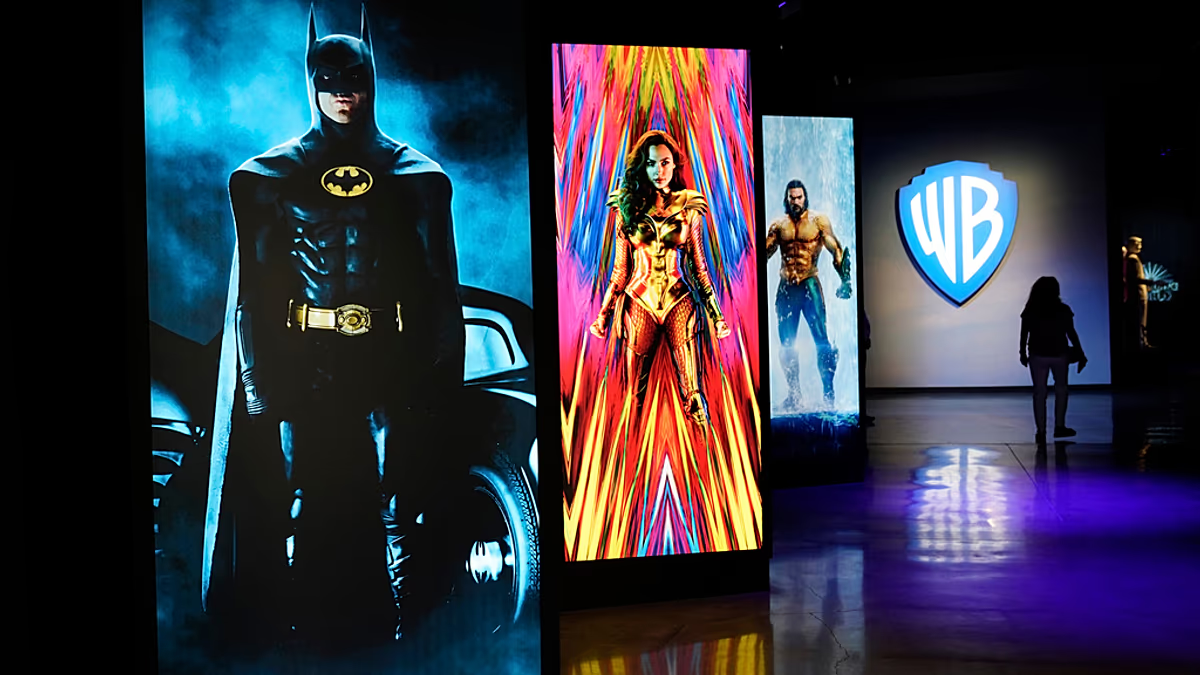
A silent shift in the entertainment world can feel louder than any box office debut, especially when the balance of cultural power tilts in a single afternoon.
Los Angeles, December 2025
Netflix has finalized a sweeping acquisition of Warner Bros Discovery, bringing HBO, its premium catalog, and some of the most influential franchises in modern media under the umbrella of a company once mocked for mailing DVDs. The transaction reshapes the global entertainment order, fusing old Hollywood’s symbolic weight with the algorithmic precision of a platform that has studied viewer behavior in over one hundred and ninety countries. It is not merely a merger of assets; it is a consolidation of imagination and influence with consequences that extend far beyond screens.
Industry analysts across Europe have framed the deal as a turning point in the decades long battle for cultural relevance. Warner, for nearly a century, incubated filmmakers, studios, and prestige television brands that shaped narratives from Los Angeles to London. By joining Netflix, the company enters an ecosystem designed for speed, volume, and worldwide synchronization. Executives in the United States argue that this alignment enhances creative potential, yet others question whether such concentration risks flattening the diversity of global storytelling.
Observers in Asia interpret the merger through a different lens. Their markets, defined by explosive demand and rapid content cycles, view the union as an attempt to secure dominance before regional competitors consolidate. The streaming wars of the past decade already demonstrated that scale determines survival. What Netflix acquires here is not only intellectual property but also strategic endurance in a landscape where attention is finite and distribution channels multiply. Meanwhile, cultural ministries in several Asian nations worry that the merged entity could dictate market rhythms that local producers might be unable to match.
Financial analysts in North America see a pragmatic rationale behind the acquisition. Integrating Warner’s library with Netflix’s distribution network may reduce production redundancies and create economies of scale that smaller competitors cannot replicate. By merging two subscriber bases into one consolidated tiered ecosystem, the company positions itself to withstand economic downturns and shifting consumption habits. This view, however, is balanced by warnings that regulatory bodies in multiple jurisdictions will scrutinize whether the merger undermines competition or crowds out independent content creators.
The artistic implications are equally significant. HBO, long regarded as a guardian of premium television, enters a platform where algorithms influence visibility and longevity. Creators across Europe and South America have expressed concern that artistic risk might diminish in a system that optimizes for global resonance rather than cultural specificity. Others counter that the deal provides budget stability, international exposure, and the possibility of cross market collaborations previously limited by legacy structures. What remains clear is that the dynamics of prestige television will change, perhaps irrevocably.
Cultural sociologists note that the convergence of two entertainment powerhouses will shape not only what audiences watch but how cultural memory is constructed. Franchises with multigenerational recognition now sit beside experimental works that thrive on binge patterns. The integration of such catalogs promises an unprecedented mapping of global taste, forging a dataset capable of revealing not just what people like but how storytelling adapts to geopolitical moods, economic cycles, and generational shifts. Within this matrix, Netflix becomes not only a distributor but also an interpreter of cultural desire.
Yet the path ahead is not without friction. European regulators signal that the merger raises questions about cultural sovereignty and media plurality. Latin American producers worry that the expanded corporation may overshadow regional industries already struggling for visibility. Asian observers highlight the risk of overcentralization in a world that increasingly values differentiated content. These concerns illustrate that consolidation rarely arrives without cost, even when framed as innovation.
Despite these tensions, Netflix projects confidence. Its leaders emphasize the merger as a reinforcement of the global creative economy, insisting that the union of cinematic heritage and digital scale will benefit both audiences and artists. They portray the acquisition as a necessary evolution in a market defined by escalating production expenses, fragmented attention spans, and relentless competition from short form platforms. Whether this optimism survives regulatory review remains to be seen, but the strategic logic is unmistakable: controlling content, distribution, and audience metrics yields unmatched power in the modern media landscape.
Warner’s identity, once anchored in the physical cityscapes of Hollywood, now merges with a platform that thrives in intangible spaces. HBO’s legacy of narrative excellence, layered characters, and meticulously crafted worlds confronts a global ecosystem built on continuous engagement. The question is not whether they can coexist but what new form they will take together. A catalog this vast, when synchronized into a single algorithmic universe, may redefine how culture circulates and which stories ascend.
As the industry absorbs the impact of the acquisition, one conclusion emerges. The merger marks the end of fragmentation and the rise of a consolidated cultural empire. For audiences, the change may feel seamless. For the entertainment world, it is a tectonic adjustment whose aftershocks will shape the next decade of global storytelling.
More than entertainment is at stake. Control over narrative production is a form of soft power. With this acquisition, Netflix moves from being a dominant platform to becoming the central axis of a global cultural infrastructure. The world will watch, but under this new configuration, Netflix may also be watching the world back.
Phoenix24: clarity in the grey zone.