

 Phoenix 24
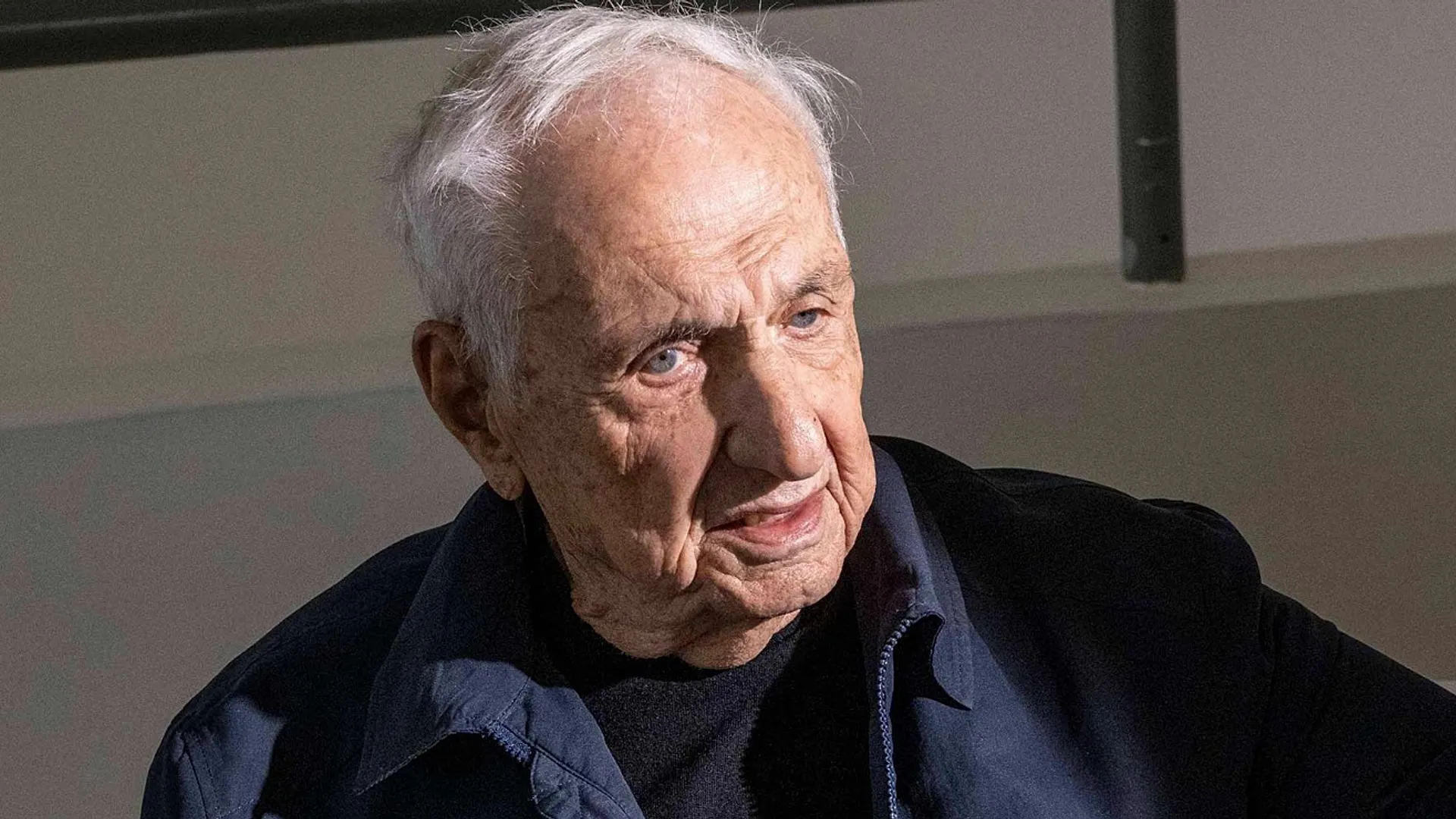
Some creators reshape their craft. A few reshape the world around it. Frank Gehry belonged to the latter group.
Los Angeles, December 2025
Frank Gehry, the architect whose visionary defiance of geometry altered skylines on three continents, died this week at the age of ninety six after a brief respiratory illness. His death marks the end of an era in which buildings ceased to be merely functional structures and instead became living gestures of movement, light and cultural momentum. Gehry’s passing resonates far beyond architecture because his influence penetrated urban planning, global tourism, civic identity and the politics of cultural renewal.
Born in Toronto in 1929 and later naturalized in the United States, Gehry approached architecture with a stubborn refusal to accept the predictable. Colleagues often described his early years as restless, marked by an almost compulsive need to disrupt the orthodoxy of straight lines. His renovated Santa Monica home became an early manifesto of controlled chaos, announcing to the world that he intended to use space as a medium of rebellion. From that moment, the boundaries of contemporary design would never fully return to their previous certainties.
The building that immortalized him, of course, was the Guggenheim Museum Bilbao. Its titanium curves, shimmering against the Basque sky, generated something more potent than admiration. They produced an economic shock wave. Urban policy analysts in Europe still cite the museum as one of the most successful examples of cultural infrastructure transforming an entire regional economy. The so called “Bilbao effect” revealed that in an age of deindustrialization and shifting power centers, architecture could serve as a catalyst not merely for aesthetic dialogue but for political and economic repositioning.
Gehry did not stop there. The Walt Disney Concert Hall in Los Angeles, the Louis Vuitton Foundation in Paris and multiple cultural landmarks in Asia and the Middle East expanded his linguistic palette. Each project destabilized expectations in different ways. Some critics found him extravagant. Others saw in his work a form of architectural jazz: improvisational, audacious, guided by intuition rather than convention. Even skeptics admitted that entering one of his buildings produced a sensation few architects could replicate.
International observers often link Gehry’s creative rise to broader societal transformations. In Europe, where historical preservation is a constant political battleground, his asymmetrical forms redefined debates about modern identity within ancient cities. In Asia, where vertical density dominates urban life, Gehry’s fluid silhouettes challenged developers to imagine alternative expressions of prestige. Meanwhile, cultural institutions in the Middle East saw in his designs a way to signal global engagement, projecting openness through architectural spectacle. His vision thus became part of a global narrative in which buildings serve as diplomatic statements as much as artistic ones.
Yet Gehry remained uninterested in grandeur for its own sake. Interviews throughout his career revealed a preoccupation with human experience rather than cultural monumentality. He wanted his spaces to feel alive. Light mattered, but so did the way a visitor moved through a hallway or turned a corner. He often spoke about architecture as a negotiation between material limits and emotional possibility. That philosophy allowed him to merge sculpture and shelter into a single vocabulary that would eventually be adopted, imitated and debated across the world’s architectural schools.
His death also reopens questions about the future of iconic design in a time defined by climate constraints, rapid digitalization and escalating construction costs. Experts in sustainable development argue that Gehry’s experimentation paved the way for engineers to rethink materials and complex fabrication. Technologists point out that software innovations in modeling and simulation accelerated precisely because architects like Gehry demanded tools capable of rendering unconventional forms. In that sense, his legacy extends into domains that transcend aesthetics and stretch into the architecture of innovation itself.
The cultural reaction to his passing has been immediate. Curators in Europe describe him as a sculptor of cities. Scholars in North America highlight his rejection of architectural fatalism, insisting that buildings need not imitate their surroundings but could transform the psychological experience of inhabiting space. Critics in Asia emphasize his ability to bridge artistic traditions without appropriating them. The diversity of these perspectives illustrates the breadth of his impact, which spanned institutions, nations and artistic movements.
Gehry leaves behind a body of work that is neither uniform nor quiet. It is restless, alive and defiantly human. His buildings do not whisper. They speak in curves, surfaces and shadows. They remind cities that imagination can be as infrastructural as steel. They challenge future architects to risk imperfection in pursuit of meaning.
As the world reflects on his life, one truth becomes clear. Gehry did not merely design structures. He designed possibilities. The void left by his absence is profound, yet the forms he created continue to pulse with the energy of his convictions. His architecture survives him, not as frozen monuments, but as living embodiments of curiosity and dissent.
Phoenix24: journalism without borders. / Phoenix24: periodismo sin fronteras.