

 Phoenix 24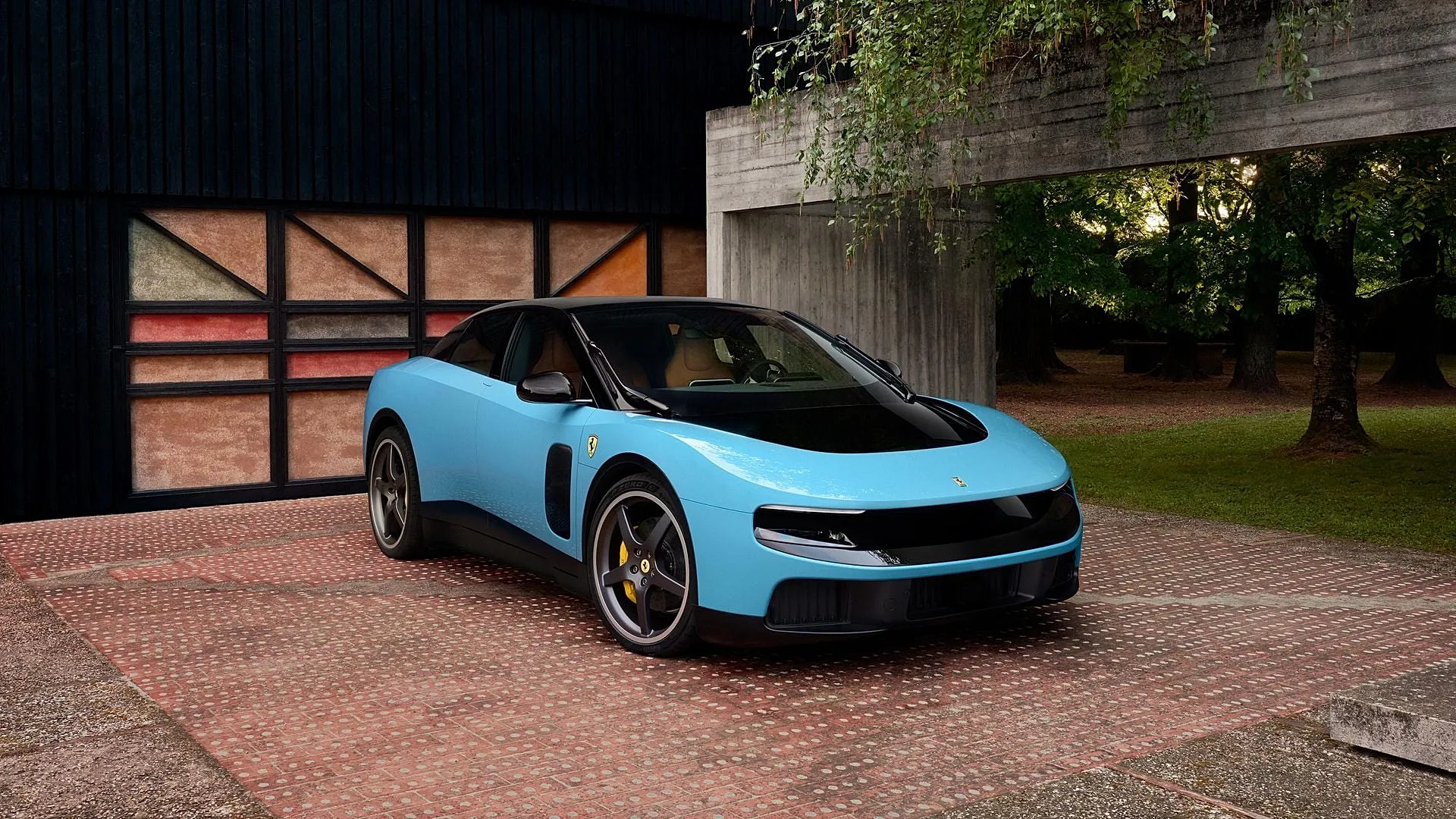
A leadership transition arrives at a defining moment for the brand.
Maranello, June 2026
Ferrari has appointed former BMW Italy chief Massimiliano Di Silvestre as its new marketing and commercial director following the controversial unveiling of the company’s first fully electric vehicle. He will replace Enrico Galliera, one of Ferrari’s most influential executives, who is leaving after more than 16 years with the luxury carmaker. The change comes as Ferrari attempts to defend the identity of its new Luce model against criticism from investors, enthusiasts and former company leaders. The timing has linked the executive transition closely to the most polarizing product launch in the brand’s recent history.
Galliera will remain in his role until Di Silvestre assumes responsibility on July 1. Ferrari said his departure had been agreed with the company earlier and represented a new stage in his professional career. A person familiar with the matter indicated that the decision to separate had been taken at the beginning of the year, with Galliera remaining long enough to complete the electric model’s launch. This chronology means the company has not formally attributed his exit to the negative reaction surrounding the Luce.
Chief executive Benedetto Vigna thanked Galliera for an extraordinary contribution to Ferrari’s international development. During his tenure, the executive helped expand the company’s global appeal while maintaining the scarcity and exclusivity central to its commercial strategy. Ferrari increasingly attracted younger buyers and customers outside its traditional European and North American base. Galliera also played a significant role in managing relationships with the collectors who receive access to the company’s most limited models.
His departure nevertheless arrives at a delicate moment. The Luce, priced at approximately 550,000 euros, represents Ferrari’s first attempt to translate its performance identity into a vehicle powered entirely by electricity. The four-door, five-seat model differs substantially from the low, aggressive and combustion-powered sports cars historically associated with the prancing horse. Its minimalist appearance and unconventional proportions immediately divided commentators following its presentation in May.
The design was developed partly through collaboration with former Apple design chief Jony Ive and industrial designer Marc Newson. Ferrari deliberately pursued a visual language that would not simply imitate one of its petrol vehicles with an electric drivetrain. The company wanted to create a distinct category capable of attracting wealthy customers who already appreciate electric technology but may not own a traditional Ferrari. That strategy produced a car whose appearance has been described by the manufacturer itself as intentionally provocative.
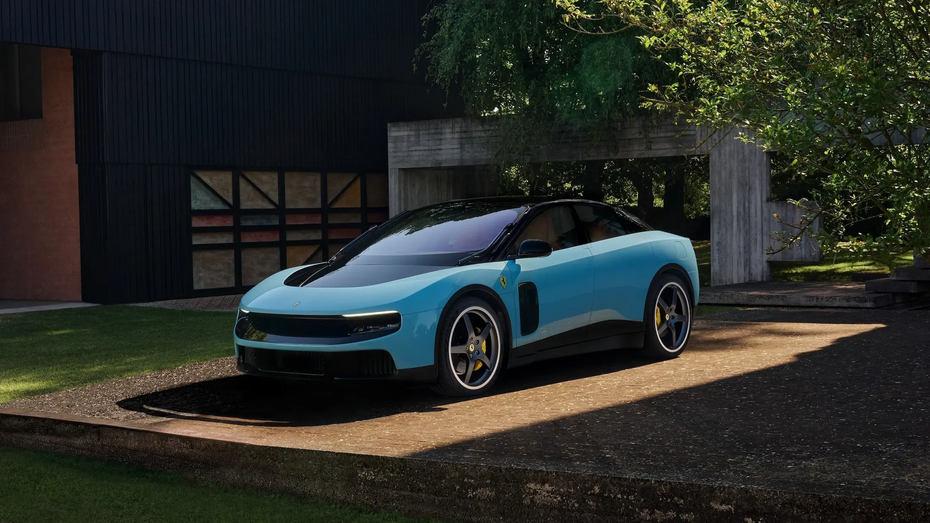
Online reaction was frequently hostile. Social media users compared the Luce with ordinary sedans, household appliances and less exclusive electric vehicles. Former Ferrari chairman Luca di Montezemolo criticized the design and reportedly argued that it did not deserve to carry the company’s famous emblem. Ferrari’s shares also fell sharply after the presentation, indicating investor uncertainty about whether the model could protect the brand’s extraordinary pricing power.
Ferrari executives have continued defending the vehicle. Chief product development officer Gianmaria Fulgenzi said the Luce requires time to be understood because its aerodynamic solutions and complex structure depart from familiar expectations. He insisted that the vehicle delivers the emotional and dynamic sensations associated with other Ferraris once it is driven. The company presents the model as a different expression of its identity rather than an abandonment of its heritage.
The Luce uses four electric motors producing approximately 1,050 horsepower. It can accelerate from zero to 100 kilometers per hour in around 2.5 seconds and reach a top speed of approximately 310 kilometers per hour. Its estimated range is about 530 kilometers under a full charge. These figures place it firmly within the high-performance category, even though its shape and seating capacity emphasize versatility more than Ferrari’s traditional two-seat sports cars.
Customer demand remains the most important test. Vigna said Ferrari received strong interest from both existing clients and potential first-time buyers after the unveiling. The company has not yet disclosed precise order numbers and plans to provide more information when it reports second-quarter results at the end of July. Some reports indicate that production allocations are already committed well into 2027, although the true depth of demand will become clearer only after deliveries begin and resale values emerge.
Ferrari has also denied allegations that customers were being pressured to purchase the Luce to improve their chances of obtaining future limited-edition vehicles. Galliera said such a strategy would be a serious mistake because reluctant buyers could become hostile ambassadors for the model and quickly resell it. That behavior would weaken residual values, an area where luxury electric vehicles have often struggled. Ferrari says the Luce should be purchased only by customers who genuinely want it.
Di Silvestre enters this environment with more than two decades of experience in premium automotive markets. He served for almost seven years as president and chief executive of BMW’s Italian operations and helped strengthen the German group’s position within the country’s luxury segment. His background includes commercial development, brand management and corporate transformation. Ferrari expects him to report directly to Vigna and participate in the company’s senior leadership team.
His immediate challenge will be broader than selling a single vehicle. Ferrari must preserve its reputation for mechanical emotion while preparing for a market in which electric and hybrid powertrains will occupy a larger share of production. The company has moderated earlier electrification targets and now expects fully electric models to represent about 20 percent of its range by 2030. Internal-combustion and hybrid vehicles will continue forming the majority.
The strategy differs from manufacturers that once promised an almost complete transition to electric power. Demand for expensive electric cars has weakened in several markets, while buyers continue valuing the sound, character and perceived collectability of combustion engines. Ferrari must therefore introduce new technology without appearing to follow an industry trend at the expense of its own identity. Its customers do not purchase transportation alone; they purchase history, scarcity and emotional symbolism.
The Luce is the company’s most visible experiment in that balancing act. It could attract a new class of buyers and demonstrate that electric propulsion can support Ferrari-level performance. It could also become a warning about extending a powerful brand too far from the elements that created its prestige. Di Silvestre will inherit responsibility for shaping how customers interpret that risk.
Galliera’s exit may have been planned before the public backlash, but the transition cannot be separated from the context in which it occurs. Ferrari is replacing its commercial leadership just as it asks customers to accept the most radical reinterpretation of the brand in decades. The success of the Luce will depend not only on acceleration and engineering, but on whether the company can persuade its audience that silence from an electric motor can still carry the emotional weight of the prancing horse.
Innovar también exige preservar la identidad. / Innovation also requires preserving identity.