

 Phoenix 24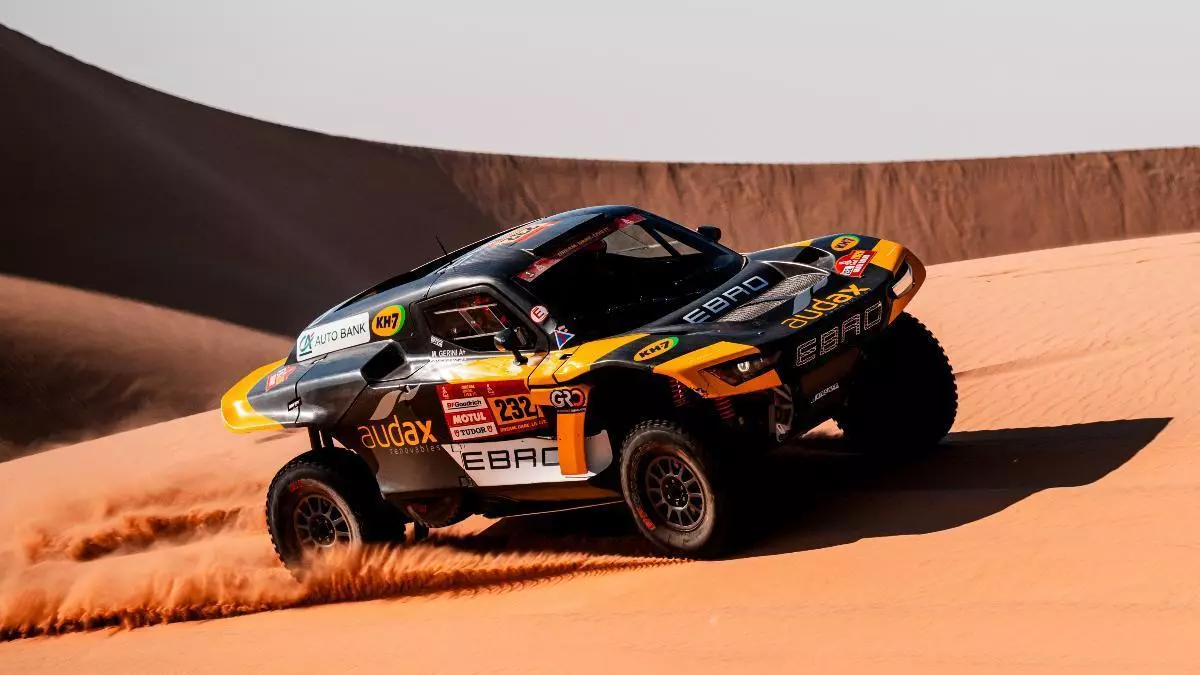
This is less arrival than declaration.
Barcelona, March 2026
Laia Sanz’s link with Ebro is no longer just a compelling motorsport partnership. It is becoming a statement about industrial ambition, sporting patience, and the strategic value of building a rally project with long-range intent rather than instant spectacle. What now comes into focus is that the Dakar was never meant to function as a one-off publicity move for the revived Spanish brand. It was designed as a proving ground. Ebro’s official positioning around the 2026 Dakar makes that clear: the company framed Sanz as the lead figure of a wider return to elite off-road competition, with the EBRO Audax Motorsport structure built not only to compete, but to learn under extreme conditions.
That matters because the Dakar remains one of the few motorsport environments where image alone collapses quickly under mechanical and navigational stress. You cannot fake endurance there. Ebro’s official materials presented the Dakar project as part of the brand’s identity reconstruction, explicitly tying the vehicle, the technical team, and the driver pairing of Laia Sanz and Maurizio Gerini to a broader narrative of industrial credibility. In practical terms, this means the desert is being used not merely as a racing backdrop, but as a symbolic factory of legitimacy. For a returning automotive name, that is a powerful choice. For Sanz, it is also a natural fit.
Sanz enters this phase with a profile that gives the project unusual weight. The Dakar’s own competitor profile still describes her as the leading female reference in off-road racing and highlights both her 14 consecutive finishes and her historic ninth place overall in motorcycles in 2015. That record matters because it places her beyond the category of celebrity signing. She is not there to decorate the launch. She is there because her endurance, technical intelligence, and legitimacy in survival-based racing give the Ebro program instant seriousness. When a manufacturer in reconstruction chooses a driver like Sanz, it is making a statement about the kind of credibility it wants to borrow and the kind it hopes eventually to produce on its own.
The 2026 Dakar therefore represented a real threshold. Reporting around the event noted that Sanz made the jump into the top T1+ category with Ebro, driving a more competitive four-wheel-drive platform than in previous years. That move was not a minor technical upgrade. It changed the scale of expectation. It also changed the difficulty of adaptation, because moving from less competitive machinery into a more demanding top-class vehicle requires new rhythms, new references, and new ways of reading pace versus preservation. Early season reporting described that transition as both a challenge and an opportunity, especially after Sanz and Gerini had already used Morocco testing to understand where the package stood.
What makes the project especially interesting is that it appears to be structured around progression rather than immediate podium rhetoric. Ebro’s own Dakar messaging emphasized determination, teamwork, and technical development more than grandiose claims. Supporting reports after the rally reinforced that line, stressing completion, learning, and competitiveness across selected stages, including a finish inside the top twenty for the team. That is exactly the kind of language one expects from a program that understands the difference between visibility and maturity. In rally raid, especially at Dakar level, finishing with useful data can matter more than chasing a symbolic headline that the platform is not yet ready to sustain.
There is also a wider industrial dimension behind the sporting story. Ebro’s return to Dakar is part of a larger attempt to reconnect the brand with production, engineering, and public imagination at the same time. The official campaign language placed the rally effort alongside the brand’s factory identity and its historical association with work, machinery, and national automotive memory. That matters because Dakar, unlike cleaner forms of motorsport branding, still rewards narratives of toughness, utility, and mechanical resilience. For a legacy marque seeking modern reinvention, Laia Sanz becomes more than a driver. She becomes the bridge between technical credibility and public trust.
For Sanz herself, the fit is equally strategic. After the frustration of the 2025 Dakar exit and the break in her finishing streak, the Ebro program offered not only a new team but a new scale of possibility. Previous reporting around the project described it as a multi-year effort and framed the partnership as a chance to grow together rather than simply survive another edition. That is a significant distinction. It suggests that both driver and manufacturer understand Dakar less as a discrete race than as a development ecosystem. In that ecosystem, each stage, each mechanical lesson, and each finish contributes to something larger than the final classification.
What emerges from the Laia Sanz and Ebro alliance is not merely a motorsport update. It is a disciplined long-term play. The brand gains legitimacy from one of the most respected endurance figures in the sport. Sanz gains a platform with higher technical ambition and symbolic weight. The Dakar, in turn, becomes the place where both must prove that narrative can be converted into durable performance. That is why this story matters beyond rally enthusiasts. It is about how brands return, how athletes reinvent trajectory, and how extreme competition still functions as a brutal but credible measure of seriousness.
Information that anticipates futures. / Information that anticipates futures.