

 Phoenix 24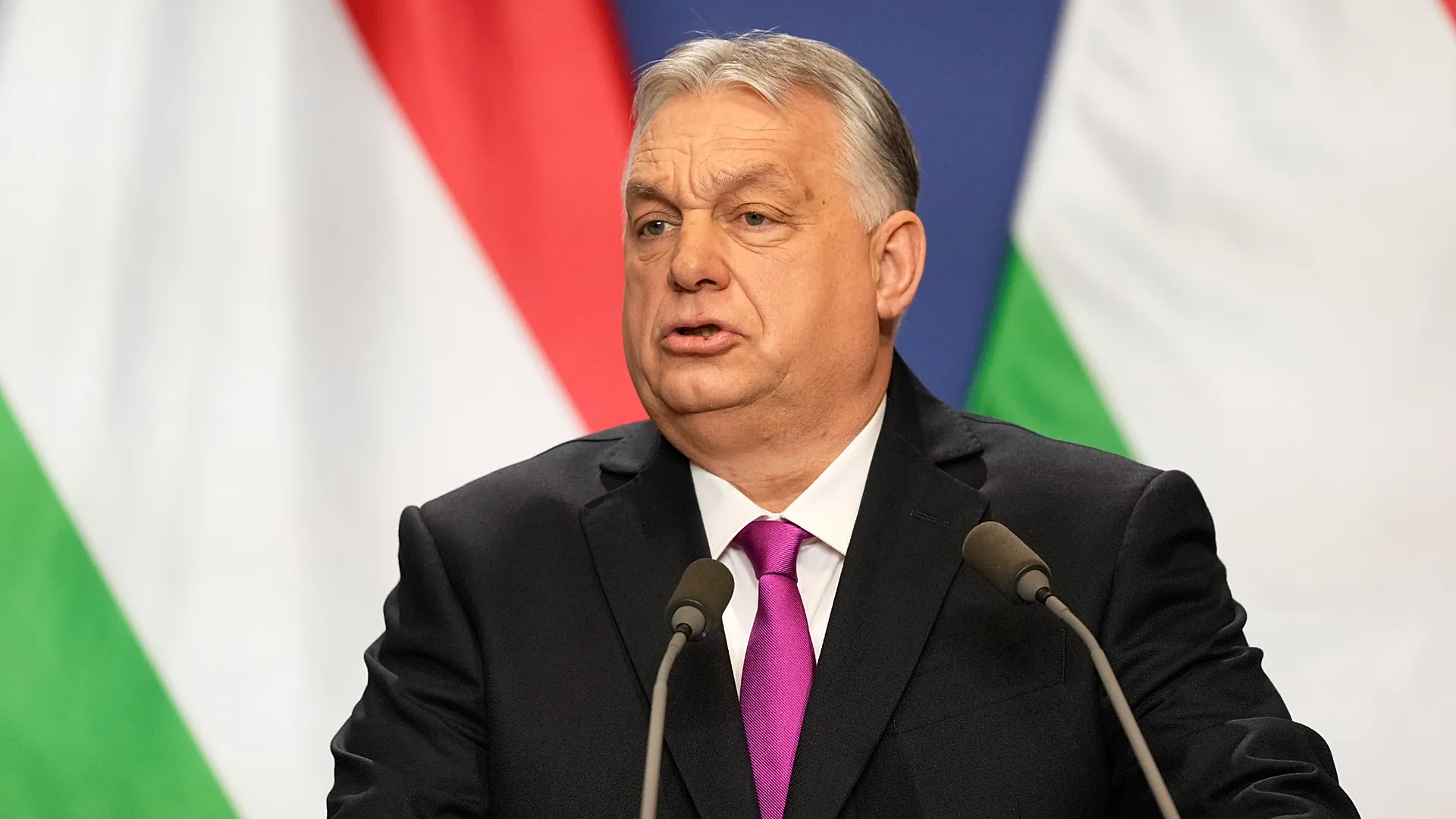
Solidarity becomes conditional infrastructure.
Brussels, February 2026.
Hungary has moved to block a proposed €90 billion European loan package for Ukraine, tying the decision to a dispute over disrupted Russian oil transit through the Druzhba pipeline corridor. The move converts a technical failure into a political bargaining chip, and it does so inside a system where unanimity still gives any single member state the ability to slow collective action. What looks like financial procedure is, in practice, a test of whether the European support architecture can withstand internal conditionality while a war is actively degrading infrastructure.
The immediate trigger is the interruption of crude flows that normally cross Ukrainian territory into Central Europe, a legacy route that remains essential for refineries in Hungary and Slovakia. The transit disruption has been linked to damage sustained after a Russian drone strike reported in late January, which is crucial for the causality argument: Kyiv frames the stoppage as a downstream consequence of Russian attacks on Ukrainian infrastructure. Budapest and Bratislava have framed it differently, implying Ukraine has failed to restore flows and is using transit control as pressure. When the same fact pattern is interpreted as either wartime damage or deliberate withholding, it stops being an engineering problem and becomes a legitimacy fight.
Hungary’s messaging has been unusually explicit. Péter Szijjártó has framed the oil stoppage as “blackmail” and tied it directly to the EU loan decision, presenting the veto as a defensive response rather than an obstruction. In parallel, the government has signaled that it is willing to use contingency measures such as tapping strategic reserves, a move that underlines how dependent the country remains on a corridor that runs through an active war zone. The political implication is that Hungary wants the benefits of stability while demanding that Ukraine treat transit like peacetime infrastructure.
The loan itself matters because it is not symbolic money. For Ukraine, large scale European financing is macroeconomic scaffolding, it keeps the budget liquid, sustains basic state functions, and reassures markets and partners that the state can remain governable under sustained attack. When a package of this size is delayed over an oil dispute, the message to Kyiv is that support is not purely strategic, it is also transactional. The message to Russia is even more valuable: pressure on infrastructure can generate political disputes inside the coalition backing Ukraine.
This dispute is not operating in isolation. Slovakia’s prime minister has threatened to cut emergency electricity supplies to Ukraine if oil transit is not restored by a near term deadline, turning wartime power flows into a bargaining lever. That threat matters because electricity operates on immediate human time, it affects hospitals, municipal systems, rail logistics, and grid stabilization during and after strikes. When emergency electricity becomes conditional, the support architecture shifts from solidarity to negotiated dependency, and the precedent is hard to contain once it enters the repertoire.
Ukraine’s response has been to reject the framing and accuse Hungary and Slovakia of issuing ultimatums that target the wrong actor. Kyiv’s argument is structurally consistent: if Russian attacks damaged a transit corridor, pressure should be directed at Moscow, not at a country absorbing strikes. The deeper concern is attention drain. Every hour spent managing disputes with EU and NATO neighbors is an hour not spent on air defense, grid repair, procurement, or mobilization, and wartime governance is always a contest over finite administrative bandwidth.
Inside the European Union, this episode exposes an old vulnerability in a new, harsher light. Unanimity can be a tool for cohesion in normal times, but in crisis it becomes a channel for side bargaining, especially when the dispute is tied to energy dependence and domestic electoral incentives. Hungary has repeatedly diverged from the dominant European stance toward Russia, and Viktor Orbán has built political identity around resisting what he casts as Brussels’ coercion. The veto therefore reads as both a policy move and a domestic signal: Hungary can still force Europe to negotiate on Hungary’s terms.
The oil dimension is also a reminder that Europe’s energy transition away from Russian supply is incomplete and uneven. Exemptions and transitional arrangements kept certain corridors alive, and those corridors now function as leverage points when disrupted. In a peacetime logic, the risk is price and supply security; in a wartime logic, the risk is that physical attacks or incidents can be translated into political vetoes. When infrastructure becomes a bargaining asset, the coalition’s unity is no longer only about values, it is also about the distribution of dependency.
The likely next phase is a negotiation over pathways rather than principles. Brussels will look for ways to keep financing moving without rewarding veto tactics, while also avoiding an open institutional clash that fractures unity further. Kyiv will push to decouple wartime assistance from transit disputes, while Hungary will seek guarantees that reduce its exposure to supply disruption, whether through alternative routing, reserve releases, or EU level compensations. None of these options are clean, because each one risks teaching a lesson that veto power pays.
What this episode ultimately reveals is a shift in the theater of war. Missiles and drones degrade infrastructure, and infrastructure disputes degrade alliances. Hungary’s veto turns an oil outage into European leverage, and in doing so it demonstrates how quickly wartime logistics can be converted into political bargaining. The strategic danger is not one blocked loan, it is a replicable template: strike, disruption, accusation, conditionality, delay. Once that sequence is normalized, every damaged corridor becomes an opportunity for internal fracture.
Resistencia narrativa global. / Global narrative resilience.