

 Phoenix 24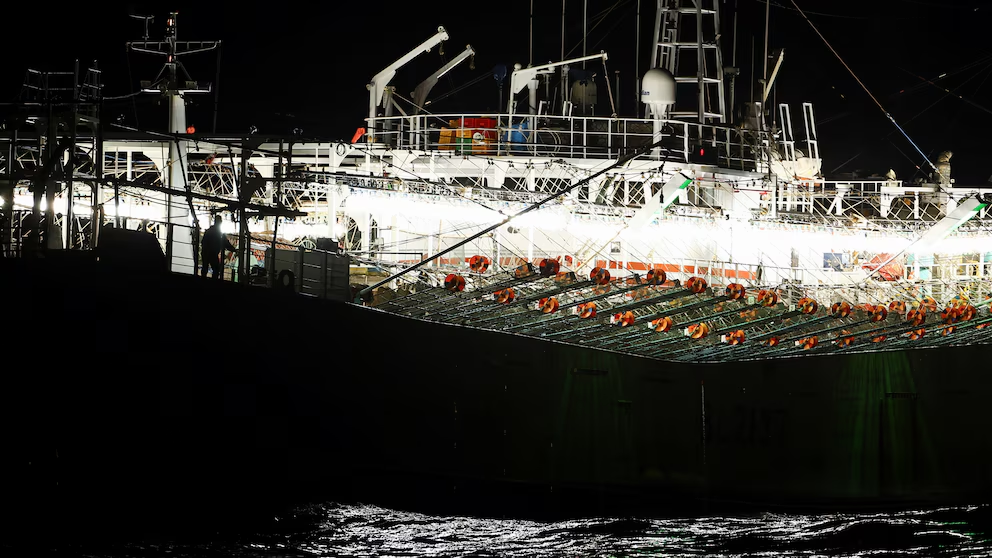
Nearly 400 vessels intensify concern over marine resources
Lima, Peru | June 2026
Nearly 400 Chinese fishing vessels are operating off the coast of Peru and preparing to move toward Ecuador, raising renewed concern over the pressure placed on marine ecosystems in the South Pacific. The fleet is reportedly working outside national jurisdiction but close to areas rich in squid and other valuable species, creating anxiety among local fishermen, environmental organizations and maritime authorities. The situation has revived accusations of predatory fishing practices and weak international controls over distant-water fleets. For Peru and Ecuador, the presence of such a large number of vessels represents both an environmental challenge and a question of maritime sovereignty.
The Chinese fleet has become a recurring source of concern along the Pacific coast of Latin America because of its size, mobility and capacity to operate for long periods at sea. These vessels often follow migratory species and concentrate near the limits of exclusive economic zones, where enforcement becomes more complicated. Although operating in international waters can be legal, critics argue that the scale of extraction may damage fish populations and disrupt the balance of marine ecosystems. The concern is not only whether the vessels cross legal boundaries, but whether current rules are strong enough to prevent overexploitation.
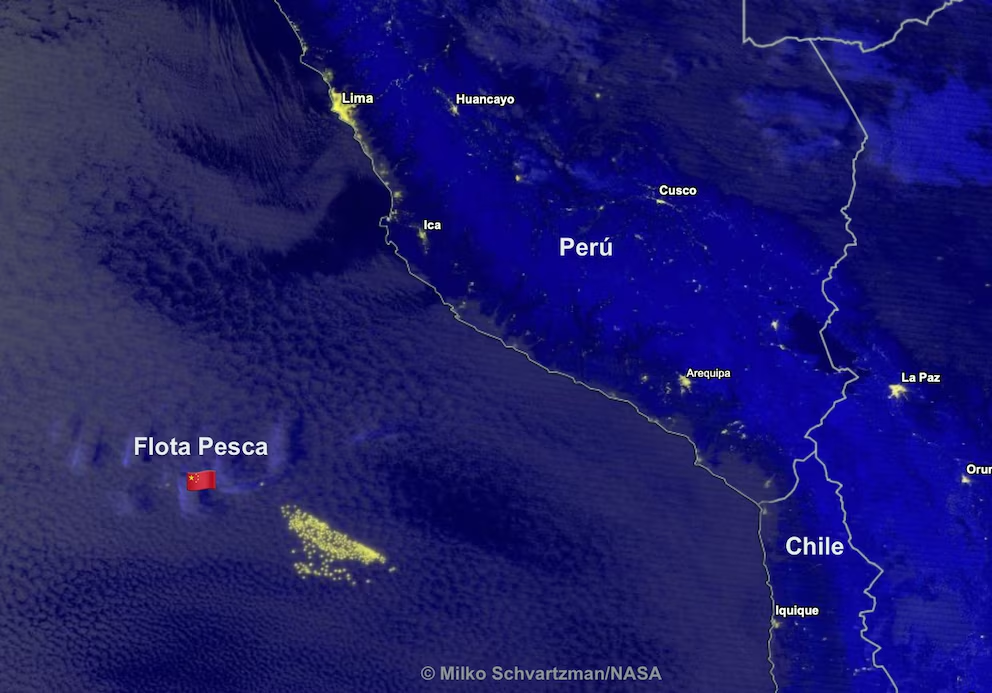
Peruvian authorities and fishing groups are especially worried about the impact on the giant squid, one of the most economically important species for artisanal and industrial fishing communities. If large foreign fleets extract heavily near migration routes, local fishermen may face lower catches and reduced income once the species moves into national waters. This creates a direct social and economic impact on coastal communities that depend on fishing for employment and food security. The issue therefore goes beyond environmental protection and reaches the livelihoods of thousands of families.
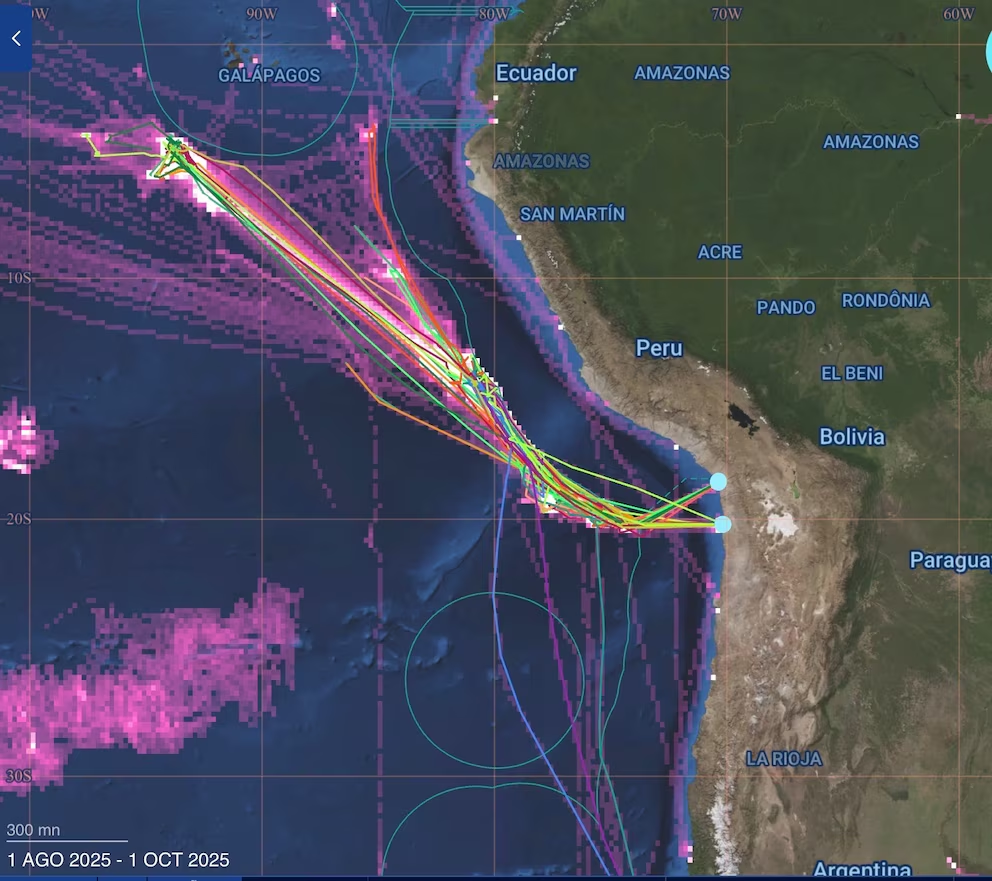
Ecuador is also watching the movement of the fleet with concern because of previous experiences near the Galápagos Islands. In past years, large Chinese fishing fleets operating near the archipelago generated international criticism and increased pressure for stronger monitoring. The Galápagos is one of the world’s most important biodiversity reserves, and any perceived threat to its surrounding marine corridors creates immediate environmental alarm. As the fleet moves south to north, Ecuadorian authorities are expected to maintain surveillance to prevent illegal entry into protected or national waters.
The case reflects a larger global problem: the difficulty of regulating fishing in international waters. Distant-water fleets can operate with support vessels, refrigeration systems and satellite coordination, allowing them to remain at sea for extended periods. Monitoring their activity requires technology, regional cooperation and transparent vessel tracking. When transponders are turned off or data is incomplete, authorities face additional obstacles in determining whether illegal, unreported or unregulated fishing has occurred.
China maintains one of the largest distant-water fishing fleets in the world, and its operations have become a source of diplomatic tension in several regions. Beijing often argues that its vessels follow international rules, but coastal countries and environmental groups continue demanding stronger oversight. The problem is especially sensitive in Latin America, where marine resources are vital for national economies and food systems. The presence of hundreds of foreign vessels near maritime borders can quickly become a political issue.
For Peru and Ecuador, the response will likely require coordination through regional mechanisms, naval monitoring and diplomatic communication. Individual countries may struggle to control such large fleets without shared surveillance systems and international pressure. Cooperation with organizations that track vessel movements could also help identify suspicious patterns and support evidence-based enforcement. The challenge is to protect marine resources without escalating tensions unnecessarily.
The environmental stakes are high because overfishing can produce long-term damage that is difficult to reverse. Squid, tuna and other migratory species are part of complex food chains that support marine biodiversity and coastal economies. Heavy extraction in one part of the ocean can affect availability in another, especially when species move across national and international waters. That is why the debate over Chinese fishing fleets has become central to the future of ocean governance.
The presence of nearly 400 vessels off Peru and their expected movement toward Ecuador shows how global demand for seafood is reshaping maritime pressure in Latin America. Coastal nations are now confronting industrial fleets with enormous extraction capacity and the ability to operate at the edge of legal jurisdiction. The immediate concern is the protection of marine resources, but the broader question is whether international rules can keep pace with the scale of modern fishing. For Peru and Ecuador, vigilance at sea has become essential to defending both biodiversity and the future of their fishing communities.
Phoenix24 News | Information with responsibility.