

 Phoenix 24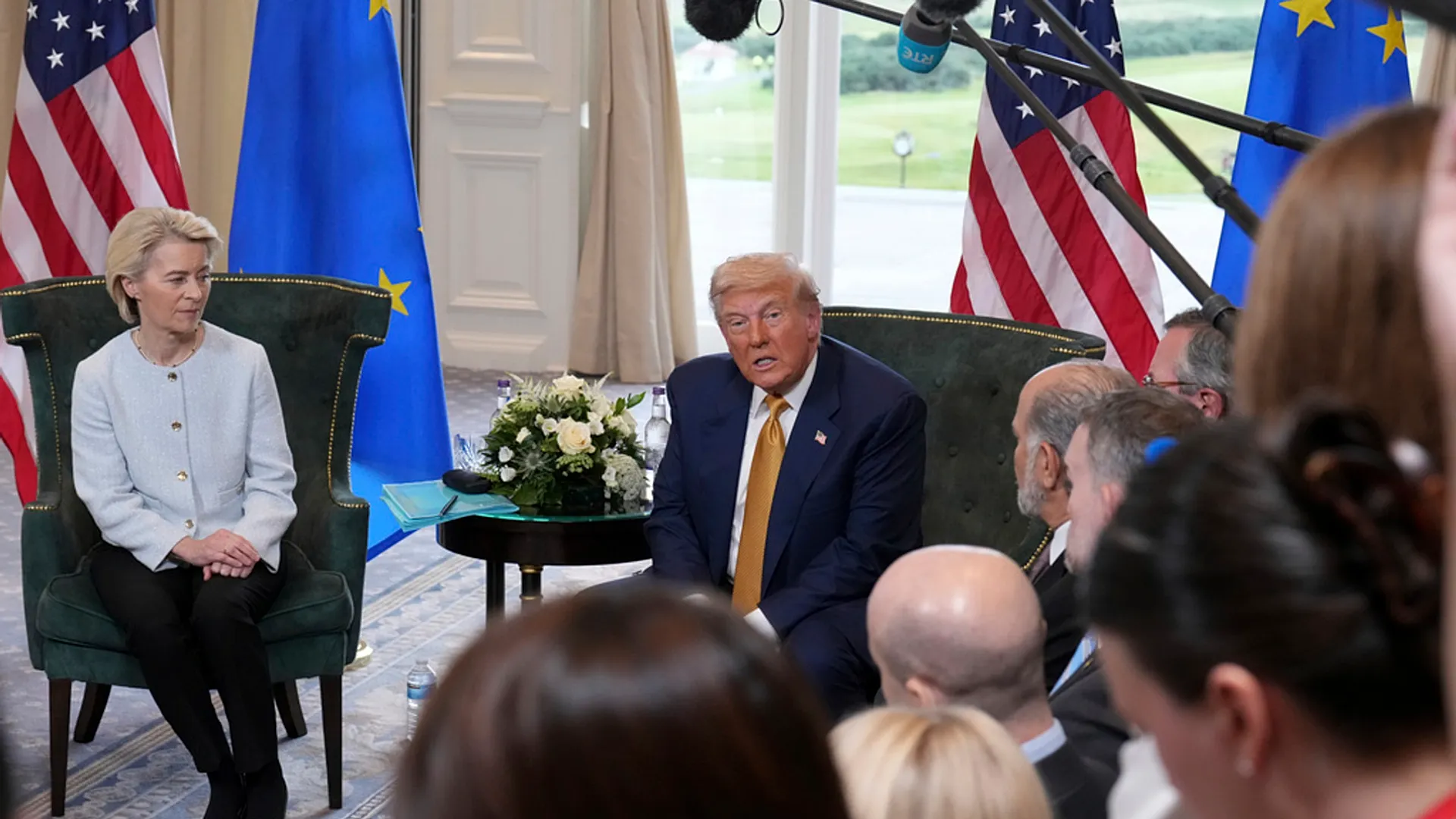
Diplomacy becomes urgent when power stops whispering.
Brussels, January 2026.
The European Union is moving in two directions at once: one hand extended toward political de-escalation around Greenland and the Arctic, and the other clenched, ready to respond with commercial retaliation if Washington turns pressure into economic punishment. The crisis is not only about cold and distant territories, but about the very core of the transatlantic order: who commands, how obedience is enforced, and how far sovereignty reaches when economic power becomes a weapon.
The trigger was neither technical nor military, but political. Statements and pressure coming from the United States, built on the idea that Greenland is a strategic space that cannot remain outside its sphere of control, set off alarms in Europe. Greenland is not just a frozen island. It is a geopolitical node where Arctic routes, critical minerals, northern military control, and the symbolism of autonomy in the face of great powers converge.
For the European Union, the problem is not only rhetoric, but method. When political pressure is accompanied by tariff threats, the conflict stops being diplomatic and becomes a modern form of coercion. Brussels reads this move as a dangerous signal: even among historic allies, trade can be turned into blackmail.
European diplomats have first chosen containment. They speak of dialogue, of open channels, of avoiding an unnecessary escalation. No one in Brussels wants a trade war with Washington, especially in a global context marked by tensions in Asia, prolonged conflicts in the Middle East, and a fragile world economy. But containment does not mean submission. That is why, while speaking of de-escalation, responses are also being designed.
In the corridors of European institutions, the debate is no longer whether there will be retaliation, but how and when. Legal instruments created precisely for such scenarios are being reviewed: mechanisms to answer economic coercion, mirror-tariff packages, selective restrictions on U.S. products. They are not yet announced with proper names, but they exist, they are ready, and they function as a political message: Europe does not want to fight, but it will not accept imposition.
The question of Greenland adds a symbolic layer. It is not only about an island, but about a principle. Greenland belongs to the Kingdom of Denmark and enjoys autonomous status. Any attempt to treat its future as a commercial bargaining chip is read in Europe as a violation of respect among allies. It is not only a Danish problem, it is a European one, because it touches the very idea of sovereignty inside the bloc.
Some European governments, especially those historically closer to Washington, have called for caution. They fear that a reaction that is too hard could break strategic balances in defense and security. Others, led by central powers of the bloc, believe that giving in now would set a dangerous precedent: accepting that the strongest can use its market as a political weapon.
The European Union thus walks a tightrope. If it responds too harshly, it risks a commercial escalation that would hit key industries, from automotive to technology. If it responds weakly, it sends the message that pressure works. The decision is not technical, it is deeply political and strategic.
At bottom, this conflict reveals something larger: the transformation of the international order. Alliances are no longer unconditional pacts. Even among historic partners, relationships become transactional. Today it is not enough to share values or history; what matters is who has the biggest market, the strongest currency, the capacity to economically punish the other.
Greenland is the visible symbol of an invisible dispute: who sets the rules when geopolitics mixes with commerce. For Washington, the island is a strategic asset that cannot fall outside its orbit. For Europe, it is proof that political autonomy is only real if it can also be defended in the economic arena.
Meanwhile, public speeches speak of cooperation, dialogue, and avoiding conflict. But beneath that diplomatic language, the machinery of commercial confrontation is being prepared. Technical teams calculate impacts, evaluate sensitive sectors, and design proportional responses. It is not about improvising, but about showing that de-escalation is an option, not an obligation.
The Greenland crisis will not end with polite communiqués alone. It will end when one side accepts that not everything can be imposed with economic power. Europe is trying to show it can negotiate without kneeling. The United States is trying to show it can pressure without breaking alliances. Both are playing a game where the board is trade and the pieces are territories, resources, and sovereignty.
What happens will mark more than a single dispute. It will mark the kind of relationship that will dominate the twenty-first century: cooperation among equals or alliances under threat. Greenland is only the first visible chapter of a story where power is no longer measured only in missiles or armies, but in tariffs, markets, and supply chains.
Behind every fact, there is an intention. Behind every silence, a structure.