

 Phoenix 24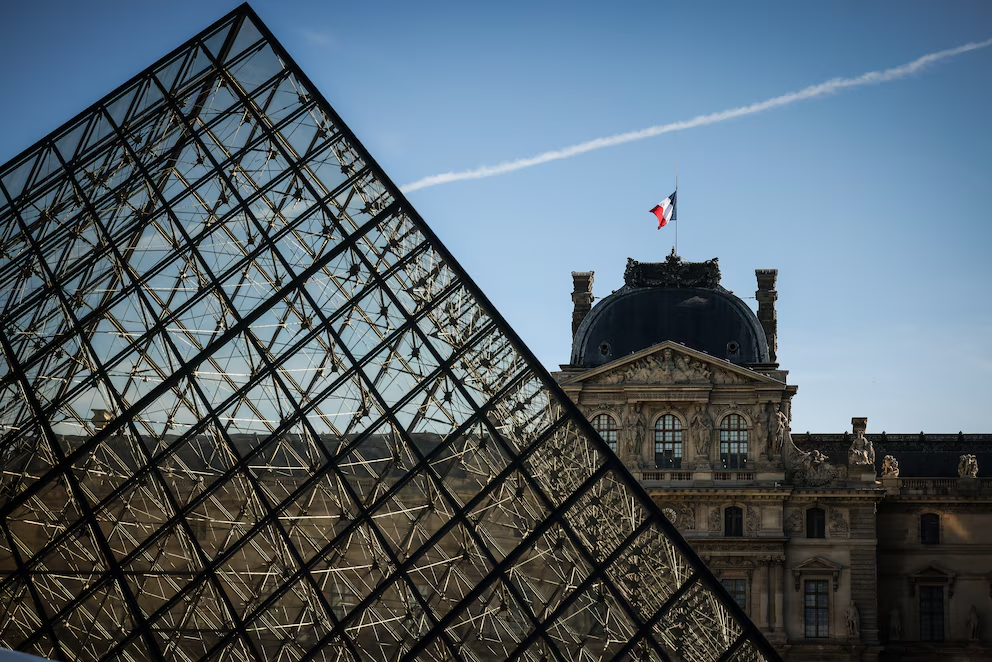
A museum’s weakness became France’s embarrassment.
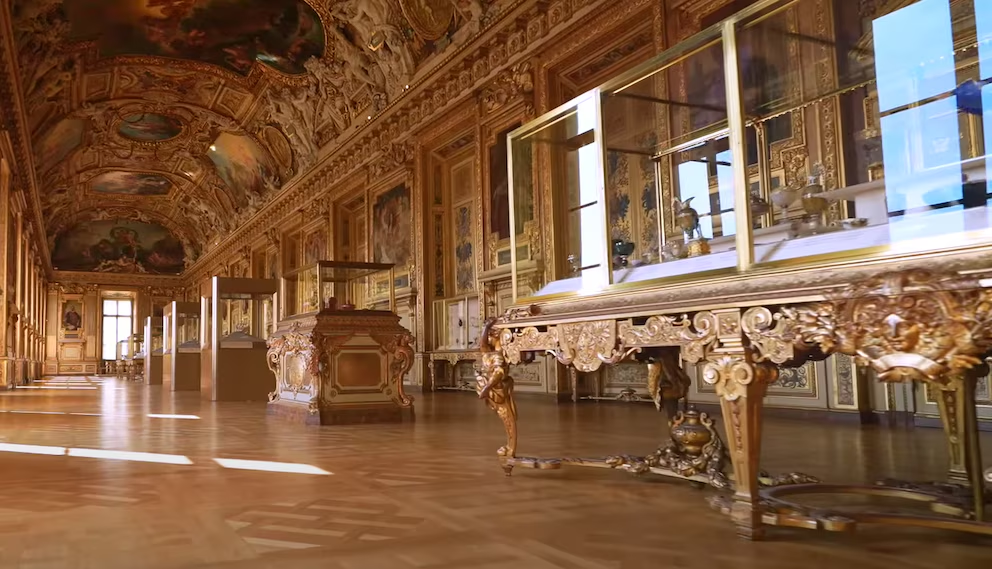
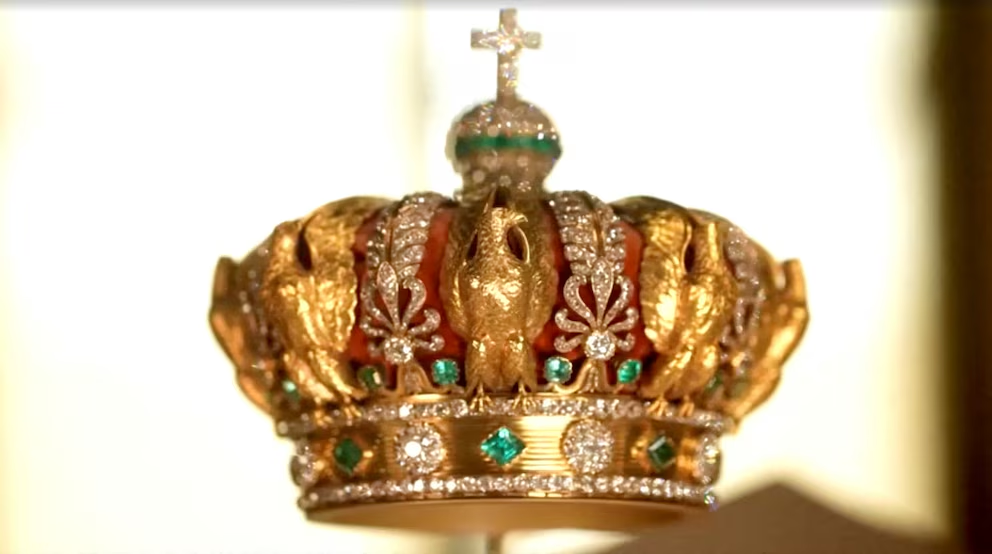
Paris, May 2026. The Louvre’s announcement of a historic reform after the theft of jewels valued at nearly USD 100 million marks a turning point for the world’s most visited museum. The robbery at the Apollo Gallery was not only a criminal blow against a collection of exceptional symbolic value. It became an institutional shock that exposed security gaps, governance delays and the vulnerability of cultural heritage in spaces assumed to be untouchable.
The reform comes after months of scrutiny over how such a high-profile theft could occur inside one of the most protected cultural sites in the world. French authorities and museum officials have faced criticism over outdated surveillance systems, insufficient investment execution and the slow modernization of security infrastructure. The case damaged more than the Louvre’s operational image. It challenged France’s capacity to protect its own civilizational symbols.
The Apollo Gallery carries a particular weight because it is not an ordinary exhibition space. Its architecture, decorative program and royal collections connect the museum to the memory of monarchy, empire and national prestige. A theft there functions differently from a robbery in a minor storage area. It strikes at the visible theater of French cultural power.
The planned renovation now seeks to respond on two fronts. The Louvre must reinforce security without turning the museum into a fortress that destroys the visitor experience. That balance is difficult because great museums depend on openness, circulation and proximity to objects, while modern theft, vandalism and climate risks demand stricter control. The new challenge is to protect without suffocating.
The case also reveals a broader crisis facing global museums. Cultural institutions are expected to receive massive crowds, preserve priceless objects, manage aging buildings, respond to labor pressures and defend themselves against increasingly sophisticated criminal networks. Their symbolic value makes them targets, but their public mission prevents them from operating like closed vaults. The Louvre’s dilemma is therefore not isolated; it is a warning for every major museum.
There is also a political dimension. When heritage security fails in France, the damage travels beyond museum administration. It enters the national debate over state competence, public spending, cultural stewardship and international reputation. A stolen jewel becomes a question about governance. A broken security chain becomes a metaphor for institutional fatigue.
The reform will be judged not by announcements, but by execution. More cameras, better control rooms, reinforced staffing, faster emergency protocols and clearer investment priorities may restore confidence only if they are implemented with discipline. The museum’s problem was not the absence of prestige. It was the dangerous assumption that prestige itself could function as protection.

The Louvre now faces a paradox. To remain one of the great open museums of the world, it must become far more technically secure. The robbery exposed that cultural power without operational vigilance becomes spectacle without defense. France can recover prestige, but only if the reform proves that beauty, memory and security are no longer treated as separate worlds.
Hechos que no se doblan. / Facts that do not bend.