

 Phoenix 24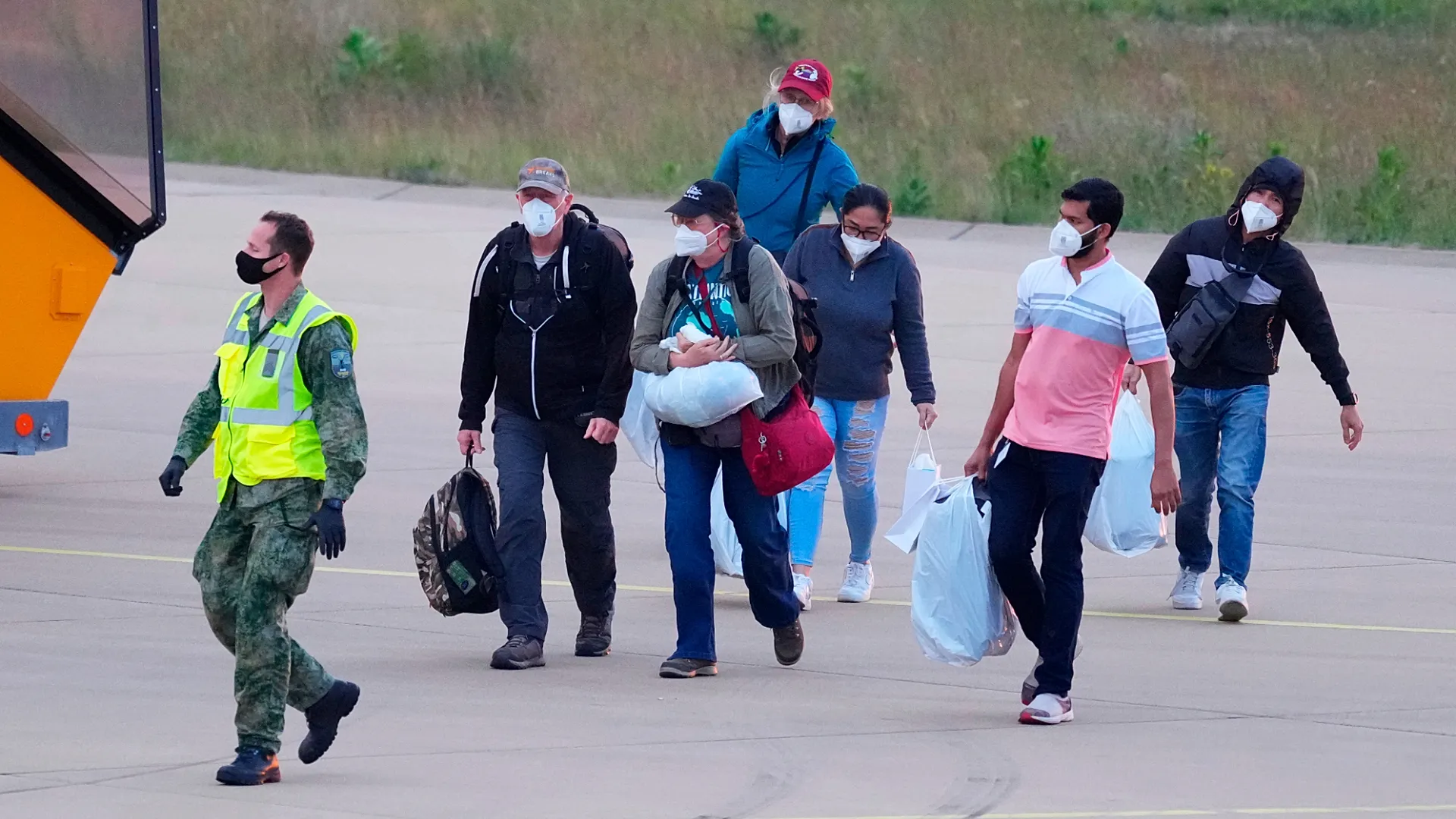
Invisible outbreaks reveal institutional stress fractures.
Madrid, May 2026
European passengers evacuated from the MV Hondius cruise ship after the hantavirus outbreak are now back in their respective countries, but the real crisis is only entering its most delicate phase. What initially appeared to be an isolated maritime health emergency has rapidly evolved into a multinational biosecurity operation involving quarantines, military flights, infectious disease units and coordinated epidemiological surveillance across Europe and North America. Authorities now face the challenge of preventing panic while managing one of the most unusual transnational contagion responses seen in recent years.
The outbreak aboard the Dutch-flagged vessel reportedly involved a hantavirus strain associated with serious respiratory disease, forcing governments to activate emergency quarantine protocols rarely seen outside pandemic scenarios. Confirmed infections, deaths linked to the ship, and the repatriation of exposed passengers have turned the case into a public health operation with diplomatic consequences. Despite official efforts to contain alarm, the use of military transport, hospital isolation and extended monitoring has amplified global attention around the incident.
The repatriation strategy now varies sharply by country, exposing major differences in public health doctrine and institutional risk tolerance. France, Spain, Greece, Ireland, the United Kingdom and the United States have adopted different combinations of hospital isolation, home monitoring, supervised quarantine and specialized infectious disease protocols. That fragmentation does not necessarily imply disorder, but it does reveal how unevenly Europe and its partners still interpret biological risk after the COVID-19 era.
Beyond the medical dimension, the crisis reopens uncomfortable questions about cruise tourism, maritime biosecurity and the fragility of containment systems in hyperconnected environments. The MV Hondius outbreak demonstrated how expedition travel can become a transcontinental epidemiological corridor linking remote maritime routes with major hospital systems within hours. Governments must now determine whether earlier disembarkations, delayed detection or onboard environmental conditions may have widened potential exposure chains before the outbreak was formally contained.
The geopolitical undertone is significant because the event is unfolding in a world still psychologically shaped by pandemic memory. Even if authorities classify the broader public risk as limited, the image of an international cruise ship associated with a severe viral outbreak carries a symbolic force that can rapidly erode confidence. This is no longer just a medical episode; it is a stress test for crisis communication, border coordination, tourism governance and public trust in post-pandemic institutions.
What follows now is a prolonged surveillance phase that could last several weeks. Passengers will face repeated testing, symptom monitoring and isolation rules depending on national protocols, while the ship itself will likely undergo deep disinfection and environmental investigation before returning to normal operations. The deeper lesson is blunt: modern globalization does not need a full-scale pandemic to expose structural vulnerability. Sometimes one ship is enough to reveal how thin the line between mobility, tourism and biological insecurity has become.
La verdad es estructura, no ruido. / Truth is structure, not noise.