

 Phoenix 24
Trade returns as strategic leverage.
Davos, January 2026.
Donald Trump’s decision to suspend planned tariffs on several European partners, while simultaneously pointing to a “framework” for future talks involving Greenland, marked a calibrated reset rather than a reconciliation. The announcement, delivered on the margins of the World Economic Forum, underscored how economic pressure is being deployed as a negotiating instrument and withdrawn once systemic escalation threatens broader interests. The initial tariff plan, which would have escalated from modest duties to significantly higher levels across multiple European economies, functioned less as a trade correction than as a signal of leverage. Its cancellation does not erase the message. It clarifies it.
At the center of the episode sits Greenland, a territory whose strategic value has steadily outgrown its geographic remoteness. The island’s relevance is no longer confined to Arctic symbolism or bilateral ties with Denmark. It intersects with alliance cohesion, military posture in the High North, and long term competition over critical resources. Security planners across the Atlantic view the Arctic as a space where deterrence, logistics and early warning systems converge. Any suggestion that sovereignty could become a variable in transactional diplomacy forces allies to confront uncomfortable questions about red lines and collective credibility.
Resource dynamics amplify that pressure. Analyses circulating within global policy circles increasingly emphasize Greenland’s potential role in the supply chains of critical minerals and rare earths. In an era where industrial resilience and technological autonomy are treated as national security priorities, geography becomes strategy. When access to territory is rhetorically linked to trade concessions, the line between economic negotiation and geopolitical bargaining thins. For European governments, the issue is not the plausibility of an agreement, but the precedent such linkage might establish.
The suspension of tariffs also exposed the mechanics of economic coercion even when it is not executed. European officials had openly discussed defensive instruments designed to counter external pressure aimed at altering political decisions. The mere contemplation of such tools revealed how trade policy has evolved into a domain of strategic signaling. Responses were framed not as retaliation but as proportional safeguards meant to preserve rule based exchange. This posture reflects an institutional lesson absorbed over recent years. Deterrence in commerce now mirrors deterrence in security. The objective is to discourage repetition rather than to win a single confrontation.
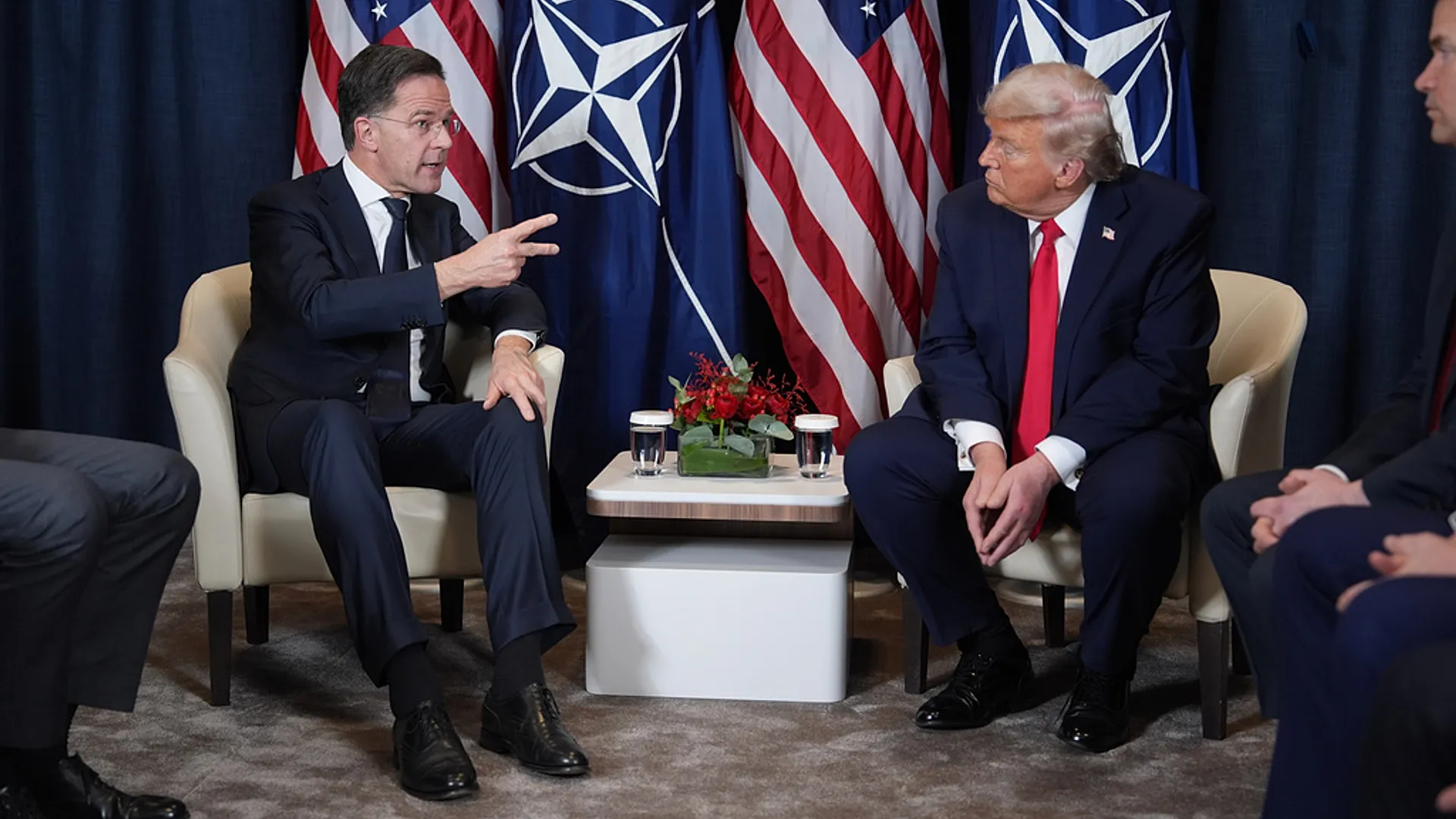
Within this context, the alliance framework plays a stabilizing but strained role. Public statements ruled out the use of force in any Greenland related scenario, while calls for measured diplomacy emphasized unity and restraint. The contrast between assertive rhetoric and calming institutional language illustrated a familiar dynamic. Power tests the perimeter, institutions work to absorb the shock. The immediate effect was de escalation, but the structural consequence was a reminder that trust, once stressed, is slower to repair than tariffs are to lift.
Beyond the Atlantic, the episode resonated quietly. Asian observers refrained from direct involvement while noting the implications for European strategic autonomy. In global competition, crises are rarely confined to their origin. They are reframed, echoed and reused as narratives elsewhere. The Greenland discussion thus became a case study in how economic and security domains bleed into one another, offering external actors material to question alliance reliability without taking overt positions.
What emerged from Davos was not a return to normal trade relations but a demonstration of method. Tariffs were introduced as leverage, suspended to signal flexibility, and replaced by a broader strategic conversation. For Washington, the approach offers short term negotiating advantage. For Europe, it raises the cost of complacency and accelerates debates about resilience and autonomy. For the alliance as a whole, it exposes a tension between transactional tactics and collective commitments.
The deeper implication lies in the normalization of hybrid pressure. Trade tools, security discourse and territorial considerations are no longer sequential. They operate simultaneously. The Arctic, once treated as peripheral, has reentered strategic calculations as a testing ground for this convergence. The question facing European capitals is not how to respond to a single episode, but how to reduce the incentive for similar tactics to be effective in the future.
This episode suggests a broader shift in the international system. Power is exercised through calibrated disruption rather than outright rupture. Pressure is applied, observed, and adjusted. In that environment, stability depends less on declarations and more on the ability of institutions to absorb shocks without fragmenting. Greenland, in this sense, is not the issue. It is the lens through which a changing order becomes visible.
Truth is structure, not noise. / Truth is structure, not noise.