

 Phoenix 24
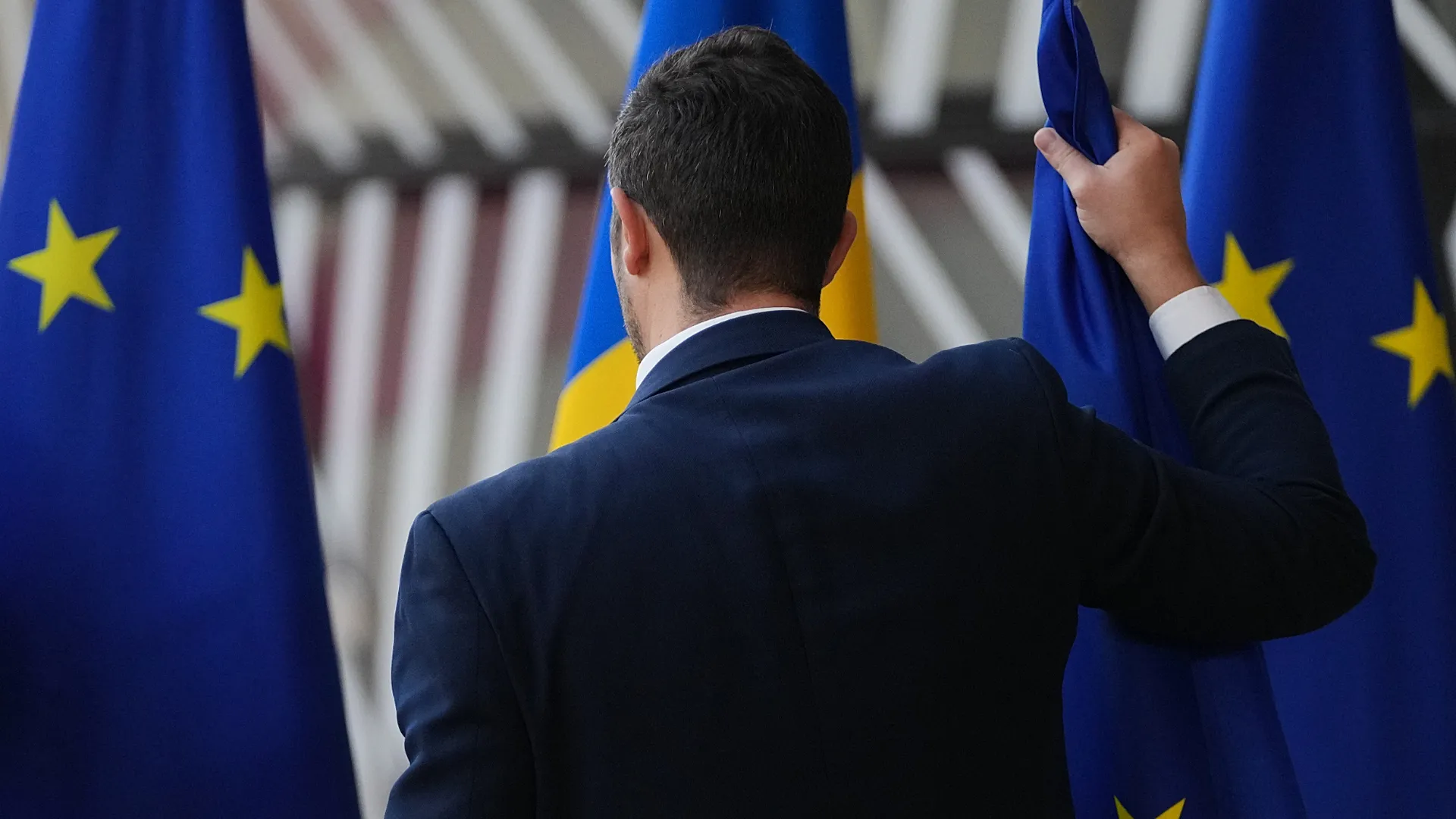
Integration is never just about reforms. It is about the political cost of sustaining them.
Brussels, November 2025
The European Commission praised Ukraine for meaningful progress in its accession process, yet made it clear that the path to the European Union is far from guaranteed. Kyiv has pushed forward institutional reforms and strengthened anti corruption mechanisms, but Brussels warned that negative trends persist in judicial independence, transparency, and the concentration of executive power. The message was firm. Progress is acknowledged, but trust must be earned through results, not promises.
The Commission’s position is both diplomatic and strategic. Ukraine is navigating a delicate phase in which every legislative adjustment becomes a signal about the stability and maturity of the State. Officials in Brussels confirmed that Ukraine has implemented measures demanded since the earliest pre accession reviews, including granting greater autonomy to anti corruption bodies. At the same time, evaluators expressed concern over decisions made without adequate checks and balances. Praise and caution coexist in the same breath, reflecting the complexity of the moment.
For Brussels, accession is not symbolic. It requires measurable institutional capacity. The benchmark includes judicial reforms, protection of independent media, safeguards for civil society, and limitations on oligarchic influence. Analysts at the Center for Strategic and International Studies explain that every accession process tests how much pressure a government can withstand without eroding the separation of powers. Ukraine faces the added burden of sustaining reforms while under armed conflict, a condition no other candidate currently endures.
While Europe examines the institutional dimension, the United States sees the accession process as a proxy for democratic resilience. The International Monetary Fund has structured support programs for Ukraine that depend on traceability of funds and mechanisms to prevent the capture of public budgets by private networks. Conditionality is not a punishment. It is a political message. There will be no funding without reforms, and no membership without verifiable control over systemic risks.
In Asia, research centers that monitor shifts in regional power observe the negotiations closely. The expansion of the European Union into Eastern Europe alters energy dynamics along the continental corridor. A Ukraine aligned with the European economic system would grant Europe more leverage over critical transit infrastructure used for gas, oil, and freight. China follows the process with caution because a deeper integration of Ukraine into European structures places Brussels closer to logistics and trade routes that intersect with Chinese strategic projects.
The Commission opted for nuanced language. It avoided direct confrontation with Ukrainian authorities, but signaled that the consolidation of power around the presidential office remains an area of concern. European rule of law bodies have noted that certain strategic decisions appear centralized among a reduced circle of advisers. At the same time, civil society groups report that journalists and human rights defenders still face pressure when investigating contracts linked to reconstruction efforts.
Across the Atlantic, security analysts follow the process for different reasons. Membership, even as a future possibility, strengthens cooperation with Western intelligence networks and increases alignment with defense structures associated with the North Atlantic Treaty Organization. The accession process has already shifted political expectations. Ukraine is treated less as a country in transit and more as a partner moving into permanent European architecture.
The report from Brussels does not only assess the legal text of reforms. It evaluates the ability to implement them without depending on specific political figures. A democracy that depends on individuals is fragile. A democracy that depends on institutions is sustainable.
Ukraine is under pressure from its own citizens. Public support for accession remains high because EU membership is linked to expectations of economic stability. European companies have expressed interest in investing in reconstruction, transportation, and renewable energy. Yet investors demand legal certainty. The European Investment Bank has made it clear that private capital flows only when contracts are protected from political interference. No company will allocate resources where legislation fluctuates with power struggles.
If Ukraine maintains momentum, the next phase will involve opening negotiation chapters related to internal markets, agricultural policy, and industrial standards. Europe does not want to repeat previous enlargement mistakes in which countries entered without solid oversight mechanisms, causing problems that affected the entire bloc. The Commission stated it plainly. Accession is not a political gift. It is a legal commitment.
Ukraine is not just seeking a seat. It is seeking a model of State. The hardest test is no longer convincing Europe. The hardest test is showing that the reforms can survive beyond a single administration, beyond war, and beyond political volatility.
Kyiv wants entry. Europe wants proof. The key is institutional strength.
The visible and the hidden, in context.
Lo visible y lo oculto, en contexto.