

 Phoenix 24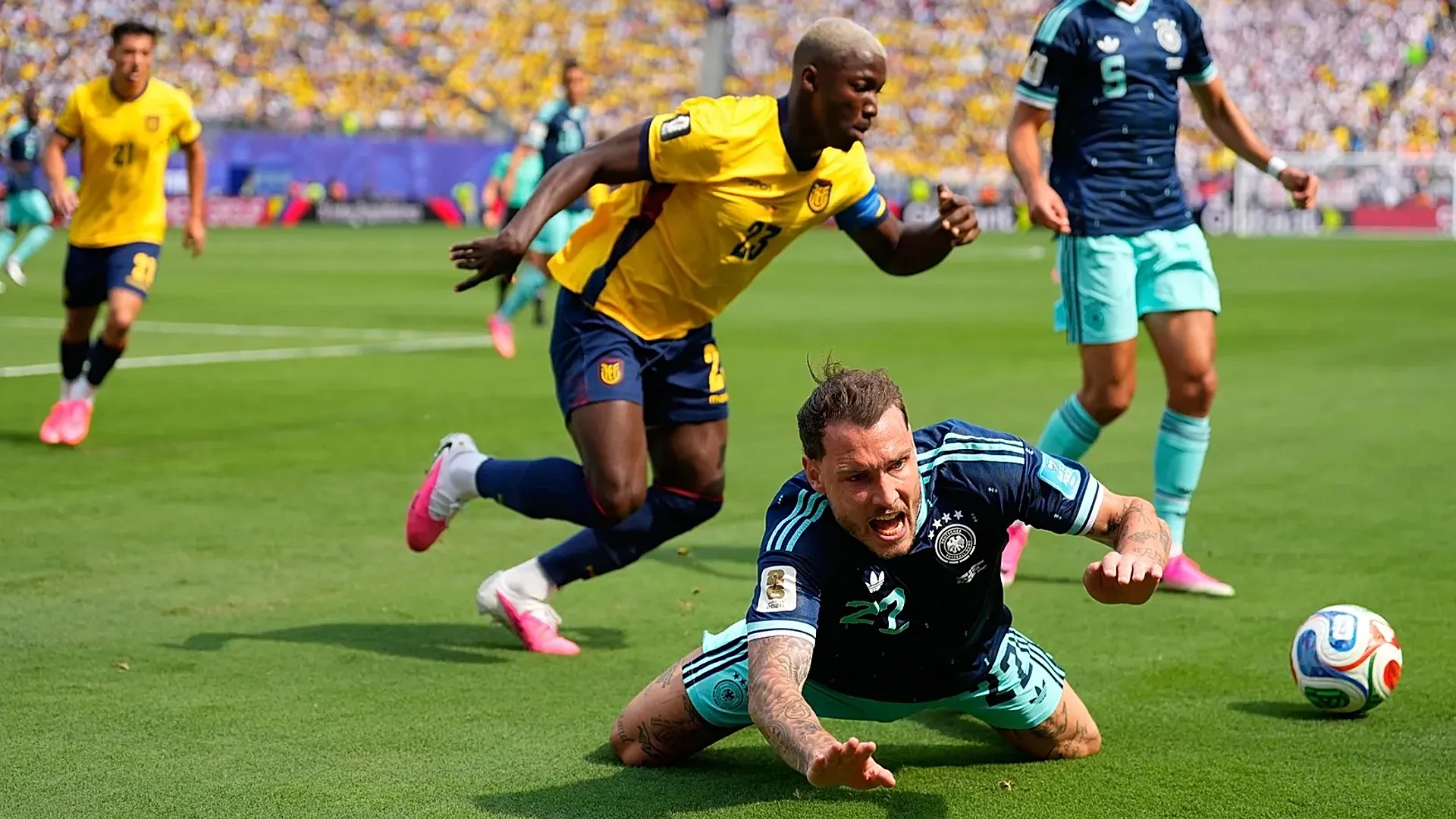
A dramatic comeback transformed qualification into a nationwide celebration.
Quito, June 2026
Ecuador defeated Germany 2-1 in one of the most surprising results of the 2026 World Cup, securing qualification for the knockout stage and prompting President Daniel Noboa to declare a national holiday. The South American team entered its final Group E match under intense pressure after losing to Ivory Coast and drawing with Curaçao. Only a victory could guarantee a realistic path forward. Against an already qualified German side, Ecuador responded with urgency, resilience and one of the most important wins in its World Cup history.
Germany took the lead almost immediately through Leroy Sané, who scored in the second minute after receiving the ball from Florian Wirtz. The early goal appeared to confirm the difference between a tournament favorite and a team struggling to find attacking rhythm. Ecuador had failed to score in its first two matches and entered the game carrying criticism over its lack of efficiency. Instead of retreating, however, the team reacted with unusual confidence.
Nilson Angulo equalized in the ninth minute with a powerful shot from outside the area that beat Manuel Neuer. The goal ended Ecuador’s scoring drought and changed the emotional balance of the match. Germany still controlled long stretches of possession, but Ecuador became more aggressive in midfield and increasingly dangerous on transitions. The equalizer also transformed the contest from a survival exercise into a realistic opportunity.
The decisive moment arrived in the second half. Germany briefly believed it had earned a penalty, but the decision was overturned after video review identified an earlier foul in the attacking sequence. Ecuador continued pushing because a draw would not provide enough certainty. In the 77th minute, Gonzalo Plata completed the comeback after a corner was redirected toward the near post.
Plata’s finish sent the Ecuadorian bench and supporters into celebration. The team then defended through the final minutes as Germany increased pressure and attempted to preserve its unbeaten record. Ecuador held firm, ending Germany’s 11-match winning streak and delivering a result that few analysts had predicted before kickoff. The victory was also Germany’s first World Cup group-stage defeat against a South American opponent.
The win allowed Ecuador to advance as one of the tournament’s best third-placed teams. Germany still finished first in Group E, while Ivory Coast secured second place after defeating Curaçao 2-0. Ecuador’s four points and improved position in the third-place ranking were enough to extend its tournament. The qualification marked only the second time the country had progressed beyond the group stage.
Ecuador’s previous appearance in the knockout rounds came in 2006, also in a tournament involving Germany. That team defeated Poland and Costa Rica before losing 3-0 to the host nation in the final group match. Ecuador then faced England in the round of 16 and was eliminated by a David Beckham free kick. Two decades later, the victory over Germany provided a symbolic reversal of that earlier defeat.
President Noboa announced that Friday would be observed as a national holiday, praising the players and coaching staff for recovering after criticism and difficult moments. His declaration reflected the emotional scale of the result. In Ecuador, football victories frequently carry meaning beyond sport, especially during periods of political tension, insecurity and economic uncertainty. The national team can become one of the few institutions capable of producing a shared public celebration.
Crowds gathered in streets, public squares and commercial areas after the final whistle. Car horns, flags and spontaneous chants spread through major cities as supporters followed the game from homes, restaurants and outdoor screens. The government’s decision converted an unexpected victory into an official moment of national recognition. For many Ecuadorians, the holiday represented not only qualification but relief.
The result also changed the public perception of coach Sebastián Beccacece. He had faced growing criticism after the opening defeat and the scoreless draw with Curaçao. Questions surrounded his tactical decisions, attacking structure and ability to convert Ecuador’s physical strength into goals. The win over Germany did not erase those concerns, but it demonstrated that the team could respond under extreme pressure.
Beccacece’s approach depended on intensity, compact defensive organization and rapid movement through wide areas. Ecuador did not attempt to dominate Germany through prolonged possession. Instead, it disrupted passing lanes, challenged physically in midfield and accelerated whenever space appeared. The strategy required discipline because Germany retained enough quality to punish any loss of concentration.
Angulo and Plata became the visible symbols of the comeback, but the performance depended on collective work. Moisés Caicedo helped stabilize midfield, while defenders maintained shape against Germany’s movement between the lines. Goalkeeper Hernán Galíndez remained composed during the final period of pressure. The victory emerged from a team that accepted the risks of attacking because caution offered little value.
Germany’s defeat will generate a different set of questions. Julian Nagelsmann’s team had already secured first place after victories over Curaçao and Ivory Coast, reducing the competitive urgency of the final match. Even so, the performance exposed vulnerabilities against physical pressure and rapid transitions. Germany created opportunities but lacked precision when Ecuador forced the game into a less controlled rhythm.
The loss does not threaten Germany’s qualification, but it interrupts the momentum of a team hoping to challenge for a fifth world title. After group-stage eliminations in 2018 and 2022, simply reaching the knockout phase again carries significance. The Ecuador match, however, showed that qualification alone does not guarantee readiness for the demands of elimination football.
For Ecuador, the opposite is true. The team reached the next stage through adversity rather than comfortable control. It entered the final match without a victory, conceded within two minutes and still found a way to reverse the result. That experience may strengthen confidence before the knockout round, where opponents will be stronger and mistakes more costly.
The national holiday captures the emotional power of the moment, but the tournament continues. Ecuador must now transform celebration into preparation. The victory over Germany has already secured a place in the country’s football history, yet its full significance will depend on what follows.
Una victoria también puede detener a un país. / A victory can also bring a country to a halt.