

 Phoenix 24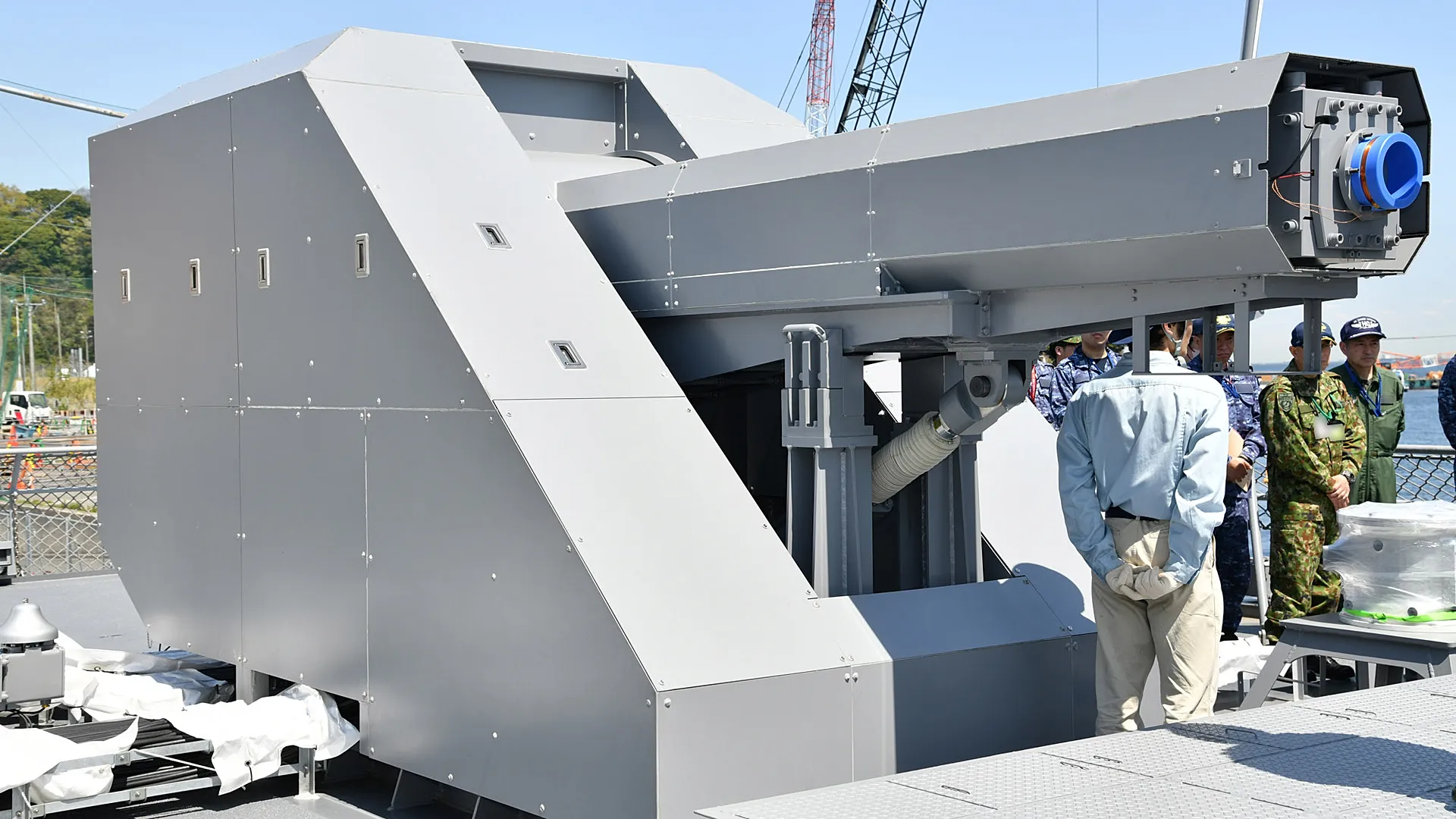
Railguns promise extreme speed, long range and lower ammunition risks.
Madrid, June 2026
Spain has placed electromagnetic cannons, commonly known as railguns, among the technological priorities of its new defense innovation strategy. The decision reflects a broader international race to develop weapons capable of launching projectiles at hypersonic speeds without using conventional gunpowder or explosive propellants. Although the technology remains experimental, Spanish defense planners see potential applications in naval artillery, air defense and future high-energy combat systems. The initiative also seeks to strengthen the country’s industrial autonomy in an area that could reshape military power over the coming decades.
A railgun works differently from traditional artillery. Conventional cannons use chemical energy from propellant charges to create expanding gases that push a projectile through the barrel. Electromagnetic cannons instead rely on extremely powerful electrical currents and magnetic fields. Two parallel conductive rails generate the force needed to accelerate a projectile along the weapon and release it at exceptional velocity.
The projectile may travel at several times the speed of sound, potentially exceeding Mach 5. At those velocities, destructive power comes primarily from kinetic energy rather than an explosive warhead. The impact of a dense projectile moving at hypersonic speed can damage or destroy a target through sheer momentum. This design reduces the need to store large quantities of explosive ammunition aboard ships or at military bases.
Naval platforms are considered particularly suitable because modern warships can generate substantial electrical power. Energy produced by the vessel would be stored temporarily in a pulsed-power system and released almost instantaneously when the weapon fires. That pulse creates the electromagnetic force required to accelerate the projectile. The amount of energy needed depends on the desired range, projectile weight and firing rate.
Spain included electromagnetic weapons in its Defense Technology and Innovation Strategy, published in March 2026. The document identifies advanced energy systems, directed-energy weapons and electromagnetic technologies as important areas for future military modernization. The strategy does not mean that operational railguns will immediately enter Spanish service. It establishes research, industrial development and technological independence as strategic objectives.
One of the principal attractions is range. Experimental railgun programs in other countries have explored theoretical engagement distances of approximately 100 nautical miles or more. A projectile traveling at hypersonic speed would reach its target much faster than conventional artillery, reducing the time available for interception or evasive action. Such weapons could support naval strikes, coastal defense and attacks against certain airborne threats.
Railguns may also offer a lower cost per shot than missiles once the technology becomes operational. A guided missile combines propulsion, navigation, electronics and an explosive warhead, making each launch expensive. An electromagnetic projectile can be mechanically simpler, although advanced guidance systems would increase its cost. The comparison is particularly relevant as armed forces search for affordable ways to confront drones and missile salvos.
A ship equipped with railguns could theoretically carry more projectiles than large missiles because the ammunition would be smaller and would not require chemical propellant charges. Removing explosive components could reduce the consequences of fire or accidental detonation inside the vessel. It could also simplify storage and handling. These advantages explain why naval forces have shown sustained interest despite decades of technical difficulty.
The greatest obstacle is energy management. Railguns require enormous electrical pulses delivered within fractions of a second. Producing, storing and controlling that energy demands advanced generators, capacitors, power electronics and cooling systems. A weapon may fire successfully in a laboratory yet remain unsuitable for a moving warship because its supporting equipment is too large, heavy or unreliable.
Barrel durability represents another major challenge. The projectile and electric current place extreme thermal and mechanical stress on the rails. Repeated firing can erode surfaces, deform components and reduce accuracy. A military weapon must survive many launches without constant replacement, especially during combat. Materials science and cooling technology are therefore as important as projectile speed.
A useful railgun must also achieve an acceptable firing rate. Long-range artillery and air-defense systems may need to engage several targets within a short period. The weapon must recharge between shots while controlling heat and maintaining structural integrity. A system capable of producing one spectacular test launch is very different from one able to sustain operational fire.
Accuracy becomes increasingly difficult at long range. A projectile traveling at hypersonic speed still encounters atmospheric effects, wind and changes in density. Guided ammunition may require electronics capable of surviving extreme acceleration at launch. Communications, sensors and fire-control systems must calculate trajectories with great precision. The cannon is only one component of a much larger combat architecture.
Spain’s interest is connected to a wider effort to develop a national defense-industrial base. Officials argue that advanced systems should not depend entirely on foreign suppliers, particularly during crises when access to components or maintenance may become uncertain. Developing domestic expertise in energy storage, power control and electromagnetic systems could support projects beyond railguns. These technologies also have potential applications in lasers, electronic warfare and civilian energy systems.
European defense research has already examined electromagnetic artillery through multinational programs. The PILUM project, coordinated under the European Defence Agency, studied the possibility of developing long-range railguns capable of firing projectiles at approximately Mach 5 or Mach 6. Researchers focused on launcher durability, projectile design and power supply. The work demonstrated technical possibilities but also confirmed that operational deployment remains demanding.
The United States invested heavily in naval railgun research before reducing parts of the program because of cost, reliability and shifting strategic priorities. Japan has continued testing electromagnetic launchers and has reported progress in projectile speed and rail durability. China is also believed to maintain active research. No major military currently operates a mature railgun as a standard frontline weapon.
That international record provides an important warning. Electromagnetic cannons have been described as revolutionary for many years, yet practical limitations repeatedly delay deployment. Spain’s decision should therefore be understood as a technological investment rather than the acquisition of a ready-made weapon. Research could produce valuable advances even if the final system differs from today’s railgun concept.
The changing nature of warfare keeps the idea relevant. Naval forces face anti-ship missiles, drones and increasingly sophisticated air threats. Conventional interceptors can be effective but expensive, especially when used against low-cost targets. A rapid electromagnetic weapon could eventually provide another defensive layer, although tracking and guidance would remain essential.
Railguns could also contribute to offensive operations by striking fixed targets at long distance without carrying explosive warheads. Their speed would make interception difficult, while ships could deliver repeated kinetic attacks without relying solely on cruise missiles. The strategic consequences would depend on range, precision and the ability to operate reliably under combat conditions.
Spain is therefore entering a field where scientific ambition and military necessity meet substantial engineering risk. The weapon promises extraordinary performance, safer ammunition and potentially lower operating costs. It also demands massive power, durable materials and advanced control systems that have prevented earlier projects from reaching full service.
The electromagnetic cannon remains closer to a strategic possibility than an immediate battlefield reality. By making it a research priority, Spain is betting that energy, materials and industrial capabilities will advance enough to overcome the obstacles. The outcome may determine whether railguns become a defining weapon of future naval warfare or remain one of defense technology’s most persistent unfinished ideas.
El futuro militar también depende de quién controle la energía. / The military future also depends on who controls energy.