

 Phoenix 24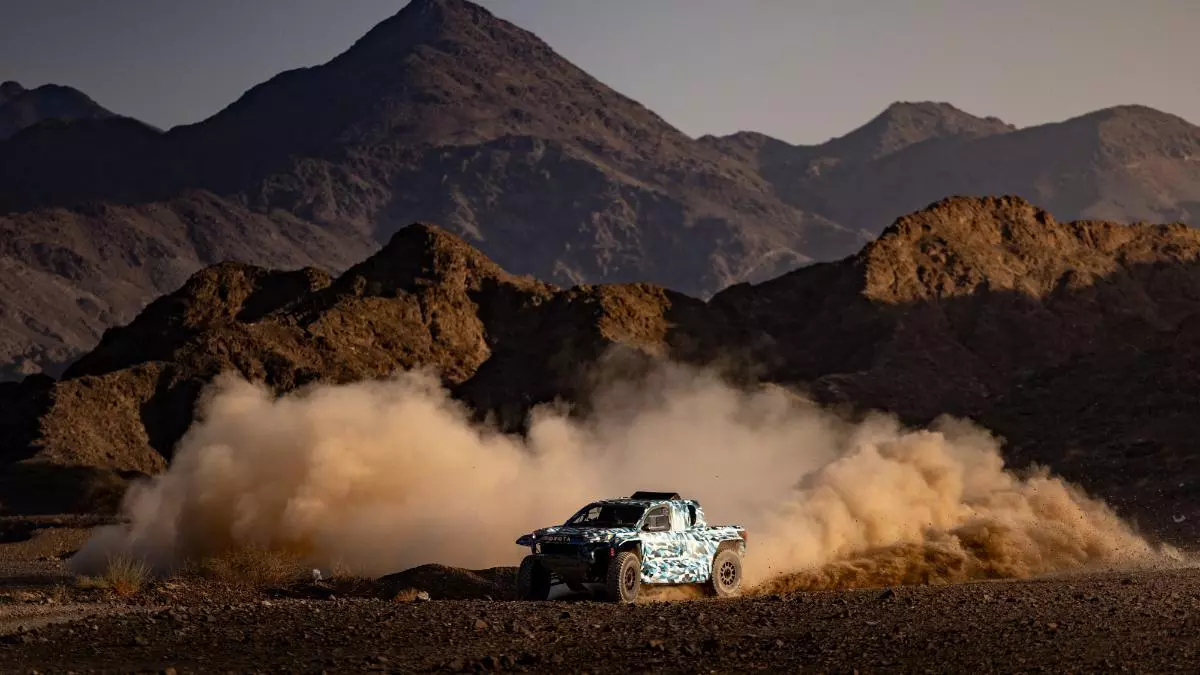
The desert becomes a laboratory for clean endurance.
Toyota City, August 2026
Toyota GAZOO Racing will enter a hydrogen fuel cell prototype in the 2027 Dakar Rally, pushing its alternative-powertrain programme into one of motorsport’s most demanding environments. Named the DKR GR FC Hilux, the experimental vehicle is based on Toyota’s established Dakar racing platform but replaces its conventional combustion engine with an electric system powered by hydrogen. It will produce no carbon dioxide from its exhaust while driving, releasing water as the principal by-product. However, the environmental footprint will still depend partly on how the hydrogen is produced and transported.
The prototype will participate in Dakar Future Mission 1000 rather than compete directly against the leading Ultimate-class vehicles. This experimental category gives manufacturers a controlled setting in which to test low-emission technologies across 13 stages and approximately 1,000 kilometres of competition. Saudi Arabia’s heat, sand, vibration and long distances will place exceptional pressure on the vehicle’s cooling, energy management and hydrogen-storage systems. Reliability, rather than outright speed, will be the programme’s most significant measure of progress.
Development and assembly work began in Belgium, where engineers have focused on reducing the size and weight of the fuel cell system. The project also seeks to improve cooling performance and protect sensitive components from dust, impacts and continuous mechanical stress. Progressive testing will allow the team to adjust power delivery and energy consumption before the rally begins on 1 January 2027. The event is scheduled to finish on 15 January at King Abdullah Economic City.
Unlike a hydrogen combustion engine, a fuel cell generates electricity through an electrochemical reaction between hydrogen and oxygen. That electricity powers motors, giving the Hilux characteristics closer to a battery-electric vehicle while allowing energy to be stored as compressed hydrogen. Toyota has already tested hydrogen combustion in circuit racing, rally demonstrations and earlier Mission 1000 projects. The DKR GR FC Hilux represents the company’s first motorsport programme combining hydrogen with fuel cell technology.
Toyota argues that knowledge obtained in the desert could benefit passenger vehicles, heavy trucks, buses, trains, ships and stationary generators. Yet Dakar performance alone cannot resolve the wider obstacles facing hydrogen, including production emissions, limited refuelling infrastructure, storage complexity and high costs. The project’s importance lies in testing whether fuel cells can remain efficient and durable under conditions far harsher than ordinary road use. Dakar 2027 may therefore reveal not whether hydrogen has already won the mobility race, but where it could realistically compete.
Information that anticipates futures. / Información que anticipa futuros.