

 Phoenix 24
The precaution limits unnecessary wireless exposure, although it cannot replace stronger protections for accounts and financial applications.
GLOBAL
Cybersecurity specialists recommend switching off Bluetooth before entering crowded public spaces when the connection is not needed. Leaving the feature active can make a smartphone discoverable to nearby devices and expand the opportunities for attackers to exploit unpatched vulnerabilities or deceptive pairing requests.
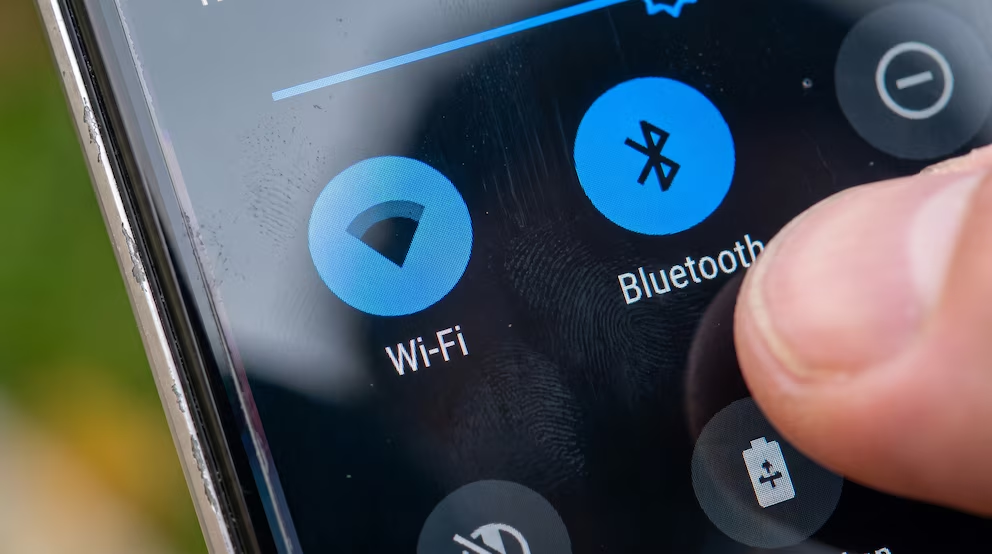
Threats associated with the technology include bluesnarfing, which seeks unauthorized access to contacts, messages or files, and BlueBorne attacks capable of exploiting weaknesses without conventional pairing. Successful attacks require particular technical conditions and are less likely on fully updated phones, but disabling unused connectivity removes an avoidable point of exposure.
Users should reject unfamiliar connection requests, delete devices they no longer recognize and prevent the phone from remaining permanently visible. Keeping the operating system updated is essential because manufacturers regularly issue patches for vulnerabilities affecting Bluetooth protocols and wireless components.
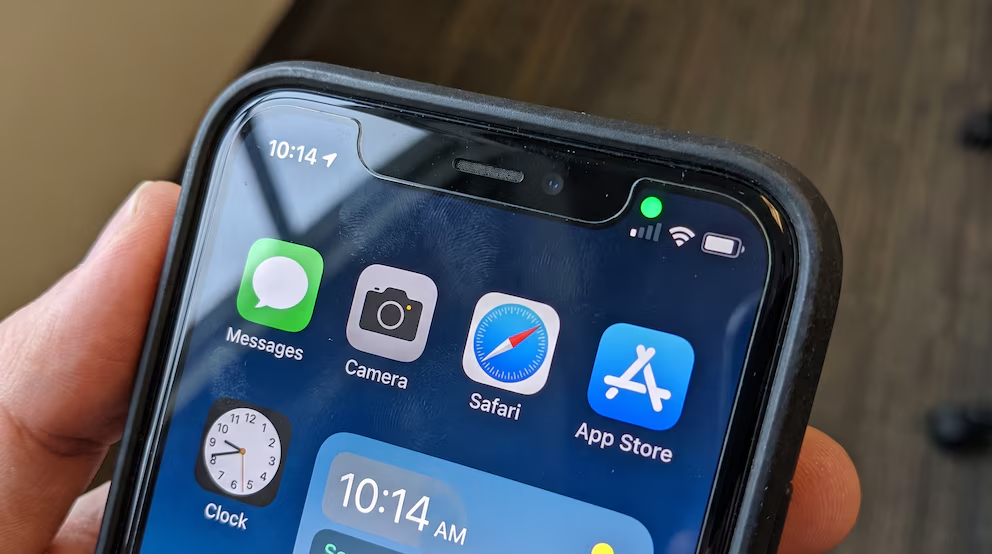
Turning off Bluetooth alone cannot guarantee the protection of money or personal information. Strong screen authentication, multifactor verification, encrypted banking applications and remote-location tools remain more important defenses. Bluetooth should stay enabled when required by medical devices, smartwatches or vehicle systems, but activating it only when necessary offers a practical balance between convenience and security.
Lo visible y lo oculto, en contexto. / The visible and the hidden, in context.