

 Phoenix 24

Early humanoid manufacturing begins amid rising AI investment and financial pressure.
FREMONT
Tesla has begun manufacturing its Optimus humanoid robot at its Fremont factory in California, marking a new stage in Elon Musk’s effort to transform the electric vehicle manufacturer into an artificial intelligence and robotics company. The announcement came alongside third-quarter financial results showing a 43% decline in net profit, exposing the substantial costs associated with Tesla’s technological expansion.
The company reported net income of $787 million for the third quarter of 2026, compared with approximately $1.37 billion during the corresponding period last year. Revenue remained broadly unchanged at $28.04 billion, illustrating the difference between maintaining sales and preserving profitability.
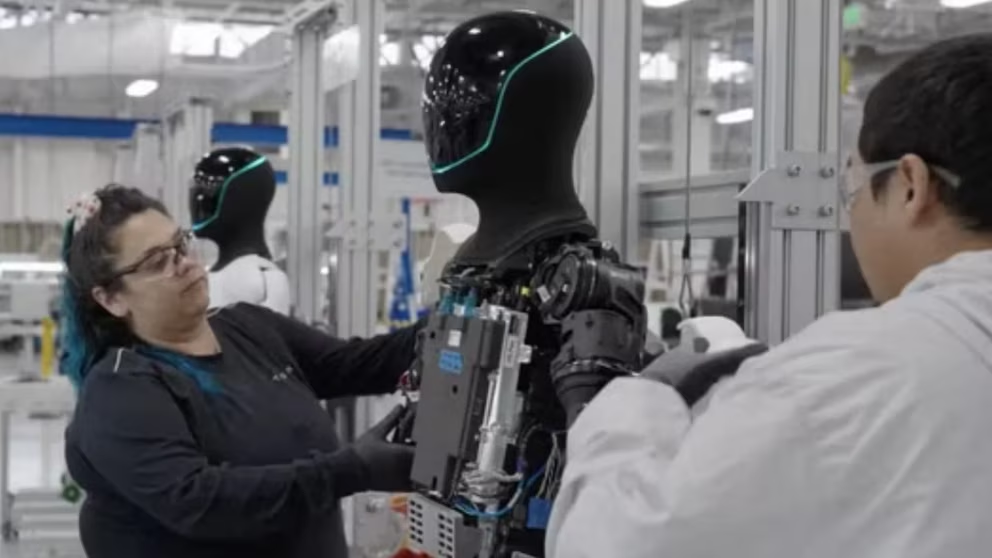
In its shareholder update released on October 21, Tesla confirmed that Optimus production had started on manufacturing lines at Fremont. The company described the initial units as its first humanoid robots meeting production-quality standards.
That milestone does not mean large-scale commercial deliveries have begun. Tesla has not disclosed how many robots have been manufactured or established a final retail price.
The manufacturing operation occupies space previously used to assemble the Model S sedan and Model X sport utility vehicle. Tesla discontinued those vehicles earlier this year as part of a broader reallocation of industrial capacity toward robotics and autonomous technologies.
The first Optimus units are intended primarily for internal development and training. Through its Optimus Academy initiative, Tesla plans to collect operational data and improve the robots’ ability to perform useful tasks.
Developing humanoid robots presents challenges that differ substantially from manufacturing vehicles. Advanced manipulation, balance, safety and reliable operation in changing environments require close coordination between mechanical engineering and artificial intelligence.
Musk has acknowledged that increasing production will be difficult because of the complexity of the technology and the absence of a mature supply chain for several specialized components.
The financial results demonstrate the scale of Tesla’s investment commitments. Capital expenditure reached approximately $4.7 billion during the quarter as the company continued developing robotics, autonomous driving and computing infrastructure.
Vehicle deliveries totaled 486,532 units, indicating that Tesla continues to operate a substantial automotive business even as its strategic priorities expand.
The company also generated approximately $1.5 billion in free cash flow, offering a counterpoint to concerns about rising investment costs. Nevertheless, weaker earnings reinforce questions about when its newer businesses may contribute meaningful revenue.
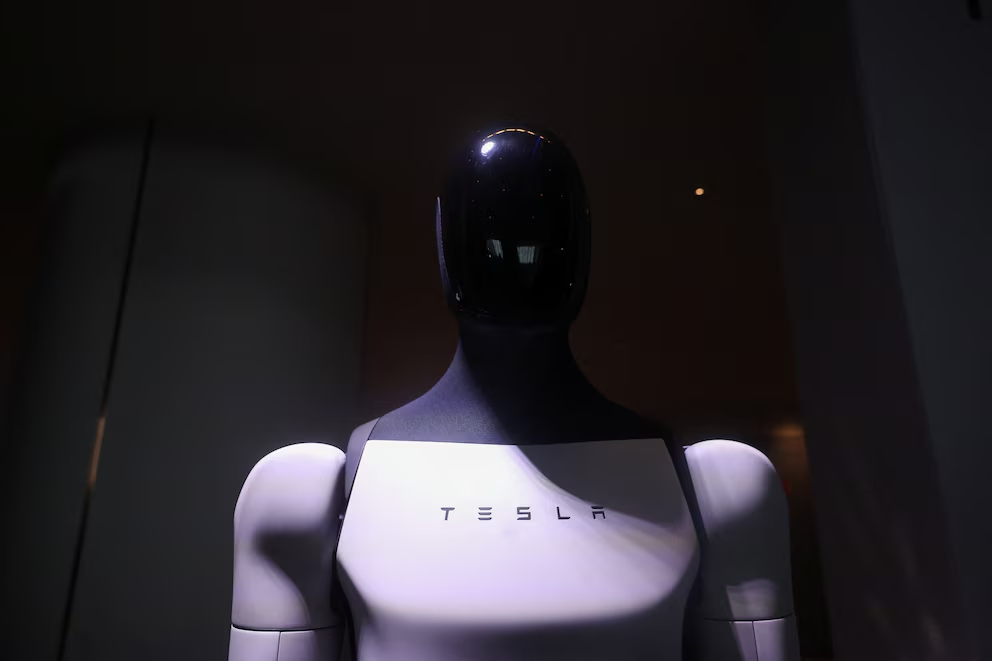
Tesla has outlined ambitious long-term manufacturing targets, including the possibility of producing one million Optimus robots annually at Fremont. Such figures remain objectives rather than demonstrated production capacity.
For investors, the immediate challenge is evaluating whether spending on robotics and artificial intelligence will eventually generate returns sufficient to justify the company’s expanding commitments.
For the robotics industry, the launch represents a significant manufacturing experiment, but commercial success will depend on performance, reliability, pricing and actual customer demand.
Tesla has crossed an important industrial threshold by beginning production. Whether Optimus becomes a commercially sustainable product remains an open question.
Beyond the Hype, Reality Matters.